
Image Recognition
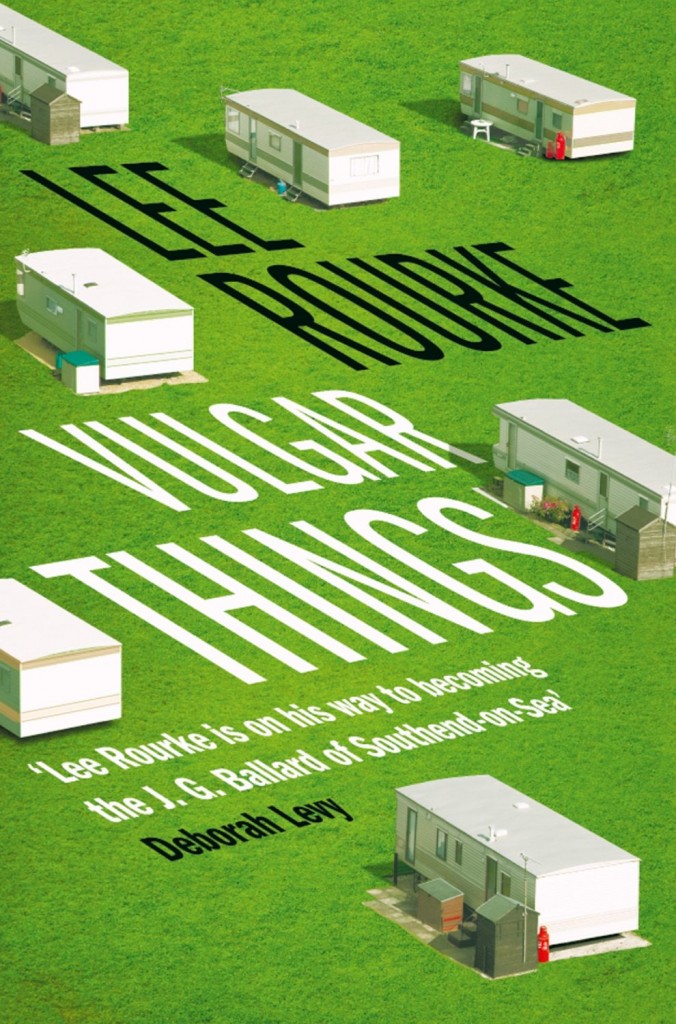
Looping, watching, being real – these things bring to mind Tom McCarthy’s Remainder, its main idea being replayed here in a reversed form: for Jon, authenticity is an afterthought rather than a prompt. Here, too, there are traumas, physical and mental, and a large sum of money involved. Boredom, the main motif of Rourke’s first novel, The Canal, is also present, both as the protagonist’s condition and as something he observes in others: “It all makes sense: boredom. But it’s a mess, like the world has short-circuited and there’s not much time left, so everything is accelerated: everything is happening too quickly for me to assimilate what is actually taking place.” Things are often “happening too quickly” for Jon, who gets periodically kicked out of seedy places and beaten up by dodgy characters. He takes it all with a degree of disbelief, as if it was happening to someone else, thinking, “I just want to be real again”.
Anna Aslanyan reviews Lee Rourke‘s Vulgar Things.
Back in Orbit
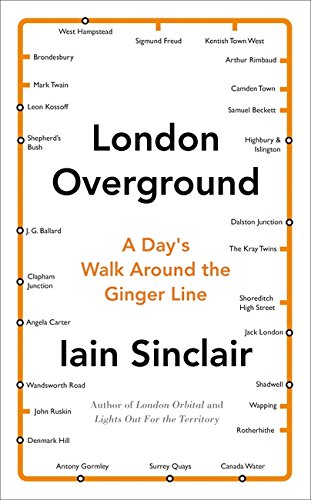
Over a decade after London Orbital, Iain Sinclair went on another circular journey. This walk, shorter but no less demanding, was prompted by his encounter with a group of youngsters in fancy dress about to board an Overground train at New Cross Gate to travel to a party in Shoreditch. They told him how they chose locations for parties somewhere along the newly completed Ginger Line and kept the details secret till the last moment. Reminded of the famous M25 raves that started soon after the opening of the London orbital motorway in 1986, Sinclair felt compelled to write about the revived rail network: to see how it had changed London’s topography and spirit.
Anna Aslanyan reviews Iain Sinclair‘s London Overground: A Day’s Walk Around the Ginger Line.