
Dasein, Objects, and Myth: Heidegger’s Unconscious Accelerationism

Here, at an angle oblique to his own position, we want to argue that Heidegger slipped his tongue by inadvertently defending a vision of history devoid of the illusions of the past (not without a counterweighing acknowledgement of the improbability of this ever occurring in the near future; the ‘fail safe’ argument of any philosophy risking a claim to the not-yet). This vision of history is typical of the ideal of Enlightenment of which Heidegger nonetheless is openly critical. By some indications with regard to the disenchantment of the past, Heidegger could become, oddly enough, an ally of today’s left accelerationism in its attempt to revive the project of Enlightenment via a curious distortion of the past.
Virgilio A. Rivas on Heidegger and Accelerationism.
When the Professor Got Stuck in the Snow
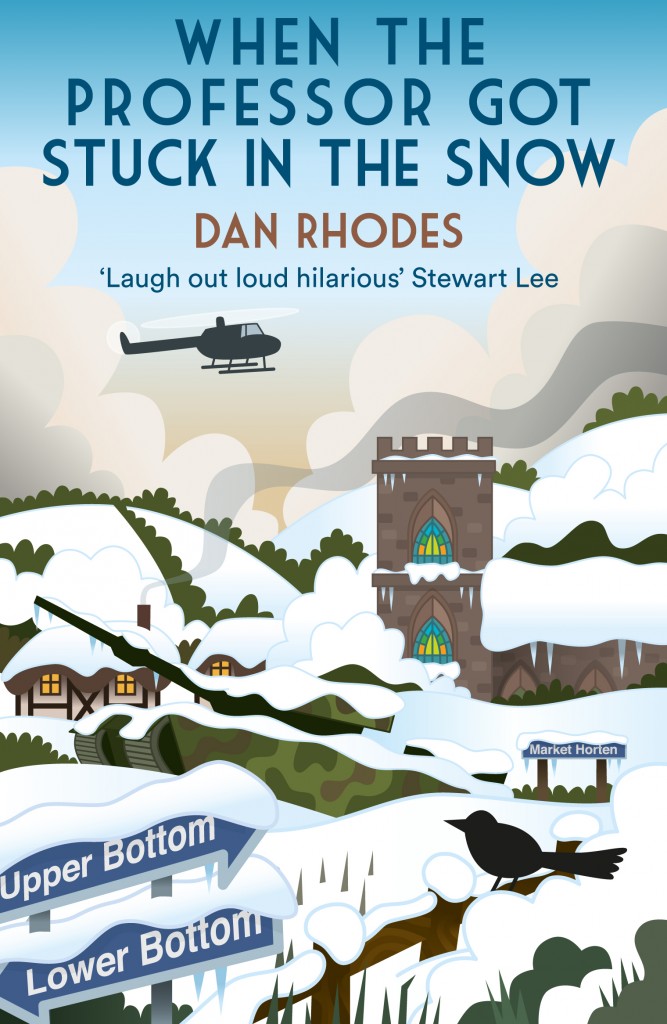
Being famous and internationally respected, Professor Richard Dawkins, is on the way to a public speaking engagement. His journey however, shared by his assistant Smee, is hindered by heavy snow, forcing the pair to find refuge with a retired vicar and his wife, whose beliefs are somewhat counter to the Professor’s own. In his mind, they are “reckless imbeciles”, “deluded believers of fairy stories who devote their lives to peddling lies more dangerous than small pox.” This clash of views, and the Professor’s unrepentant, zealous fervor, represent the starting point for what is a brilliant comic construct: “I have devoted swathes of my life to kindly telling people how ignorant they are, and correcting them, and giving them the opportunity to think as I do.”
Paul Ewen reviews Dan Rhodes‘s When the Professor Got Stuck in the Snow.