
A Small, Dark Miracle of a Book: Peter Stenson’s Thirty-Seven

In any event, a book that ties the reader up in such moral knots is a book worth reading, no matter how displeasing the reading experience may be. And it is. The characters’ illnesses are well-described, their depravities carefully delineated, their crimes docketed without fail. Enlightenment through suffering necessarily entails suffering, and this book bears a lot of it. Plus, the ideas in it are so heavy, and so imbricated, that reading the book is an intense, blinkered experience. Even if you’ve put the book down, your emotions haven’t really let go, and your mind keeps working at its contradictions.
Katharine Coldiron reviews Thirty-Seven by Peter Stenson.
Condemned to Modernity?
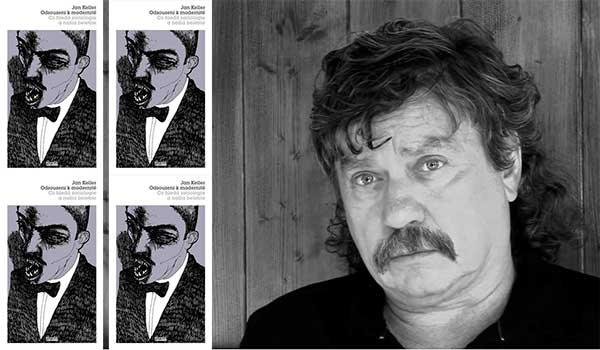
In one of his most recent works, Condemned to Modernity: What Sociology Seeks, Literature Found, he attacks the argument, often made in both mainstream media and academic circles, that our globalized, digitalized economy has created a postmodern and post-industrial society whose actuality is unique to human history. In the book, he uses literature as his main weapon of attack, repeatedly asking: If this argument is correct, then how is it that we can find in some of the great literary works of the 19th and early 20th centuries — the epitome of modernity and the industrial age — precise descriptions of social and economic phenomena that are supposedly unique to our time?
Svatava Antošová on Condemned to Modernity by Jan Keller.