
Essays One
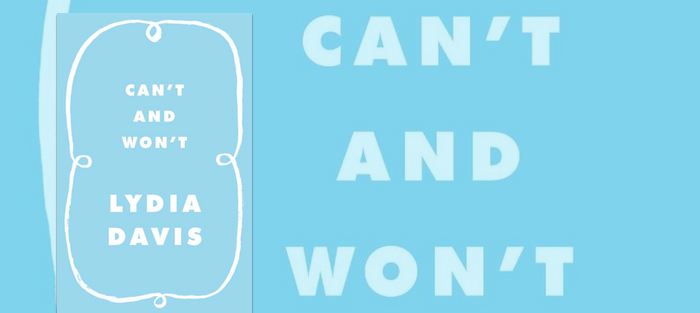
A very short story cannot help but associate with other short forms – poems, dictums, parables, and dreams – that are typically ripe with meaning. Encountering such a story on its own, then, means determining its importance, especially when it is a lone sentence engraved in a setting of outsized significance. Does the task change if you are told that the story originated as an email or a dictionary definition? What happens when you have read a dozen very short stories, and then you come across a longer one, full of characters and grief? This may be the lesson of reading Lydia Davis: the origin of writing is infinitesimally mundane, until the moment it is not.
Andrew Hungate reviews Lydia Davis‘s Essays One.
The Offing

The title of the novel refers to the place where sea and sky merge, the novel itself representing a fold in time and space, fixed in the past yet speaking to us of the present, a kind of invocation that Eros, the creative spirit, might awaken and prevail in a volatile age that once more appears poised upon the brink of desolation. As Dolcie instructs Robert, ‘Let poetry and music and wine and romance guide the way’. Well, sure, at this point in the barbarous tragedy and absurd comedy of human affairs, why the hell not?
Chris Brownsword reviews Benjamin Myers‘ The Offing.
Mother Tongue

For as long as I can remember I have equated the death of one’s parents with the most pure freedom in the world, perhaps the only freedom in the world.
A story by Jules Lewis.