
On or About
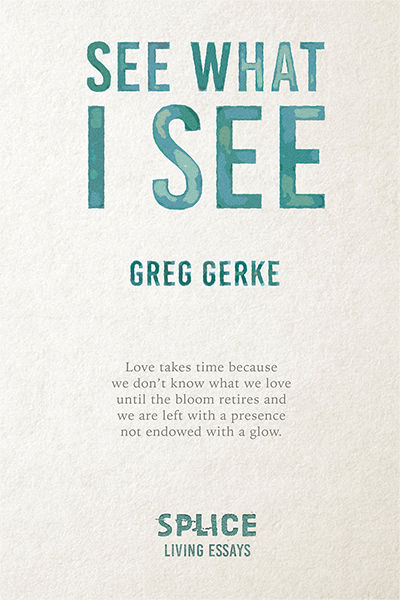
Can I say I’ve had the privilege of living a life tending solitary? I didn’t choose it as a child or a teenager–it’s just what happened. Divorced parents, a sister seven years older, the ostracization of being taller than everyone else my age and fairly chunky–these facts strafed me and made me separate. I learned to play by myself, creating my own universe and my own reality, taking the role of two players in Monopoly and many other games, and then gorging myself on TV, movies, and reading. It can’t be a surprise I traded the usual collaborations of my first passion, filmmaking, for the quiet, orderly hours of writing.
Read an extract from Greg Gerke‘s new collection of essays, See What I See.
The Missing Links
According to Rob Doyle, Serotonin “reanimates the long-felt suspicion that each Houellebecq novel is an instalment in the biography of the author’s penis”. * Eimear McBride on why the novel matters: “The novelist must never deceive themself with the idea that they are in charge: the novel is. And this is not always an easy […]
The Unsayable: a conversation with Cynthia Cruz
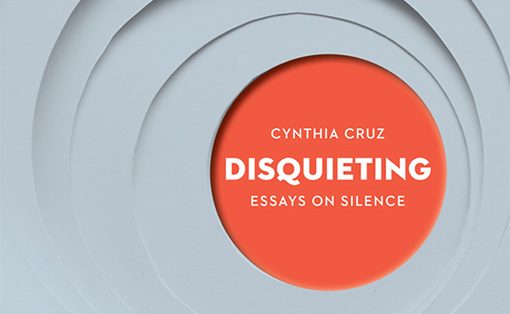
The main difference to me between depression and melancholia is that depression is what is occurring on the outside, one’s symptoms: (sadness, lethargy, loss of appetite, etc.) while melancholia is what is actually happening within. Furthermore, melancholia is a definition of what occurs when one is unable to grieve the loss of something because they are unable to determine what exactly it is they have lost. Because in melancholia one does not know what one has lost, there can be no resolution; there is no way to recover. This is the case for class trauma (the trauma that occurs when growing up working class/poor in the contemporary US) and trauma, in general. The definition of trauma is that the event that has occurred to create the trauma has created a shock and that shock results in a blackout where no memory exists (the psyche protects us from such traumatic memories). Because these memories are not recoverable, what has occurred cannot be remembered, which means it cannot be re-experienced and grieved.
Paul Rowe interviews Cynthia Cruz.
Loop
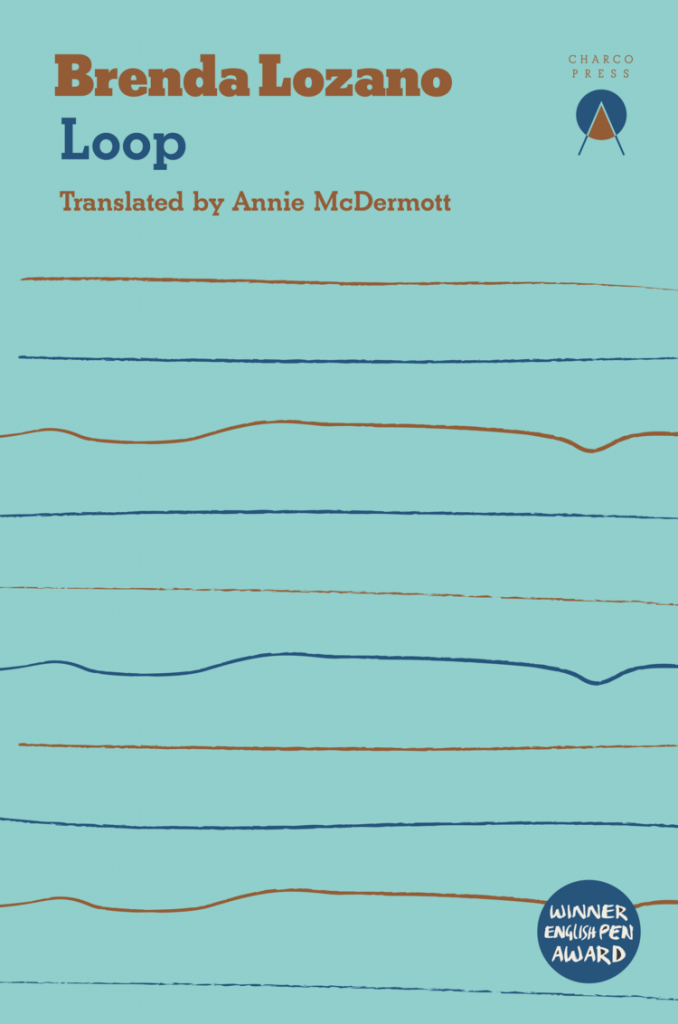
Some novels flow; others overflow. Loop is a veritable deluge. That’s the way it should be. In some ways it has less in common with a novel, a thing of incident and design, than with an amiable, free-associative, slightly stoned conversation. It keeps you company. As a friend, it is stimulating, precocious, sometimes exhausting: a browser with too many tabs open; the hypertext when you hover the cursor. It is not, in a narrative sense, satisfying. But nor is waiting. In form it resembles the notebooks the narrator so adores, a compilation of found thoughts: never whole, always playful, the liberal effusion of an unoccupied mind.
Daniel Marc Janes reviews Brenda Lozano‘s Loop.