
The Novel as Kaleidoscopic Puzzle: Carlos Fonseca’s Natural History
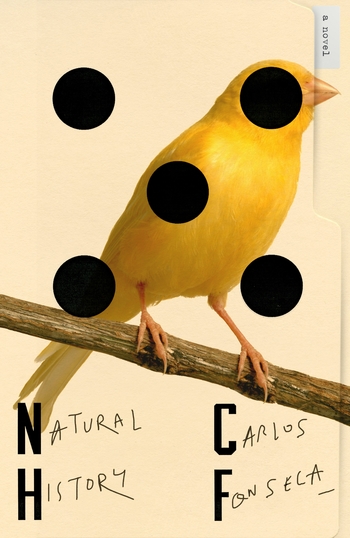
One could call Natural History a “philosophical book,” a novel that remains in dialogue, throughout its pages, with the tradition of twentieth century French philosophy, from Badiou to Derrida. The book overflows, as has become Fonseca’s trademark, with multiple stories that direct the reader in different directions, but which slowly begin to trace the contours of a recognizable conceptual phantasmagoria. From Badiou, it seems to adopt his “theory of the event” and the idea of trying to find a truth, even when the final piece of the puzzle permanently eludes us. And from Derrida, it seems to borrow the idea that every event bears the traces of a previous event, traces that work as displaced repetitions, distorted copies of an original that never gets fully actualized.
Enrique D. Zattara reviews Natural History by Carlos Fonseca, translated by Megan McDowell.