
Love

With its fundamentally undetermined relation to facts, Love manipulates readers’ expectations from fiction—a followable plot, a character arc—to express the radical incoherence of experience in the face of sexual violence. The violation of the body sunders narratives that make sense of the pursuit of love and renders everyday language inadequate for describing it. When the narrator is committed to a psychiatric institution, she defies the therapists’ attempts to analyze her: “I laughed loudly when they asked if I felt any pain, where did it feel painful. What else could I do?” The character’s pain, as Eitan says in her interview, is “not disconnected from reality.” It is the pain of yearning for love, but only being able to experience it as exploitation. But straightforward propositions such as this are insufficient for conveying the quality of this pain. If it can be conveyed by words at all, they need to be the circular, evasive, and variegated words offered by Love itself.
Michal Zechariah reviews Maayan Eitan‘s Love.
An Animal Sees its Death
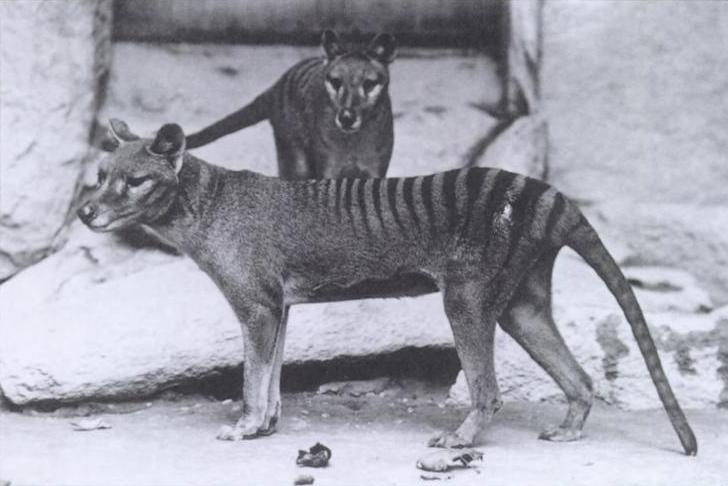
Time, unannounced, enters the tiger’s world. It is a slow, invisible infection, imperceptible to her consciousness. It colonises unseen, working noiselessly through her snout, her paws and stripes, her long muzzle and shortbrush hair. What is happening to her is irreversible. Once time has entered a body it remains, fitting itself raggedly to a being’s outline. She flinches and clips the watch, and it floats free from the stone and down the stream into the night. She does not follow, sensing imperceptibly something that has passed between the object and herself. This feeling is unrecognisable to her, this oblique intrusion of something new. The watch, sailing away down the water’s flow to its next victim, remains somehow lodged inside. The world reconfigures, gaining edges and fresh chambers. Night, her dominion, becomes wider and deeper, full of danger.
Read an exclusive excerpt from David Hering‘s wonderful novel in progress.