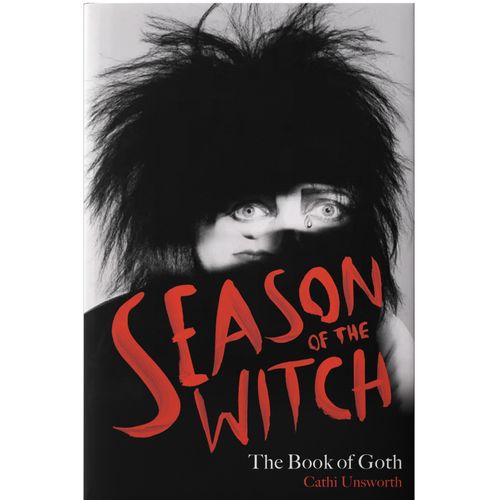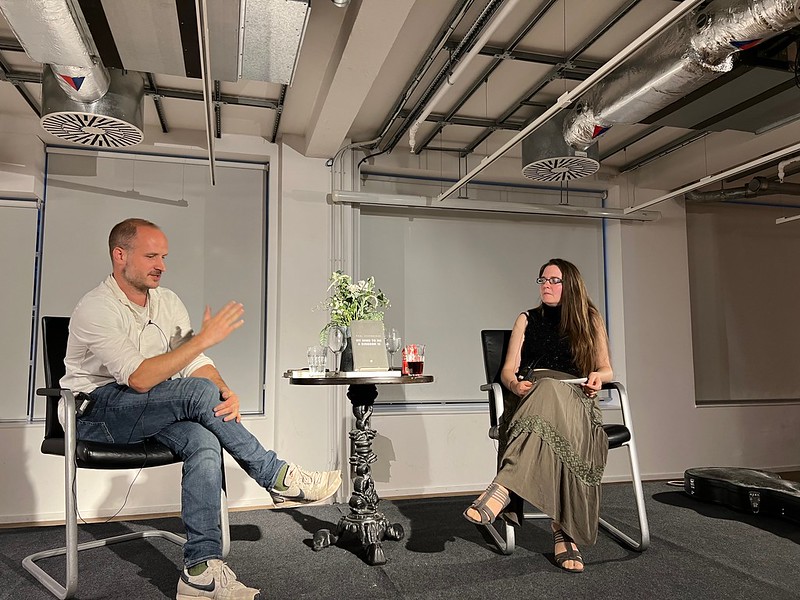
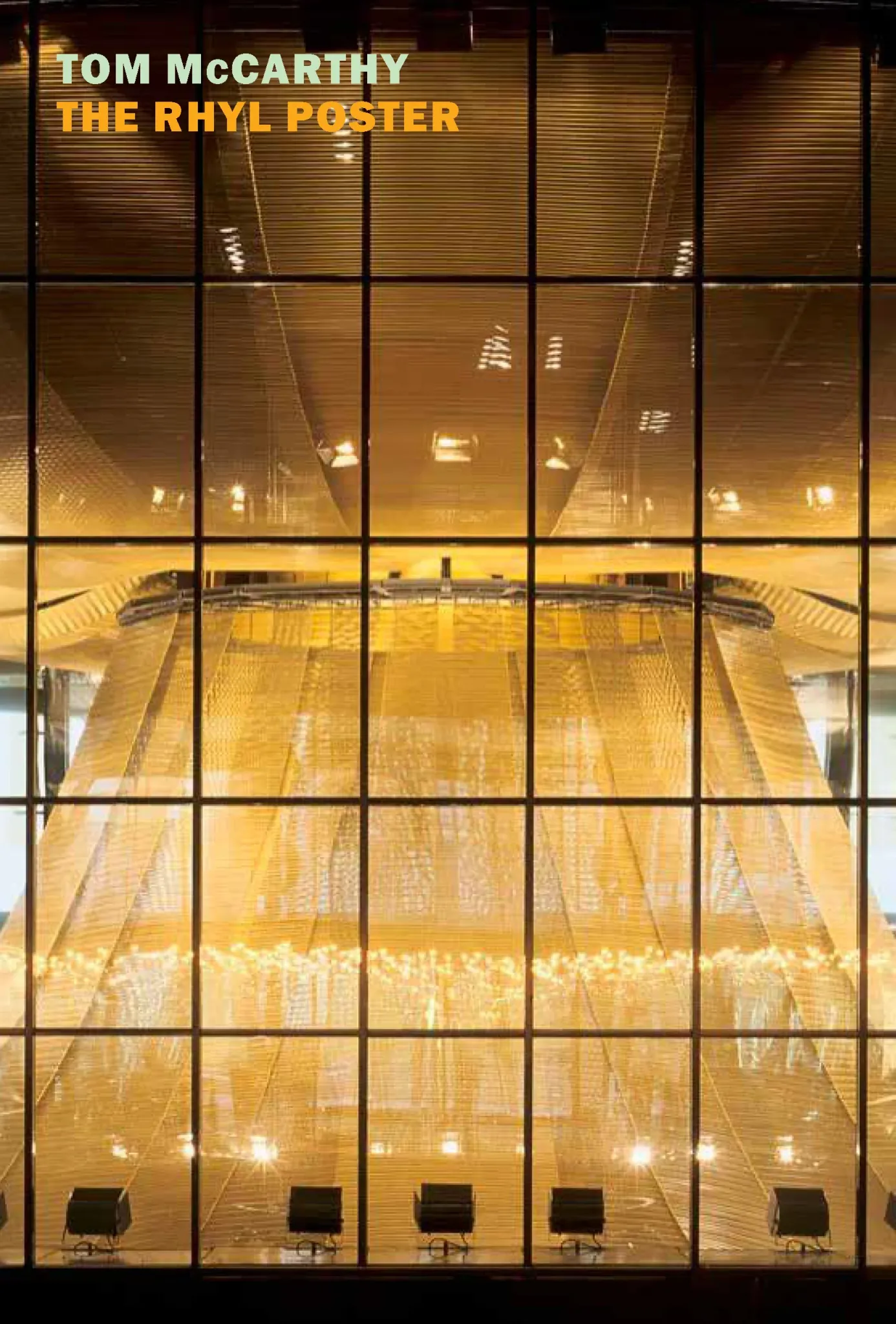
Continuing the “My Favourite Author” series, 3:AM columnist Sophie Parkin loves this writer so much, she named her daughter after her:
Further: The Offbeat Generation / The Offbeat Generation Film Channel / Matthew Coleman reads ‘Dream Poem’ / Heidi James reads two pieces / Adelle Stripe reads 3 poems / Ben Myers reads four Brutalist poems / Matthew Coleman reads from Her Naked Self / Lee Rourke reads Everyday / Andrew Gallix talks Offbeat / Tony O’Neill reads ‘Mark Twain & I’ / Heidi James: My Favourite Author / Lee Rourke: My Favourite Author / Tom McCarthy: My Favourite Author / Andrew Gallix: My Favourite Author
Tao Lin provides Book Notes for his new poetry collection Cognitive-Behavioral Therapy. Here, he introduces his Book Notes choices:
I wrote Cognitive-Behavioral Therapy while on tour with my band “Spanish Rilo Kiley” in Taiwan and Japan. I played drums and my friend played keyboard and “sang.” Taiwan has a 24-hour mall and we lived there for four days. I slept inside a circular display of clothing. Just kidding, our band has not toured Taiwan or Japan. Taiwan has places where people pay money to sit indoors fishing from a small concrete “pond” and then grill the fish that they catch and eat it while still fishing. People do this “for something to do” like people in America might take walks inside shopping malls or go on deep sea fishing trips. Some of these places in Taiwan have giant shrimp instead of fish. Some of the places do not use bait or reel, you hold a pole and move it around until the hook goes into a fish’s scales then you “pull,” or “yank,” the fish out of the water. I have done this before, when I was ten or eleven. It was like a video game. I wouldn’t do it today.
I feel good when I look at an album or book and see that someone was selective about what to include. I think this means I “value excellence” or something. But I don’t feel bad when I see that someone has “put a lot of shit” together into a book or album. I think it’s “funny.” “Either way is okay with me somehow.” I just put an entire sentence inside quote marks and it was not a quotation. When I start using quotation marks for single words or phrases I feel the urge to put everything in quotation marks. I think it’s because I become aware that the words and ideas already “exist” as possibilities and therefore I am, sort of, “quoting” no matter what I type—the sentences are not really “mine.” This might be “Zen” of me. It felt good to put an entire sentence in quotation marks. I felt calm and detached. I edited Cognitive-Behavioral Therapy in a lot of places including in my bedroom in Florida. I remember editing it in Florida. I “laid out” every page on the floor in order, separated into four sections, and thought about it for three weeks or something, staring at it from different angles moving pages around and writing things on it. I listened to “emotional and sincere yet quiet, catchy, pleasant, and unobtrusive” music during this period of editing, I think it was mostly Rilo Kiley and Neva Dinova (songs off their split with Bright Eyes). I tried to be very selective in what I put into Cognitive-Behavioral Therapy.
At some point in my life I want to publish a book where I “just put all my shit into it” in a random order. People will probably like that because it will include my “screwing around” stories and poems and people like my “screwing around” things according to what I have read on the internet. Taiwan seems to me like “someone just put all their shit into it.” Japan seems to me like the “selective” version of Taiwan. I have been to both places and like them both.
I don’t know what to type about Cognitive-Behavioral Therapy. I tried to type some things about it but then typed those other things.
Look out for a 3:AM/Tao Lin “exclusive” very, very soon. Meantime, Tao is having a book-launch party for Cognitive-Behavorial Therapy, and y’all are invited.
Further: Cognitive-Behavorial Therapy, the website, with special features including a promotional video and every page edited ‘half-assedly’ into haikus

There’s a new work out on Billy Childish. Penned by Neal Brown and introduced by Peter Doig, Billy Childish: A Short Study is available as a limited edition hardback—with a portrait of Childish by Gareth McConnell—as a paperback and as a free PDF (but as with all Childish/Aquarium productions, you’ll want to put your hand in your pocket and get yourself a hard copy). Here’s a teaser from the Introduction:
Billy and I met at St Martin’s School of Art in 1980 – where we ‘studied’ together. I have had respect and admiration for him from the beginning. He had already had a stint there in the late seventies and was back for seconds by the time I arrived . . . Billy was not really around very much. Early on I remember him in the life drawing room. We drew ‘Dog Jaw Woman’ – Billy’s nickname for what was easily the most attractive and animated model we had there. Billy subsequently made a Xeroxed book of poems and drawings as an ode to her. For a second-year exhibition Billy turned up with a heavily rendered green, black and white portrait of his friend Sexton Ming, painted so thick and wet that (when hung above a radiator) it curled up like a stiff sail.
There was never any doubt in my mind that Billy is an artist. A lot of people are embarrassed by work like Billy’s – but that’s what’s great about it as well. He is very honest. I don’t ever remember Billy painting in the studios of Charing Cross Road, but do remember him busking in the underpass at Centre Point and in Coffee Bar Dave’s, where he challenged a hairy Hell’s Angel (a real one) to prove that he could balance a full pint of beer on his erection. Billy was in Hamburg a lot of the time, or so it seemed. While we were down Le Beat Route, he was playing the Star Club . . . and on one great occasion his group The Milkshakes played at a house party next to the British Museum where all us students had paintings hanging in the back garden. Occasionally Billy appeared in photos, in his self-published books of poems and drawings, dressed like Rodchenko or Kurt Schwitters, along with drawings that looked like rough Paul Klees.

1) Lounge Lizard has been compared to Henry Miller’s Sexus and Charles Bukowski’s Women. As “Henry Miller” and “Henry Chinaski” were extensions of those writers, is Max Zajack your literary alter-ego? How much of Mark Safranko is there in Max Zajack?
Absolutely, yes. Well, at least one of my alter egos. How much of Mark SaFranko is there in Max Zajack? Insofar as my life experiences go, everything. But it’s long been evident to me that any sort of autobiographical or confessional writing is essentially a lie. As soon as pen hits paper, truth is deflected at the source. Something perverse happens in the attempt to be “honest.” A writer can recount his experiences but altogether fail to capture the essence of something because so much, from so many different angles, is brought to bear on a specific experience. There’s usually a lot more to the author than emerges on the page. I would question whether even someone like Proust succeded in pulling it off.
2) Last time we met Zajack, he was a struggling writer in a tempestuous relationship, recalling John Fante’s great book Ask the Dust. This time around, he’s working for the man and shagging rings ’round him. Aside from Miller and Bukowski, does Lounge Lizard have any other direct literary influences?
Probably the biggest is Bill Naughton’s Alfie novels, too underestimated and ignored in my opinion. Also Pedro Juan Gutierrez, the Cuban writer. We have something in common as well. Others too, I’m sure.

3) I’ve been enjoying reading your articles on The Guardian Books blog, highlighting some of your favourite under-rated writers. You even been
the subject of one yourself, “a genius overdue for recognition”. Who’s the best writer we’ve never heard of? And why?
Susan, that’s the toughest question you’ve asked. Mohammed Mrabet, the Moroccan who collaborated with Paul Bowles. You can’t find his books anymore, at least in America. He’s a great confessional writer. Seance On A Wet Afternoon by Mark McShane. Small 1961 British novel that was the basis of a great film with Kim Stanley and Richard Attenborough. That one just popped into mind. Alberto Moravia, who no one reads anymore, specifically The Conformist. Here’s another: Among The Dead, a potboiler by the Frenchmen Boileau and Narcejac. Japrisot’s One Deadly Summer. Robin Maugham’s The Servant. My reading tastes are all over the place.
4) You recently were Guest Editor for Beat the Dust. How did you find that? How did you select the writers for that issue?
Difficult, because there was something to be admired in every submission. I have a great deal of respect for what people put down on paper. I hated to turn any of it away. In the end it was whatever struck me as good on a given day.
5) Aside from a novelist, you’re a playwright, musician, actor and short story writer. What are you working on at the moment? Can we expect to meet Max Zajack again soon?
At this moment I’m working on a couple of non-Zajack novels and two story collections. I’m always working on something — including some kind of a job.
Can we expect to meet Max Zajack again soon? I hope so. The next Zajack novel, written before Hating Olivia and Lounge Lizard, should see the light of day within the next couple of years, hopefully. That one’s been done for a long time. I’m also working on a fourth. who knows, maybe there will be a fifth if I’m around long enough.
Lounge Lizard by Mark SaFranko is available now to buy from Murder Slim Press.
Alfred Hoffman, inventor of LSD, has died; Ben Myers doffs his cap. * “A freestanding slab of concrete wall at the northwest corner of Houston Street and Bowery is being transformed into a fluorescent pink, orange, and green Keith Haring mural — again. To celebrate the 50th anniversary of Haring’s birth on May 4, the gallery Deitch Projects, which has represented the artist’s estate for more than a decade, and the Keith Haring Foundation have hired artists to recreate the mural that Haring, who died of AIDS in 1990, painted on the wall in 1982.” * Aeronwy Thomas talks about her father, poet Dylan Thomas: “People need to have these legendary bad figures, and he has become an iconic figure, Brendan Behan-style, which is only part of the story. He was very focused in his 39 years. He wasn’t interested in anything but literature and writing it. It is very isolating to write, and he did it many hours a day. Then he’d go to the pub to play cards or skittles - he needed that. All the drinking and the womanising, you know, it is more understandable to me now.” * The Non-Expert’s Guide to the Hipster. * The LA Times reviews Tom McCarthy’s Tintin and the Secret of Literature: “McCarthy has given his American readers a savvy perspective on his sophisticated views of fiction, which we will (I hope!) continue to enjoy in coming years. In his introduction to S/Z, poet and literary critic Richard Howard mocked a snide review of the book that said it would profit anyone who had no “instinctive enjoyment of literature.” He sneered at the notion of “instinctive enjoyment” as naive and argued that we always need a poke in the ribs when we read a novel. McCarthy’s brainy dissection of Tintin hits us midpoint between the head and the heart.” * Michael Bracewell, Matt Thorne and Sean O’Hagan on Renegade: the Lives and Tales of Mark E Smith * Mark E Smith in Scotalnd on Sunday: This must be the first rock book – the first of any kind – to quote Arthur Schopenhauer (like the German philosopher, our hero adheres to a daily regime), Thomas Carlyle (”Produce, produce – it’s the only thing you’re there for”) and Grandad Smith’s old plumbing manuals. Smith also quotes Jean-Paul Sartre, Thomas Hardy and Knut Hamsun, but he wears his literary influences lightly. I tell him I’m surprised by all the unlikely name checks – Neighbours and also the Glitter Band for a double-drumming din, “like a war tank”, Alvin Stardust and Shakin’ Stevens for entertaining being their “duty”, Peter Waterman for being a “good worker” – and he puts an arm round my shoulder. “Only a Scotsman would have made those connections.” Surely not, I say. “No, lots of English tossers wouldn’t have done the research. You’re a product of a superior education system, almost as good as Germany’s.” * The Guardian run an extract from the Mark E Smith book and ask readers to share MES encounters. * Plathophilia, Elizabeth Bachner re-reads Sylvia for Bookslut: “My Sylvia Plath obsession started because, as a ten-year-old rummaging around the public library in search of “grown-up” books, I read some of her poems and got a strange rush of vertigo, and I wanted to feel that again. I spent the next decade religiously exploring the intrigues and biography wars that bubbled around in the wake of her thirty-year life.” * Ahead of the Ian Fleming centenary, Sam Jordison celebrates the brilliance of the Bond books: “There’s certainly good reason to take Fleming seriously as a creator of “literature” in the approving, FR Leavis sense of the word. There are few more atmospheric literary routes into the misery (I’m thinking especially of the descriptions of the drab life in the USSR at the beginning of From Russia With Love), as well as the reliably exciting paranoia of the Cold War years. Thanks to the cartoon violence of the films it’s also easy to forget just how effective the sadism in the novels can be. Fleming’s books are creepy and chilling and this graphic cruelty, combined with painstakingly accurate descriptions of high-living, fine eating and the pleasures of quality consumer goods must make Bond a direct ancestor to characters like Patrick Bateman and the unnamed protagonist of Fight Club as much as the promiscuous father of so many lesser pulp-thriller spies. It certainly merits him a place in the canon.” * For Your Eyes Only: Ian Fleming and James Bond; plus Penguin 007, the countdown to Devil May Care is on. * More from Houellebecq’s mère: “[An] evil, stupid little bastard..this individual, who alas came from my womb, is a liar, an imposter, a parasite and above all - above all - a petit arriviste ready to do absolutely anything for money and fame.” [Previously<<] *
Andrew Gallix on his favourite author:
Further: The Offbeat Generation / The Offbeat Generation Film Channel / Matthew Coleman reads ‘Dream Poem’ / Heidi James reads two pieces / Adelle Stripe reads 3 poems / Ben Myers reads four Brutalist poems / Matthew Coleman reads from Her Naked Self / Lee Rourke reads Everyday / Andrew Gallix talks Offbeat / Tony O’Neill reads ‘Mark Twain & I’ / Heidi James: My Favourite Author / Lee Rourke: My Favourite Author / Tom McCarthy: My Favourite Author

Reading Matt Ross’ ‘In Defense of Hipster Literature’ in The Rake magazine, gave us a strange case of deja vu:
I like McSweeney’s.
This may come as a surprise, because I don’t wear tight jeans. And even though I have thick-framed glasses, it’s because I’m near-legally-blind, so if I had puny little wire-frames the lenses would stick out like half an inch, and I’d be all self-conscious about it. You can call my tortoiseshell frames trendy, even pretentious, but the fact is I need them, and that they look so good on me is purely incidental, a symptom of my otherwise-already-fantastic features. (I’ve been led to believe, maybe because of the movie Juno, that McSweeney’s readers are prone to tight denim and unnecessarily thick spectacle frames. Greasy hair and a moth-eaten scarf might round out the picture. A plaid wool skirt over the tight jeans, for the ladies. Hipsters, if you will. Dirty, dirty hipsters.)
I like McSweeney’s. More so than my sartorial infractions, this may surprise you because I also like n + 1.
For the uninitiated, n +1 is a powerful little literary/sociological journal printed twice yearly, updated online frequently. Occasionally its editors will get some attention for, among other things, doing a little bash work on McSwy’s.
The latest barb came in last Sunday’s New York Times, in an article about Keith Gessen, whose book All the Sad Young Literary Men just came out. It was a paraphrase, and only half a sentence long, but biting nonetheless:
“As a founding editor of n +1… Mr. Gessen and his colleagues have assailed other publications they believe have squandered their eminence, or never merited it (McSweeney’s and anything else associated with the writer Dave Eggers).”
Here is a bit of extrapolation, taken from an interview Keith Gessen did with the New York Inquirer:
“When [n +1] launched, it seemed like [McSwy’s] were the ideal representatives of a certain kind of literary position, which states that 1) reading, in any form, is good, that writing is good, that literature is good; 2) all these things are imperiled, and therefore 3) that anything done in the service of these things is good. We disagree with all three parts of that, even #2. And we’ve said so a number of times.”
At root, it seems n + 1 is arguing that the McSwy’s crew is not serious enough about their writing, because they look to their childhoods for substance and content instead of culling meaning from the world we live in presently.
Gessen and others are assertive, and even persuasive. I, too, believe that the best literature out there is more expansive than a fictionalized memoir — the characters of Tolstoy and Fitzgerald and Flaubert are all products of the societies they inhabit; their novels aren’t about personal stories, but about whole cultures.
[..]
Am I missing something here? I must be missing something here. I’m not saying Eggers is on the level of Proust or Joyce, but if they’re allowed to examine their childhoods, why can’t Mr. Eggers? Is it a matter of intellectual analysis? Of storytelling?
If nothing else, Eggers and his pals are making literature enjoyable for the non-reader. One can pick up an issue of McSweeney’s and not have to have read hundreds of other books to catch the references therein. n + 1 has some ambitious goals for its fiction, but the fact is they need publications like McSwy’s just to establish some ground-level interest in reading, to make n + 1 accessible — possibly even relevant — at all.
Via Largehearted Boy // Further Chuck Klosterman on the difference between hipsters and retards / The Hipsters Handbook


Poet in the City are involved in a campaign to see that 8 Royal College Street in Camden, the house once occupied by Arthur Rimbaud and Paul Verlaine, retains its cultural heritage:
In 1873 the two poets lived for a year in the house near Kings Cross and St Pancras stations. The poets had scandalized French literary society by running away together to the grubby streets of Victorian London, where they were astounded and fascinated by the uninhibited advance of industrialisation and urbanization. Their period living in Camden gave birth to some of their most important and influential poetry, as well as to the some of the most fascinating anecdotes about their lives. Most famously the poets eventually fell out over a herring, purchased by Verlaine from Camden Market.
In 1993 there was a danger that this building, dated 1828, might be demolished or so drastically altered by an unscrupulous owner that its artistic and architectural heritage might be destroyed. The local authority had it spot-listed, which means that extra steps would have to be taken by any developer before work can take place. It was also at the time put on the Buildings-at–Risk register of English Heritage. However, in spite of these measures the building, and the two on either side, were slowly collapsing.
An opportunity came when it was to be placed on the market. Many potential buyers were approached. One, who respects the history of the building, came forward in January 2007 with plans to convert it into a centre for Poetry and in particular for Rimbaud and Verlaine. It was saved. He has since been renovating it sympathetically, but the building still needs a long-term strategy to achieve its cultural ambitions.
During 2007 a British charity, Poet in the City, became interested in taking it on. This had the good idea of leasing the building from its owner to a corporation, perhaps a French one, which would use it for its own functions but also subsidise a Centre here in accordance with the original aims. This building is located ten minutes from St Pancras International Railway Station, from where trains arrive from and depart to Paris on a journey of under two hours.
Poet in the City, led by Graham Henderson, is now looking for fresh ideas for such corporations or other arts or academic institutions which might sponsor the building. He has recently established a group of interested people under the banner of Friends of No. 8, which has held preliminary meetings. This group will advise on and manage future programmes of activities in the building.
If you can contribute practical, feasible and financially sensible ideas or suggestions, and/or would like to join the Friends of No. 8, which currently meets in central London, please approach Graham Henderson: graham@adventco.co.uk / info@poetinthecity.co.uk
Further: To London, for love / The house at poets’ corner

“There are very good writers that I would avoid at cocktail parties in New York, and some not-so-very-good writers who became close friends—and I’m not naming names.”
Bret Easton Ellis, recipient of the Budapest Grand Prize for Literature, talks to Hungarian Literature Online:
You have come to Hungary to receive the Budapest Grand Prize (previous recipients include Umberto Eco, Günter Grass and Mario Vargas Llosa). What does receiving it mean to you?
I’ve received so few prizes that I’m not sure how to react. It’s nice. Somewhat humbled to be in such company. But then again I’m very self-critical so… maybe I deserve it and just don’t realize it.Sometimes you sum up the essence of your books with the words ”The world sucks”. Does it suck even more today than back in the 80s when you started your career?
Well, the basic nature of man never changes. The clothing changes, the lifestyles change, but man and his appetites don’t change. So when you ask me if I still think the world sucks—well, it does. And why does it? Because of how man is built. The flaw of life is that we’re emotional creatures and so we tend to feel deeply about things that are beyond our control (hunger, desire, love, death, aging, pain) and we become damaged. Yet we’re always trying to stop the inevitable with coping mechanisms which often just intensify our suffering. In many ways people numb themselves to what society expects of them and it’s usually the beginning of their downward spiral. As a writer this is what I’ve been interested in exploring: people buying into the things that society demands of them and then getting damaged by that.Does it bother you when people react to your books negatively?
It depends on the person. If it’s someone I respect—it can bother me. Usually, it doesn’t. I don’t write for praise. No writer should.
Don’t you think there are too many readers who like your books because of the violence and not because you abhor that violence?
Of course. But I’m not thinking of readers when I write a book. I’m thinking of myself and I’m thinking about the book. So if someone has read the book for whatever reasons and responded to something—making it the focus of the book whether it was my intention to do so or not—there’s nothing I can do. The book has its own life after it goes out into the world and you have no control over how people interpret it.
Via Literary Saloon // Further: How Andy Warhol influenced Bret Easton Ellis / The LA Times on the work of Bret Easton Ellis

There’s a three-part feature on Harry Crews in the current issue of The Georgia Review, including unpublished material from Crews‘ archival papers housed at the University of Georgia. In his introduction, Review editor Stephen Corey says,
“Harry Crews is not merely a describer, though he is a describer par excellence, beating beautifully on Flaubert’s cracked kettle of language. Crews is also a thinker and a feeler with a keen understanding of a broad range of human beings—and with the need and will to present in his books many characters and characteristics whose existence some readers would just as soon overlook.”
As Maud Newton notes, Crews has “never shrunk from candor. The strength and fury of his writing surges from his bluntness.” She writes:
“Years ago Crews published A Childhood: The Biography of a Place, an utterly unique meditation on growing up dirt poor and white in rural Georgia. Now The Georgia Review has published an excerpt from a second autobiography he’s been writing, and this one is packed with sociocultural musings — on race, women, homosexuality — that I completely reject.
Even so, I’m interested, in a way I don’t fully understand. Do I read Crews’ nonfiction because of my own background? Because I’m drawn to writing about extremes? Because I once sat in his classroom? I just don’t know. Maybe there’s a connection with some of the ideas underlying Victor LaValle’s Oe test (scroll down).
I’m posting a brief excerpt — hitchhiking tips that veer into a riff on men who prey on boys. Click “more” at your own risk.”
The excerpt Maud posts is hairy, all right, yet, like her, I am drawn to Harry Crews‘ work, still.
Further: Harry Crews’ bird story, from the Jim White documentary Searching for the Wrong-Eyed Jesus / An interview with Julian Goldberger, director of The Hawk is Dying, based on Crews’ novel