
Fighting Fate: Sam Mills’ The Watermark
It’s a tremendously fun conceit, the idea that one might ‘inhabit’ a fiction or a sequence of fictions in the same way that one ‘inhabits’ reality. But it also draws attention to the overlap between those two realms: through the five stories at the core of The Watermark, the various constituents of our current, shared reality – selfhood, capital, historical progress, male supremacy, human exceptionalism – are each revealed to be a fictitious construction.
Perhaps the most complex of these components – of the ideas accepted as fact within our own world and myth-busted within The Watermark – is the notion of authorship.
Oscar Mardell reviews The Watermark by Sam Mills.

Two Annies
Although she is the same age, comes from a similar background, and has an important literary and critical body of work, she is far from being some kind of double. Just as there were two Marguerites (Yourcenar and Duras, opposed in every way), can we not say that there are two Annies?
Annie Ernaux and Annie Le Brun seem to represent two irreducible currents and approaches: one of the institutionalised left, a left that always holds power in the cultural milieu, and the other issuing from a left recalcitrant, something closer to anarchism but without claiming any label, and which, in fact, abhors them.
Patrick Autréaux on Annie Ernaux and the late Annie Le Brun. Translated by Tobias Ryan.

Roberto Bolaño’s Ektachrome Transparencies
It’s a story, of course, but also a description (not a review or a critique, but a description) of a film called, probably, The Colonel’s Son, a movie about (“don’t laugh,” the narrator says) zombies. The name of the story? “The Colonel’s Son,” as if—once you get past the narrator’s short opening musing on the movie and its meanings—the story and the movie are one and the same, or at least traveling along the same paths. “I swear it was the most democratic, the most revolutionary film I’d seen in ages, and I don’t say that because the film in itself revolutionized anything,” the narrator claims. In fact, the film is clichéd, obvious, coarse, and yet “every frame was infused with and gave off a revolutionary atmosphere, or rather an atmosphere in which you could sense the revolution, not in its totality, but a fragment, a miniscule, microscopic fragment of the revolution.” He offers up a comparison: imagine watching Jurassic Park and not only do the dinosaurs never show up, but they’re not even mentioned.
By Nicholas Rombes.

The Unheard
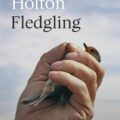
The photograph on the cover is a portrait of a man I knew in East Manchester. His name is David, and I took the photograph not knowing it would be the last time I would see him. He wasn’t well by then, although none of us knew that. He was sitting in front of the altar of a church, the place he felt most at home, and where he’d started sleeping. David’s presence and his quiet dignity resound in the darkness of the photograph. Of all the images I’ve taken, I chose this for the book. David’s expression reminds me of my father, who inspired some of the writing. The image goes to the heart of what The Unheard is about.
Anne Worthington, author of The Unheard and documentary photographer, interviewed by Richard Clegg.
Special K
It was just that as soon as Kate and I locked eyes, we were never distracted by ordinary things. From that point on, we couldn’t sit with our knees together or patiently learn the forms of obedience. We had the urge to turn ourselves out and run until we were sure it was just the two of us. Once we were aware of one another, all we could do was roam around, which meant we were never where we were supposed to be. We were laying out our hair along the riverbank and swallowing any substances we could get our hands on until the materials of the world began to stir. Kate and I felt responsible for this magic. It came from us, holding hands until our eyes collapsed together and we saw everything the same: the tilted trees, the clouds made of mercury, the auguries the birds spelled out as they swooped through the pastoral corridor.
A short story by Kelly Dignan.
Creative Adaptation: An Interview with Alec Finlay
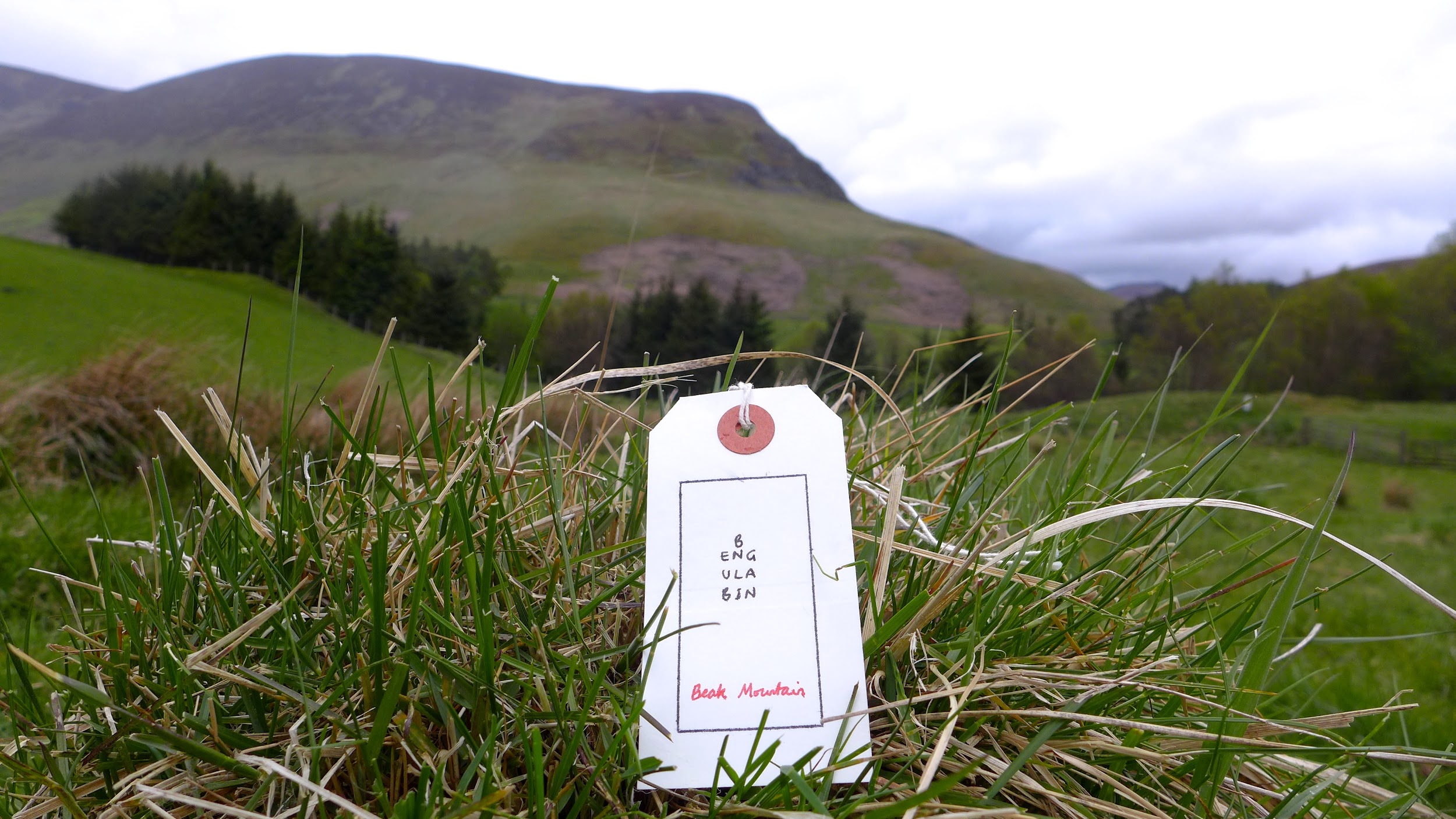
One role of art is to describe, and thereby to represent – through framing, materials, and context – and this representation includes experiences which have been erased, or repressed from shared consciousness. This becomes especially acute in a time of identity politics and the fraying of trust in the collective. The book, descriptions, is an act of witness: ME has never been represented in an accurate way, and this has been deliberate. The consequences stymie research and potential treatment. I composed the poem from 300 people’s answers to a series of detailed questions; it was the hardest, most painful project I’ve worked on, and the most personal, though only five words are mine. It’s a work of poetic collective biography.
Alec Finlay interviewed by Katy Wimhurst.

From the Other Side
On opening it, we are there, on the other side. Not in a foreign country or one mired in war, in Apocalypse Now or Platoon, not in a place seen from a helicopter or one from which you wait to be extracted by the birds, of booby-trapped rice fields, or forests full of lean tigers and venomous snakes. We are there amongst the nasal-voiced soldiers we know from the movies: those whom we can barely see and who are everywhere. We are there in the jungle, with those who talk of weariness, love, exhaustion, and desertion, who erect altars for the dead, who are fragile and terrified, cowardly or superstitious, merciless and heroic; with the bô dôï who play cards, drink and smoke wicked weed and roses, who remember college friends and lovers, the little lakes of Hanoi and Nguyen Du Street, and with those who must hide from the political officials. Here we are on the other side, and still it’s humanity.
Patrick Autréaux on The Sorrow of War, the only novel by Vietnamese author Bao Ninh. Essay translated by Tobias Ryan.

About This Duck
A duck walked into the bar. Why was it there? That’s not the point. For now, just accept these two facts: a duck, a bar. A human bar, by the way—in case you were thinking otherwise. In case you were thinking of this as some kind of bar for ducks. Not at all, this was a human bar—the clientele exclusively human, the exception being this duck that had just walked in.
A short story by Simon Pepper.

No Homage to Rojava
At the end of the 1990s, the PKK were ejected from Syria, and Ocalan was abducted by the state forces of Turkey. He has been imprisoned there ever since, the only inmate in the prison on Imrali Island, in the Sea of Marmara. During his incarceration, Ocalan’s thought developed considerably. He had begun as an orthodox Marxist-Leninist and led the PKK along these lines. In captivity, Ocalan meditated on the immense flaws in Soviet-style socialism as well as neoliberal capitalism, and sought other routes and options for his movement.
By Ben Granger.

Mice 1961 & Prison Mars
Stacey Levine’s debut novel Dra— suggested an Eastern European absurdist detained in the equally gray environs of the Pacific Northwest. Its mordant surrealism, and that of early short masterpieces like “Sausage,” bled into the later novels. With Frances Johnson and in particular Mice 1961, however, an inversion took place in which the worlds that seemed projections of the single protagonist’s anxieties, or at least the proscribed communities Levine utilizes as her canvas, went on to counter-project their mass neuroses and inane theories onto the lives of the poor main characters, whose aims are by contrast simple-hearted. Those characters display their spiritual and physical deformities like scars made by the jabs of boorish neighbors from whom they yearn to escape.
Alvin Lu reviews Mice 1961 by Stacey Levine and Prison Mars by Lauren Fairbanks.
Other Reflexes: Diana Georgiou Interviewed
Perhaps we need something different to bring about an absolute rejection {of the male gaze], one that would really make it impossible to be consumed. And I can’t say that I have the answer to that. I think queer people have fought very hard to enter fields that were otherwise foreclosed to us: from healthcare to politics to mainstream television. But this strategy of inclusion has historically, and inevitably, led to our identities being co-opted by capitalism and then resold back to us at a higher price, while also evacuating our identities of any political intent. Not all queer lives benefit from the politics of representation, and neither will their social conditions ameliorate on the basis of glossy TV entertainment. I have always been far more aligned with the politics of refusal, indetermination, and abolition, rather than the idea that equal participation and representation will transform the unjust systems that have excluded us in the first place.
Bridget Penney interviews Diana Georgiou.
No Child of Mine
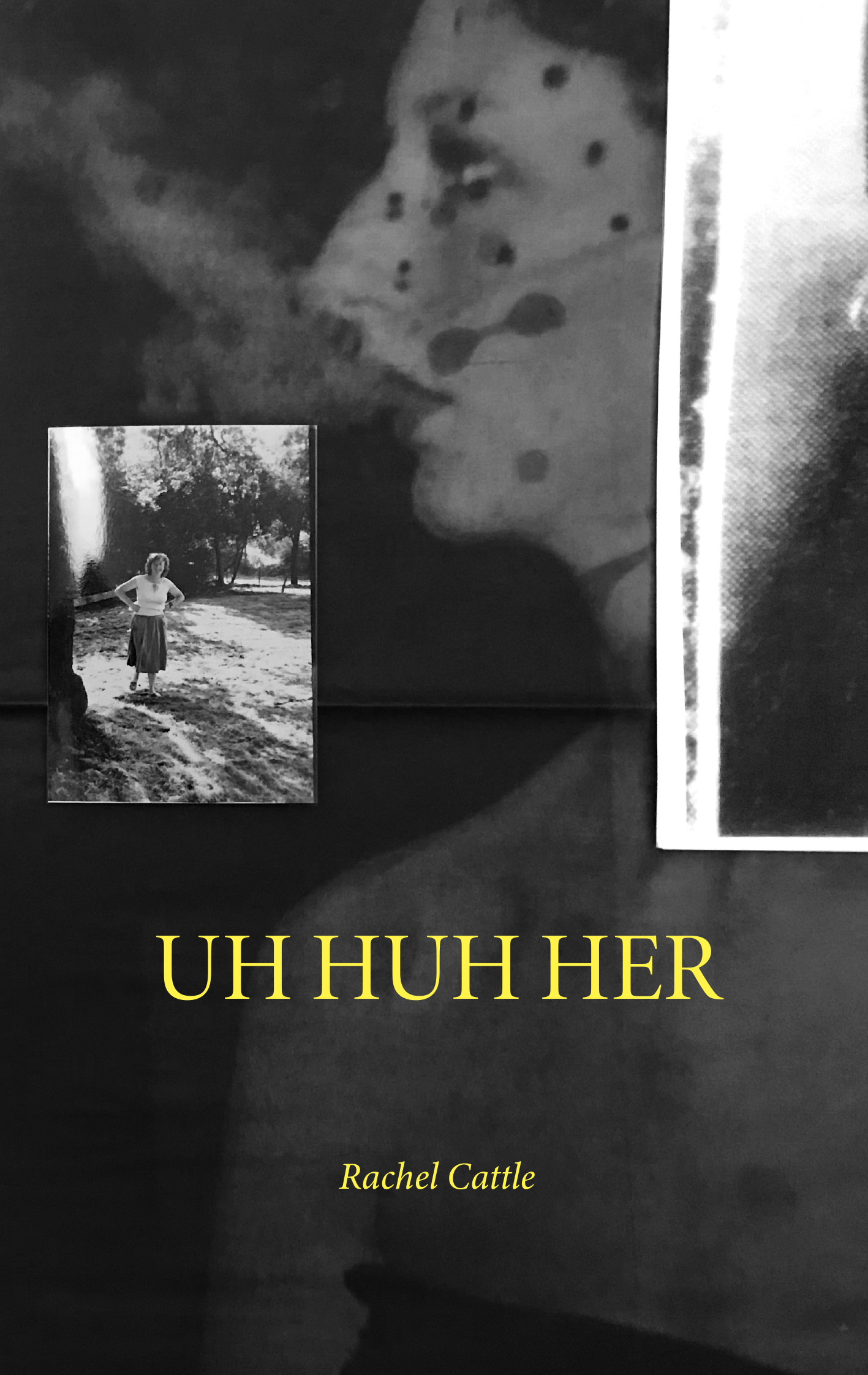
This same silence as my brother sat in the front seat next to Dad when he was at university, we would be driving him there or picking him up Dad was driving and they would be talking and talking Dad asking questions so interested in what was going on with my brother everyone always so interested with what was going on with him, I’m in the back seat deep inside myself inside the dark longing of myself looking, searching around, right there inside in the deep dark blueish blackness digging around in there sometimes right under my own skin, my fingernails so far in there I had almost gone under the deepest part of where there was no crust or core further than even the landscape rushing past the car window because if Mum held the energy of her mother after she died I hold her energy and my grandmother’s and she held her grandmother and it goes back and back and back and back into The Garden into the plastic car seat no wonder my bare legs are sweating and shining across the field across the hill the sea in an undulating heat stretching out towards glittering blue pencil lines flecking yellow daffodils and orange specs in the distance, so full of something, about the blood, the conversation, the inabilities, the exhibition, she was very quiet, we were each other’s fertile silence.
Read an exclusive extract from Uh Huh Her by Rachel Cattle.