
Cheerleading with an agenda: how the press covers science
In practice, storytelling codifies the neoliberal logic by which universities increasingly evaluate research. In her book Undoing the Demos, political theorist Wendy Brown described how under this logic, academics are made “not into teachers and thinkers, but into human capitals who learn to attract investors, game their Google Scholar counts and ‘impact factors,’ and above all, follow the money and the rankings.” This logic has been internalized by many scientists and granting agencies.
By Yarden Katz.
Speaking Gigantular with Irenosen Okojie
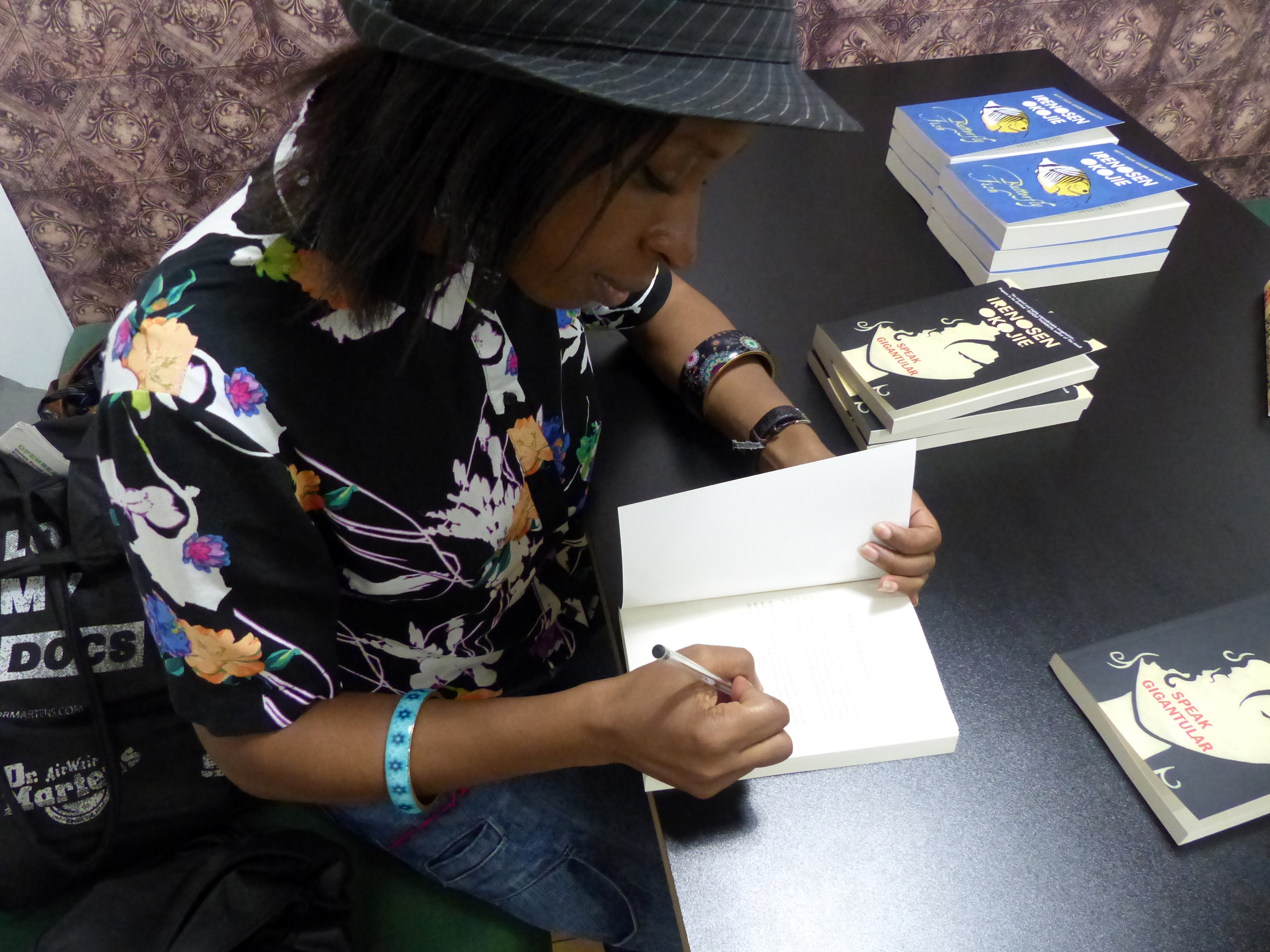
Irenosen Okojie’s prose is luxurious, rich and evocative, frequently funny, sensual. Her writing also carries a sharp bite, razor edges that cut you up if you slip into an easy groove. Her stories are fable-like in the way she anthropomorphizes animals, legendary creatures, plants, inanimate objects and forces of nature. They traverse continents, fetishes, curses, incredibly strange goings-on and serious traumas. Winner of the Betty Trask Award this year for her intoxicating debut novel, Butterfly Fish, Okojie has made a name for herself as a unique voice in British fiction.
Kit Caless talks to Irenosen Okojie for 3:AM Magazine.
The Calvinist Roots of American Anti-Intellectualism
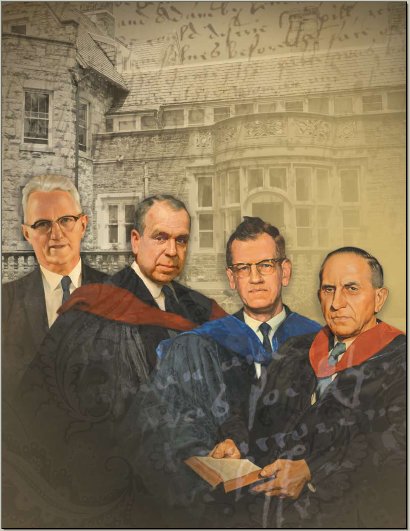
Trump sounds familiar because he is doing on a grand stage what they are told to do every day from pulpits across America. They are told to stick to their guns and to reject the evolution crap and the carbon dating crap and more generally the logic and inductive science crap, and they know that it is HARD. But here is Trump, a man who can proudly, unashamedly, stand up to Renaissance and Enlightenment-forged principles of rational inquiry and rational discourse.
EJ Spode takes down the Calvinist roots of American Anti-Intellectualism – hard.
Jean-Luc Nancy at four by three magazine
LISTENING TO PHILOSOPHY, SILENCE & SELF FOUR BY THREE MAGAZINE in conversation with Jean-Luc Nancy What would it mean for philosophy to listen? What does silence or the self sound like? French philosopher Jean-Luc Nancy talks to four by three magazine about the responsibility of philosophy, his approach to the arts, the noise of being and the difference between seeing and hearing oneself.

Reality and Its Dreams
Internal criticism, for Geuss as for Adorno, is not typically ‘productive’ in offering a solution for the problems criticized. But here he also offers a second implicit response to the charge of bleakness in developing a philosophical account of ‘utopian thinking’, an imaginative activity that addresses discontents and persistent, unsatisfied desires in the present.
John Rapko reviews Raymond Geuss‘ Reality and Its Dreams.
‘The failure of so many urban utopias’
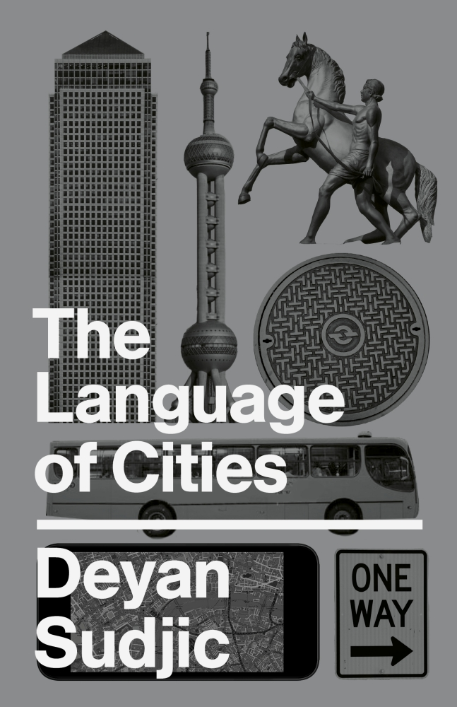
The language of city living and the urban experience is everywhere around us, but beyond new development industry marketing speak, what do such terms actually mean? At the heart of the book is a story about the socio-economic and architectural transformation of one city over the past 40 years. That city is London, the author’s place of birth and current employment, and that story about the capital is detailed, engaging, witty, and occasionally angry.
John P. Houghton reviews Dejan Sudjic‘s The Language of Cities.
A Place Free of Judgement
On 29 October 2016, over the course of nine hours, teenagers in Worcester, Telford and Cannock will be taking control of their local libraries, and performing live to a worldwide audience. Through a unique project supported by Arts Connect and ASCEL West Midlands, the group have been working with award-winning artists Blast Theory and author Tony White (above) to reimagine libraries, storytelling and their place in the world. This work will come to life in an ambitious and fun nine-hour takeover of the three libraries, starting in Telford (3pm – 6pm), then Cannock (6pm – 9pm) and ending in Worcester


Muhammad Ali Came to Tea (A Discordia Concors)
It was such an exciting moment, an honour to have this man, ‘The Greatest’, in our living room, with a bunch of excited kids outside our apartment door, in a ball, pressed up, listening, waiting to see this great man. Perhaps that is part of the power that this photograph has over me. It was a moment of shared joy and excitement for our family, an extraordinary moment, which was a rare thing, glowing for a short while before being snatched away by the act of the cut. A reminder of what our family life was like in reality.
This photograph is both that moment and that moment being taken away. It is at once sweet and painful, whole and fragmented. It is a photograph of three events spanning time. The day Muhammad Ali came to tea; the day my father cut the photograph; and the day my mother glued it back together, shortly after my father’s death. This photograph shows us all together, yet split by a fault-line. Together and not together. Both/And, not Either/Or.
Salma Ahmad Caller explores the complexity of identity through her photograph of a photograph with Muhammad Ali.

Fertiliser
‘He practices his sentences on the Vine, and is condescended to. He does not want to end up like the other boys, beyond the box trees in the servants’ cemetery. He is small and pliant (only five three) but has learned to aim for higher things, for a high life. “Life holds us like a wheelbarrow,” he says, in a sudden, high-pitched flash of coherence, “a barrowload full to wheel out and spread, whichever way it so chooses.” What he is getting at, the Vine eventually understands, what the boy is after is to end up beneath the empty plot.’
By Scott Morris.
Notes from the Enemy’s Camp: On John D’Agata’s New History of the Essay
Just what is an essay, then? D’Agata never really tells us. Or, rather, he does tell us, in 118 different riffs on his opening proposition that essays are “about human wondering.” The effect of following after D’Agata as he combs from scrap to definitional scrap is stunning. The essay is a vehicle for freethinking. It’s an experiment. It lacks confidence and brims with emotional doubt. It’s a transcript of its creator’s mind. It’s deeply deceptive, and might only reflect whomever the author wishes he were. It’s often written in the first person, or the third, but also the second, and sometimes smatterings of each. Essays are perception, indirection, failure, and experience; they’re human in their flirtation with the way things are and the way they might be.
Daegan Miller reviews A New History of the Essay by John D’Agata.

The Impossibility of Return
No one returns to a woman, as much as a woman cannot return to herself, without being confronted by what has changed — be it Odysseus to Penelope or Woolf to herself, via her double, Isabella. A person, like a place, no longer remains the same because time does not guarantee any recovery. The mirror and the glass are always in fear of being — ready to be — shattered. That shattering is also the shattering of a myth, the myth of Penelope and of everyone after her.
An essay by poet Manash Firaq Bhattacharjee.