
The Stopover
On the bus to the plantation, a man and woman with large suitcases had got on outside a car wash. The couple had sat in silence until, unprompted, the woman said, “You were selfish and got off the bus, and it hindered me,” to which the man had replied: “Safety first.” Julianne fixated on using the word hindered to express frustration, and what would getting off the bus have made the man feel safer about? She had snuck a peek at him: sweatpants and a black baseball cap. Being newly in America, her mind went to the obvious answer: terrorism. The couple were from somewhere conservative, and the man was maybe one of those jumpy Midwestern types she’d seen on international news reports. Julianne considered why she wasn’t also jumpy though, why she was moving to America at all.
A short story by Hannah E. Joyner.
The Rachel Condition
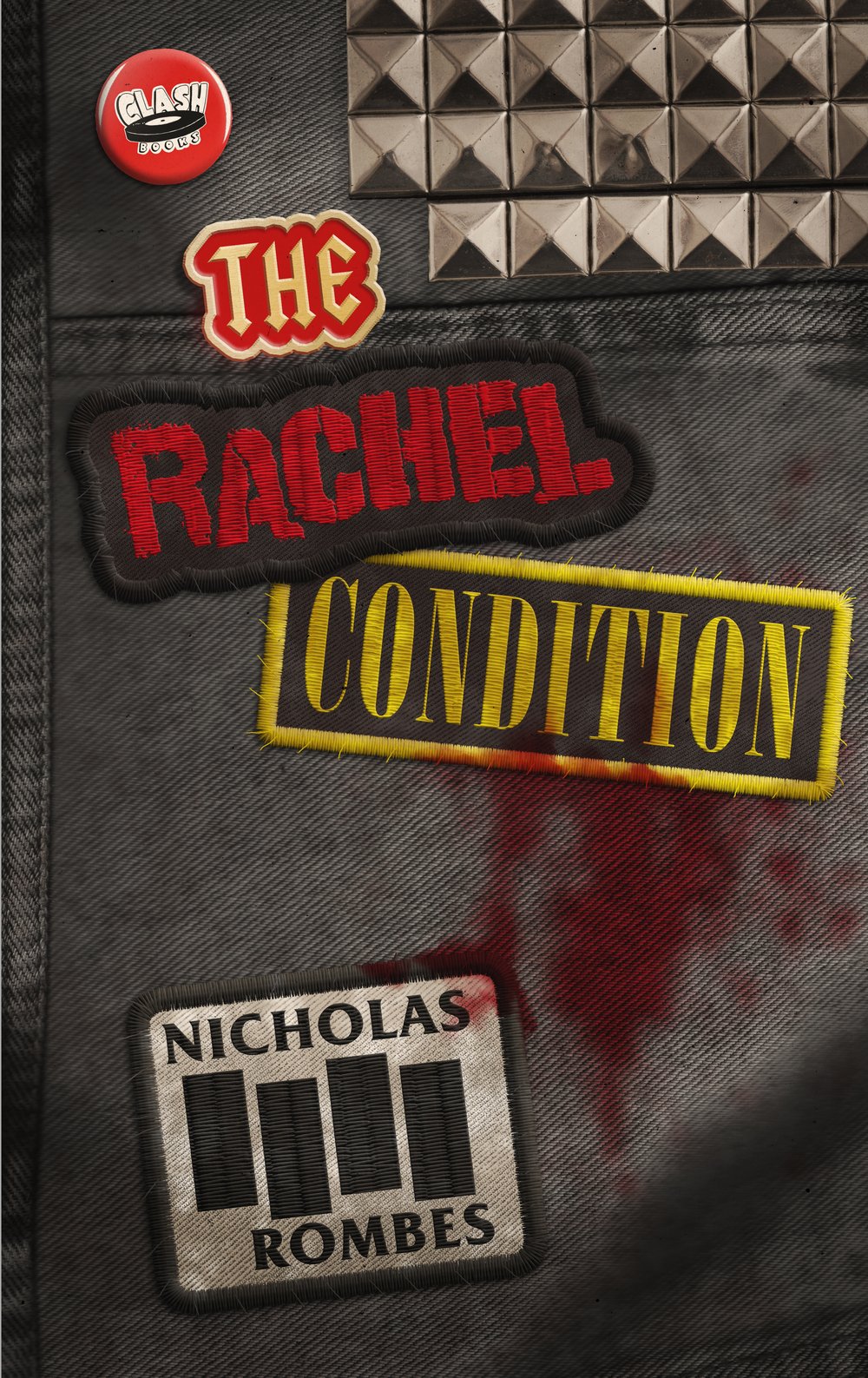
The threatened moment arrives, after the aforementioned letter, in the book’s magisterial closing sections, where a nested novel, with accompanying commentary, finally makes its appearance and disintegration initiates at the level of the image and the word. In the stark mystery of this penultimate section and the brutality of the finale, Rombes takes the step, where previously there had only been a kind of void, of showing us what lies beneath, with dread and incoherence intertwined in a monstrous embrace.
Alvin Lu reviews The Rachel Condition by Nicholas Rombes.
Intertitles (extract)
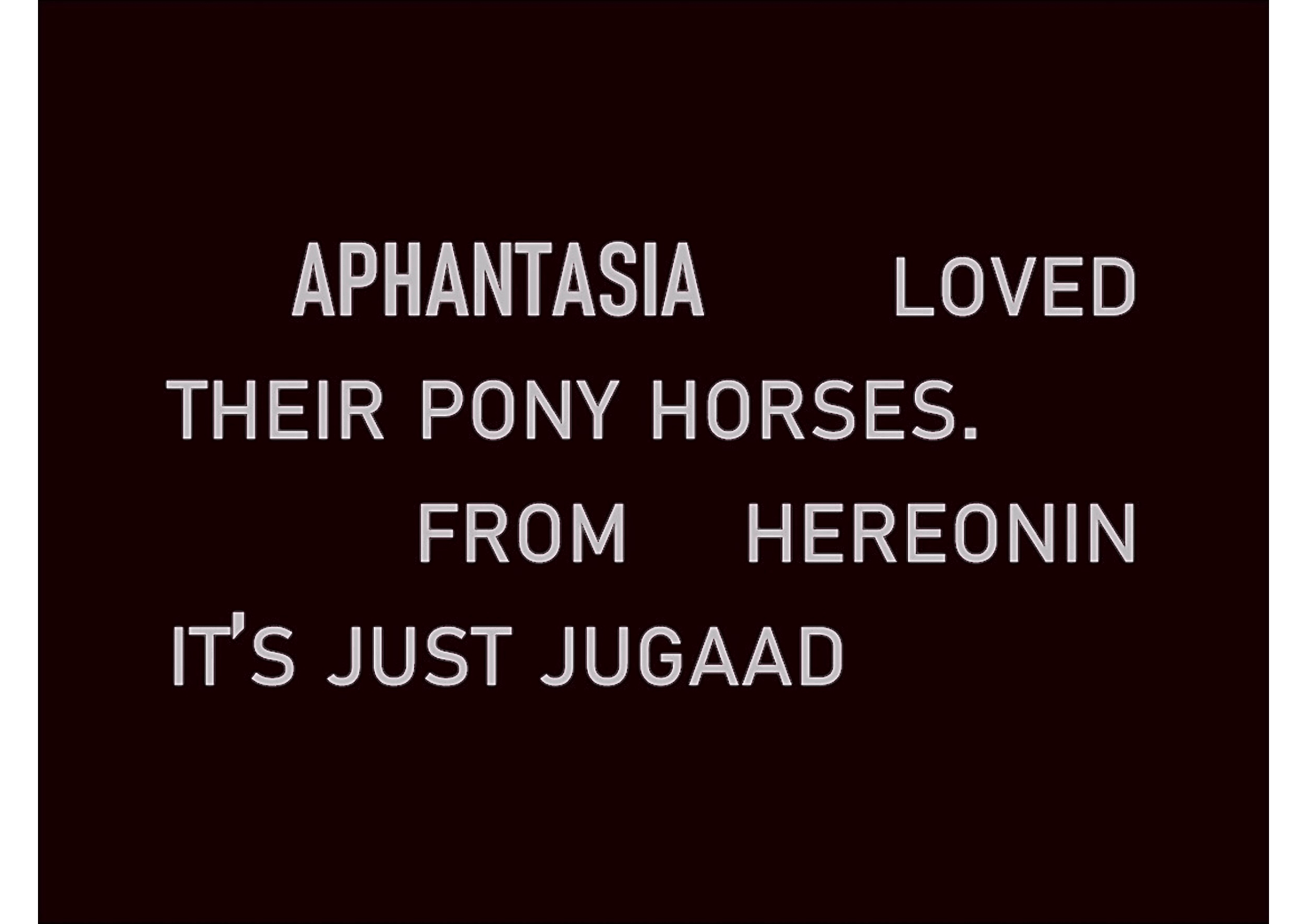
Intertitles is a sequence adopting the aesthetics of the between-scene cards in silent films. These narrative poems thus induce the expectation of the visual leaving the viewer-reader, should they so wish, the opportunity to augment the picture-story.
New Poetry by Martin Wakefield

Pilling a Fast One
In the morning you slip a blue tablet under your tongue and it dissolves before you can chase it down with sparkling water. Your hangover is gone and you sit at your computer and draft a chapter of your next novel. It’s like each of your fingers is a magic wand and the piece unfolds like a conjuring. It’s better than good, the characters more than lifelike. You send it to your agent and she calls you, actually uses her phone, her vocal chords, to tell you fantastic.
A short story by Homa Mojtabai.
Minute 9: Night Train
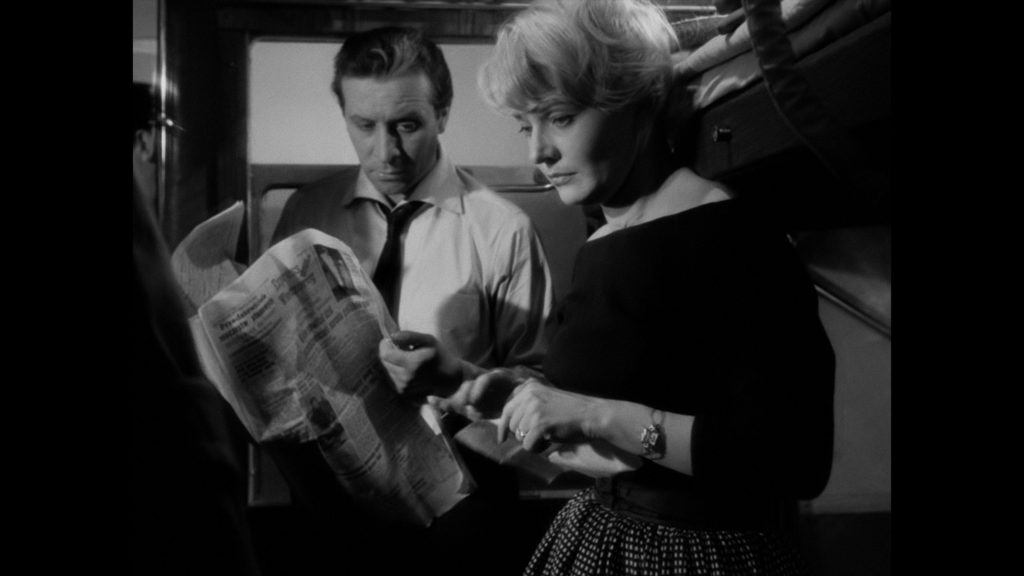
The final shots in the movie are not of the passengers, but of the train, now deserted in the early morning sun at a rural station by the Baltic. The compartment we entered together with Marta and Jerzy in minute 9 is empty. There are rumpled sheets on the berths; an empty beer bottle sits on the compartment table next to a discarded newspaper and some crumpled tissues, and then the empty carriage rolls slowly past the camera to its siding. Once again, a night train has brought its passengers safely through the darkness. Whatever they do with that fact is up to them.
Marcel Krueger on Night Train by Jerzy Kawalerowicz.

Transmigrational Defences
Gregor Samsa hides under the sofa, eats rotten food, and crawls around his empty room. His life appears utterly pathetic, but only in the context of a civilised expectation. Gregor Samsa’s metamorphosis is evidence of a man altering his state to escape the drudgery of an unfulfilling and bureaucratic reality. People are finally doing the same — rebelling against the paperwork which mutilates the mind, erodes the soul. They are rebelling against society’s body. Reality bends to suit. Gregor Samsa is a hero. A fantasy of corporeal freedom.
Read the introduction to a new edition of The Metamorphosis (Translucent Eyes Press) by Chris Kelso.

Love the World or Get Killed Trying
At the moment I think my brain is limited to autofiction, maybe because I experience life so intensely, emotionally, that it’s hard for me to step that far outside of myself. I just don’t see how I’d manage to write a novel in that way. Perhaps I could do what Sylvia Plath did in The Bell Jar and change my name to Aurora, Isabella, or Estelle and pretend it was a traditional novel, but that’s about it… On the other hand if I change as much 20 years from now as I’ve changed in the last 20 years, who knows?
Rob Doyle interviews Alvina Chamberland.

With and Against
Such a reading breaks with a strictly materialist view of political economy and insists upon reading capitalism through aesthetics. In approaching the concept this way, Routhier strives to understand aesthetics not merely limited to the domain of art but a crucial component of capitalist domination, particularly in contexts such as ours where our experience of reality comes from a screen in our pocket.
James Rushing Daniel reviews With and Against: The Situationist International and the Age of Automation by Dominique Routhier.

Mary Counts the Pearls
Once the big men leave, I begin cracking the bivalves, which comprise the catch, and making two piles from their halves: ones with pearls and ones without. This process kills the bivalve. When I’m done killing the bivalves, I throw away the empties. We are behind on our trash bill so I pack the empties into brown lunch bags which I bring into the city center and set down on a bench in the park. I sit in the park on a neighboring bench and stare at my watch periodically over the course of an hour. When an hour passes, I throw the lunch bags filled with empties into a park trash can, making a big show of shoving them in before leaving the rest to spill over the top. When I make my way back to the facility, I collect the halves of the bivalves from the pearls pile and deliver them to Mary.
A short story by Matthew Dix.

The Unreliable Nature Writer (Extract)
What are we supposed to do out here now? I feel adrift without him.
We’re going to need inspiration. We’re going to need that feeling he gives us. Is there some other muse on one of the other sites do you think? Maybe they’ll bring one in?
Oh yes! Maybe there’s a back-up muse.
They really should have a back-up muse.
Oh well, I think it’s incredible that they’ve got one at all, especially one like him. He’s amazing.
Yes, and no one would keep a back-up muse; it’s just unheard of. Too costly. Having one like this is such a privilege.
A short story from the upcoming collection, The Unreliable Nature Writer, by Claire Carroll.

Collected Poems
We tend to convince ourselves that we are the smartest and biggest beings in the universe; I find that quite funny when you realise that we rely on everything else as a reference to define ourselves. From the rodents you come across to the things you choose to keep on yourself — everything about us is made up of other things, so I think it’s safe to assume that they are fuller creatures than we are.
New Poetry by Danica Ignacio.

The Trains of Europe (Review)
Though at 245 pages The Trains of Europe is not particularly long, it offers many things: it is a disturbing vision of Europe in ruins; an exploration of the tenuousness of human relationships; a transnational love story; a glimpse at the avant-garde marginalia of the Berlin art world; a self-reflexive mediation on the form and function of fiction; a physics lesson on thermodynamics, entropy and the arrow of time; and a history of the trains of continental Europe. It is also an audacious experiment in literary form, combining modes as diverse as myth, realism and speculative fiction, as well as in narrative construction, for this is a novel that is structured in reverse.
Eoghan Smith reviews The Trains of Europe by John Holten.