
The Trains of Europe (Extract)
During the first months in the city she found herself texting her old friend Camilla back in Oslo, but increasingly her reports from home seemed so terribly vapid they made Sybille feel trapped — as though Camilla’s uninteresting life acted as an obstacle to Sybille returning to Oslo even as her escapist plans in Berlin feel somehow blocked. The result is that these Facebook Messenger chats seem to take place in an awful, claustrophobic non-place. Even now she can’t imagine returning there, to the boring bars and crushing routine, the faces she always has to pretend not to recognise, the forced estrangement from other bodies in space. And yet at the same time she knows she will eventually, inevitably, one day return.
Read an excerpt from The Trains of Europe by John Holten.
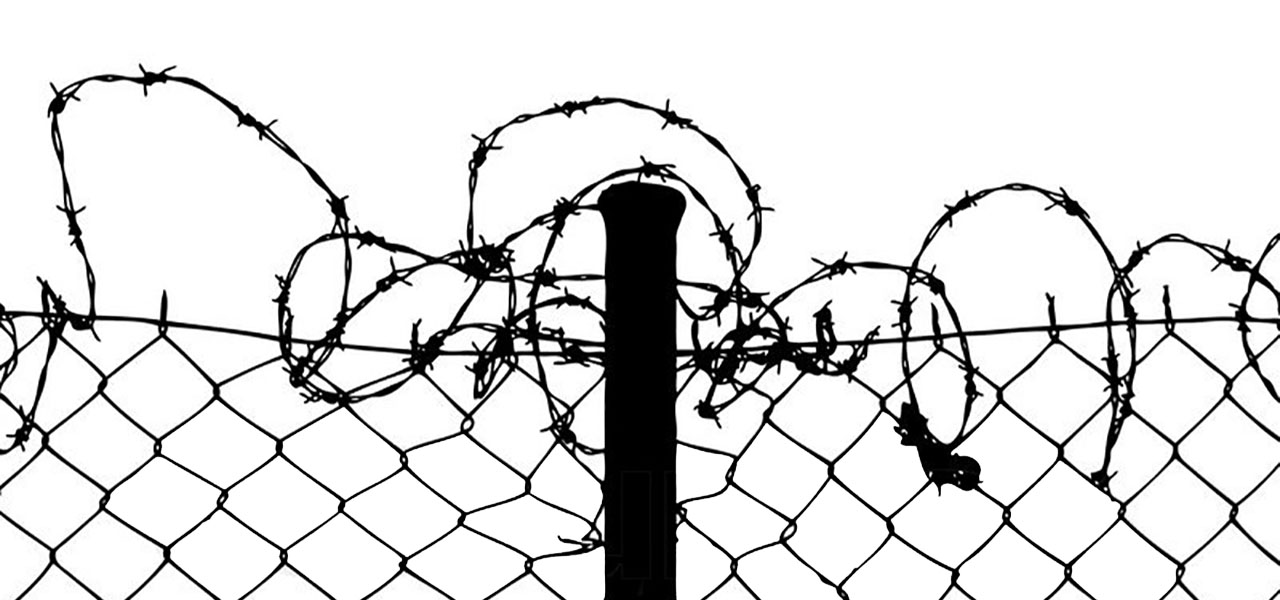
Barb City Manor
I never worked my first job at the house barb wire came from. That was in high school. We lived in a little rented place and barb wire came from an old mansion two blocks down. I could walk there in three minutes, but I didn’t. Performance anxiety, social anxiety. The training sessions went badly. I mumbled too much, my posture was awkward. I didn’t like the touch of the brass faces I had to tug to open doors and cabinets. The metal was cold, I expected cobwebs; as soon as I slid my fingertips up their mouths I heard a sound, a groan or simply a noise, for which there was not always an explanation. Each room had a clock with a chime so low it seemed to come from elsewhere—from inside my body, perhaps; not from works concealed by a sky, a sun, and a moon. The door to the conservatory opened itself. The palms had a Victorian rectilinearity. The horse in the attic didn’t move. It was snagged on a barb wire fence.
A short story by Addison Zeller.
American Cipher: Bret Easton Ellis at 60
For all the smoke and mirrors about serial killers and the nods — some sly, some not — to the horror films Ellis so clearly adores, The Shards is essentially a desperately sad story about a kid growing up queer and trying to deal with it on his own. In revising Less Than Zero’s portrait of the artist as a young man, it’s also an implicit admission that he became trapped by the false image he created and so became “a man who stayed a child.” This is the trauma Ellis has spent his career since Lunar Park trying to process; the rest is just noise.
Bret Easton Ellis at 60 – come celebrate with Stu Hennigan!

On my heels
On my heels, following, I can hear them, they’re after me, I’ve always known, I could always tell, but told myself no, those are the footsteps of other people, they are after somebody else, following somebody else, now I know there is no one else, they can’t have been following or ever followed someone else, always after me and me alone, that is who they want, what they’re after, I know, I can tell, listen, so close, where are they, so close to me, clamouring, reaching out, almost to touch, nearly within reach, whether I am crawling, or climbing, or clambering, or standing, now and again, from time to time, on occasion, I feel them, feel their touch, feel the grazing contact of their claws or fangs or whatever they might be snapping at my heels, but they aren’t there whenever I turn my head aside to look, but that doesn’t preclude them from being there, no, as I can only turn my neck, my head, so far as to get a glance of them in my periphery, I cannot turn around fully, I cannot make my neck bend one hundred and eighty degrees, and so see what is directly behind me, beneath me, at my heels, I cannot stop and turn, I cannot turn around, they will pounce on me in an instant, the second I stop, before I am able even to turn, they will be on top of me, they will have brought me down…
A short story by Sam Glover.
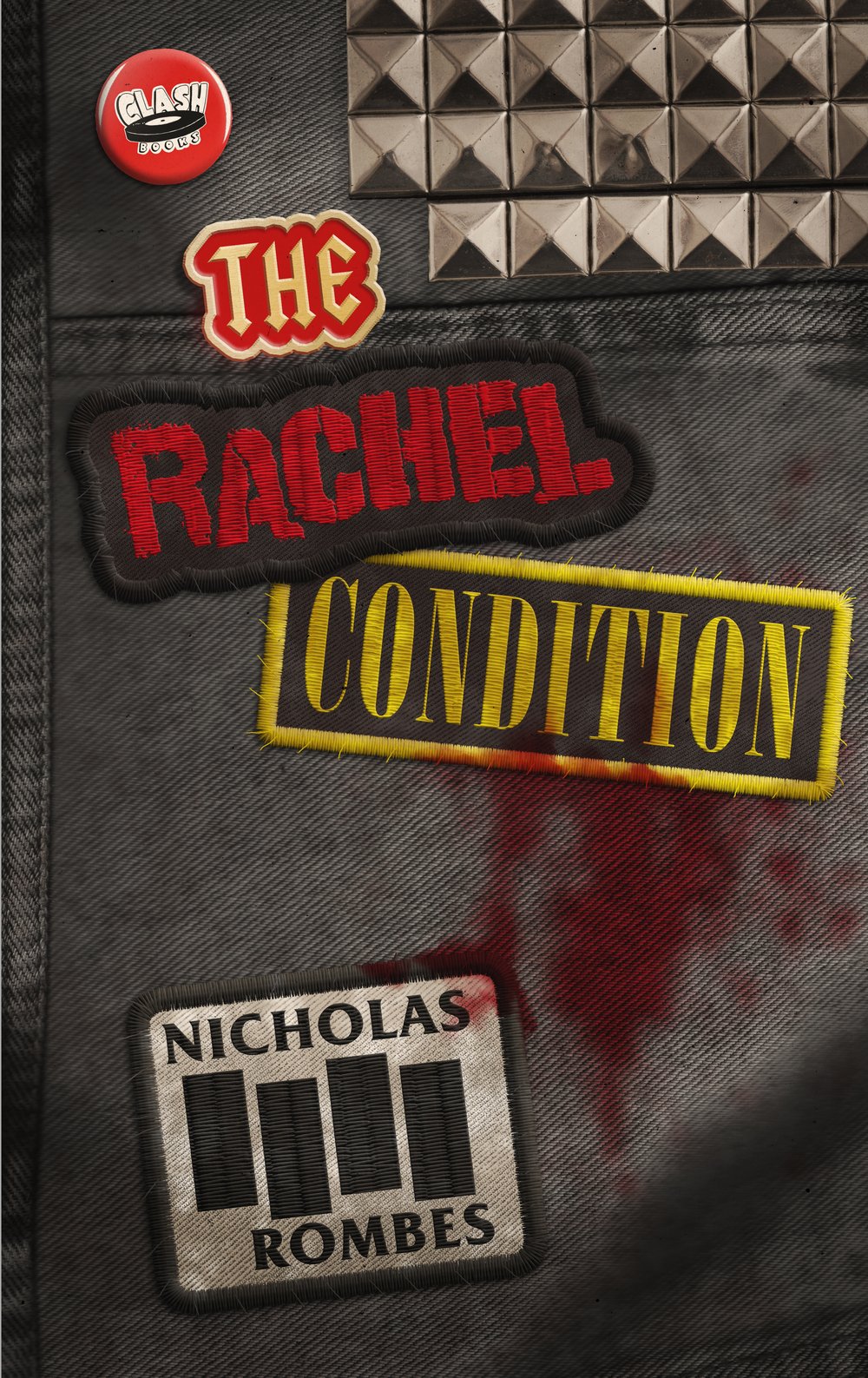
The Blackness Behind the Blackness
They set up their instruments as if walking on the moon or in a vat of invisible molasses, their hair hanging loose and stringy like black threads or beaded into some ropey ponytail, their fingers more knuckley bone than flesh. Of course they were dressed in the usual black, but such a uniform and unforgiving black as if their clothes had soaked up the night. There was a blackness behind the blackness.
And there was a sound behind the sound. The silence behind the silence.
The blackness behind the blackness.
Read an extract from The Rachel Condition by Nicholas Rombes.
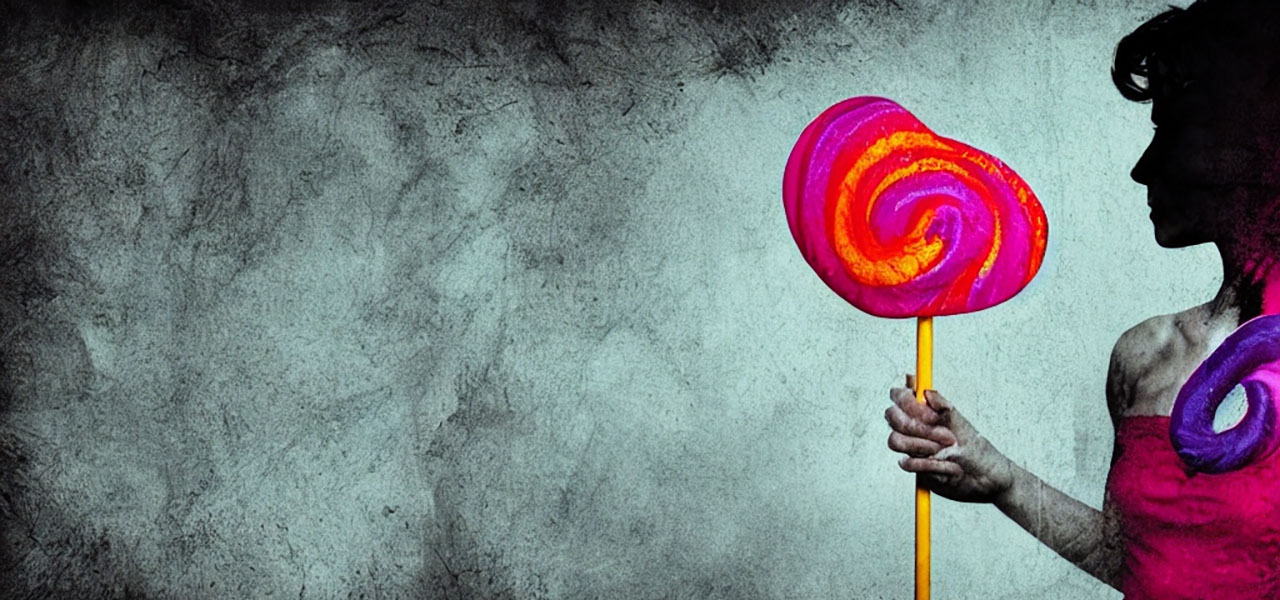
The Giant Orphan Girl
The giant orphan girl stood at the entrance to the carnival, handing out lollipops.
Lolly? she said, tap dancing.
No, said every single person who passed by. Mothers hissed. Children latched onto the giant orphan girl, swinging from her shoulders until she lost balance and fell to the ground. Also, they stole her lollies.
A short story by Skyler Melnick.
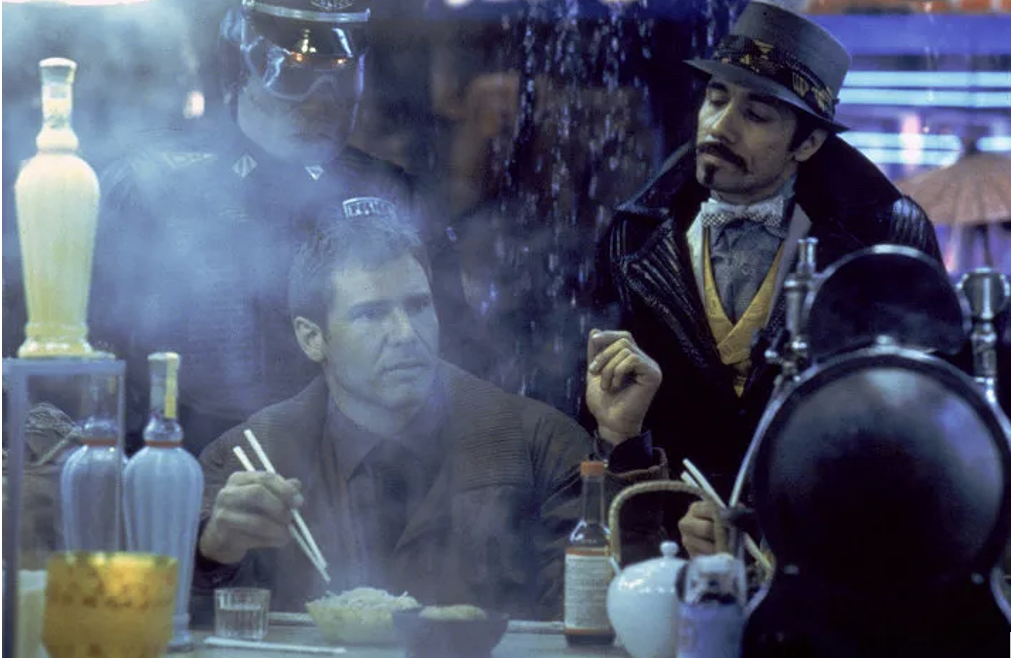
Minute 9: Blade Runner
Torrential rain and flickering neon, pedestrians of miscellaneous ethnicities bump umbrellas, struggle through tight alleyways between a downmarket electronics store and a line of crowded street-food stalls. Seated at the counter of a sushi bar, close-up on his face and open shoulders, an unnamed man in a noir-style classic trench coat rubs the splinters off his chopsticks. Behind his right shoulder appears a uniformed torso with a police badge pinned to a bulky stab-vest. The cop has a deep bass voice…
By Des Barry.

The Saga of William Soskill
On the first day of the first month one year after his parents bought him his first bicycle William Soskill a boy of below average intelligence had his skull fractured when a one-eyed bald eagle dropped onto his head a one-legged pit bull it had abducted from a junkyard in Brooklyn.
A short story by David Sheskin.
Heil Bukowski!: The Nazi Letters That Never Were
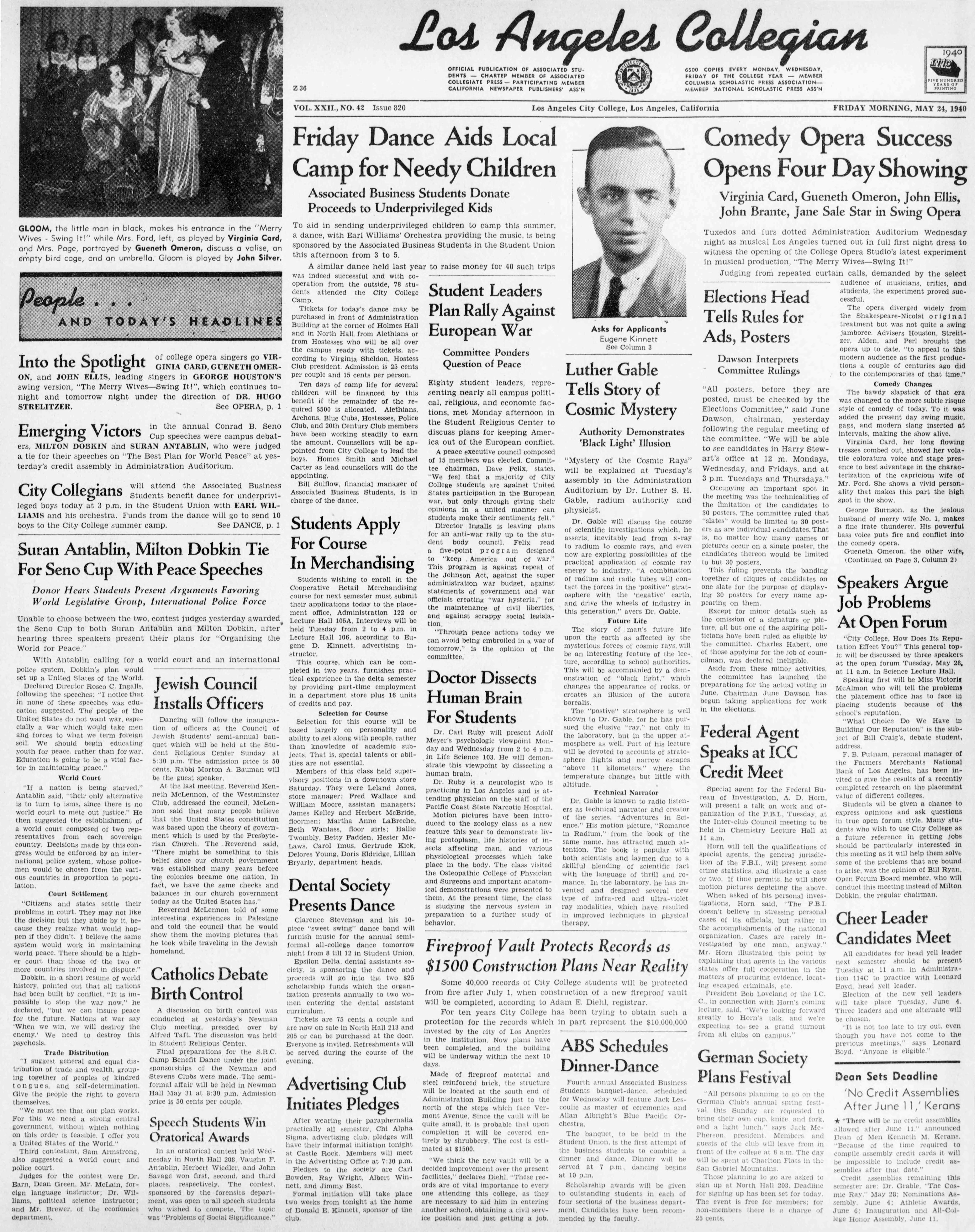
As luck would have it, I came across a relatively tiny database with a large number of Los Angeles Examiner and Los Angeles Herald Examiner issues. A perfunctory search yielded no results at all. I remembered that Bukowski’s father was mad at him for signing his piece as “Henry Bukowski” in a 1940 Los Angeles Collegian issue, his first known publication ever. I tried several variations of the Bukowski name and, lo and behold, there they were, three letters by a “Henry C. Bukowski, Jr.” I clicked on them and sure enough those were the elusive letters Bukowski had mentioned in interviews and poems, lying dormant for God knows how long in that small database no one had ever heard of.
By Abel Debritto.

Instructions for Shooting
close-up: of hand over hand, tentative, a brief squeeze, one of them disengages as the camera pans up to find two people crying, we can tell from her expression it’s the first time she’s ever seen tears on his face but not the first time he’s brought them to hers…
A short story by JP Seabright.

these gosh darn rubberneck blues, a silent salute and neighbours
These poems seem to stem from a curiosity into the overlooked. They address all the typical topics in this life of grief like beauty in decay and our own occasional idiocy but from odd angles, motivated by this unspeakable compulsion to admire even the most bizarre beacons.
New Poetry by Abbie Doll.

It’s All About Love
You see, before I met Charlie, I lived in a world I didn’t understand or trust. I still don’t, in fairness, but back then I really didn’t see the point of anything. The bad thing—that happened when I was a kid—influenced this to a certain extent, but it would be remiss of me to attribute all my shortcomings to that moment. No, my perception of the world was shaped over many, many years. Don’t worry: I’ll spare you the details of what molded my personality. Just be assured that those experiences left me feeling very disillusioned with life. It was all aspects of life too, not one thing in particular; not the big or the small, or the irrelevant, but everything. Everything just seemed so empty and stupid and pointless.
A short story by Christopher Farrington.