
Les Story
Les was fat with crooked eyes and messed-up teeth. And he told me he’d died at age twelve. Died in a bike accident, revived, died again, and revived once more at the hospital. He was grown, but the trauma from the accident made it so I had to drive. “Take me to Waffle House,” he’d say. “Four more jobs before we go home.” He tried to monitor my every move too. Like when I took a call or got lunch. And he hated everyone: Black people, runners, bikers, fast-food workers, women.
A short story by Charles Mines.
Memory, Sleep & Getting Started
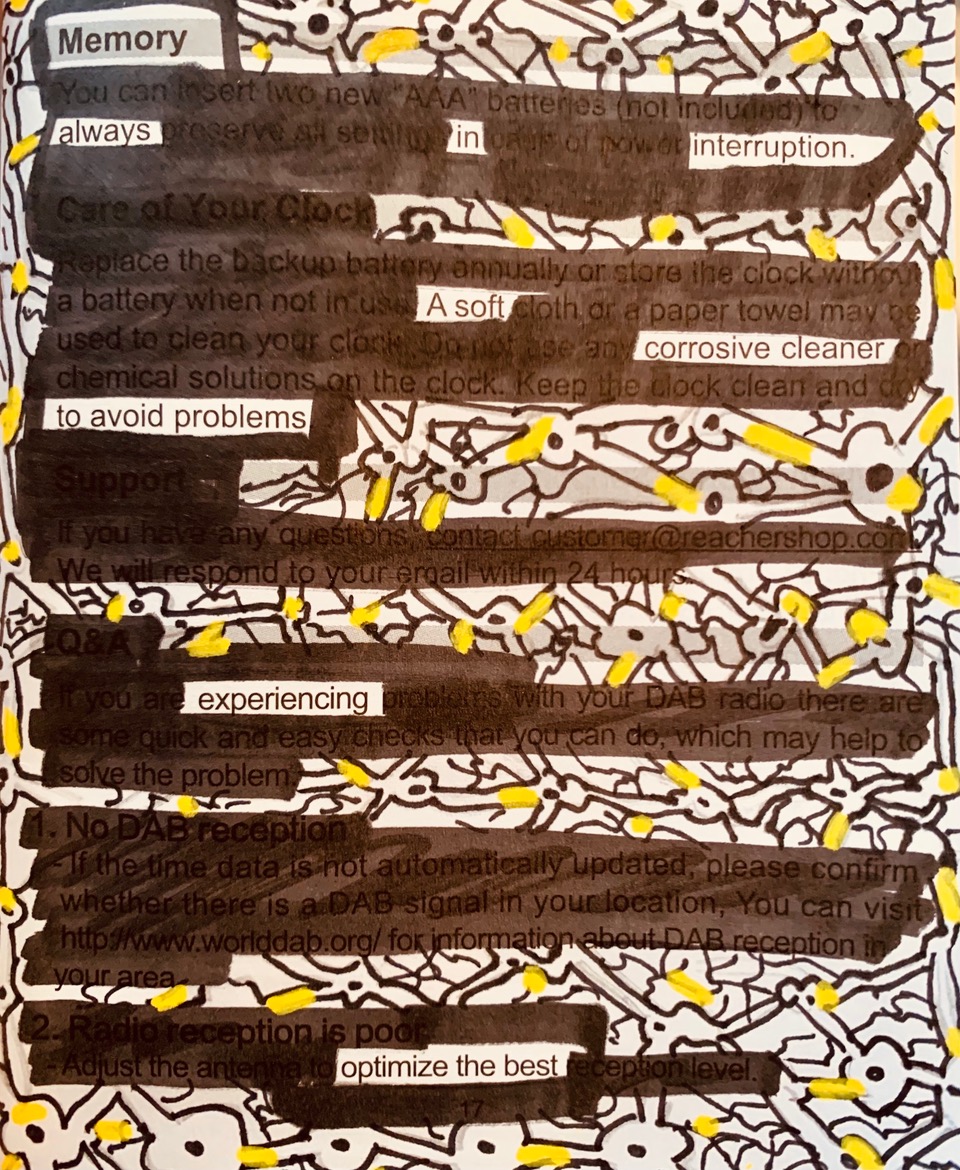
Each of us must remember or is forced to forget parts of our existence. Mine is a reflection on this self- defence or improving/way out mechanism guided by our neuronal connections. A way of survive switching that internal and consequentially our external links and relationships. A continuous way of changing and developing our lives.
New Poetry by Dario Roberto Dioli.

Furniture
He liked to show me things and he liked me because I behaved like I liked to be shown things. Because I behaved like I liked to be shown things he showed me more things, he showed me the town and he showed me the coast and he showed me the cycle route worth cycling. And then he told me about the tides and the wind and I said Ugh the wind and he said That’s how it is and I said: Yeah. Later on he showed me his house and he showed me what he’d done to his house and while he was showing me his house he told me how he’d acquired the house and how he’d worked on it and how in working on it he’d saved it, yes he’d saved his house, did he want to do the same to me. I don’t mean to give the impression that this was a thought I had at the time, it was not a thought I had at the time and in fact it did not occur to me until I started wanting to smash things after seeing him. In his house there were many things to show me, that was the way. By the way that was always the way.
A short story by Emilia Ong.

Orpington to London Victoria #12 – George Berger Column
I’ve felt pride and shame, and also felt incredibly small when considering how many other people could — and should — write completely different stories with the same chapter titles. All those commuters, all those adventurers, all those rebels who burned brightly like Kerouac’s roman candles. The mad ones, the sane ones, the unhappy ones and the ones whose joy and purpose lit a flame that we all may see a little more clearly. The heroes and the villains. All with their own private stories, unrealised memoirs, crammed into those suburban cattle trucks as they rushed through the suburbs with varying degrees of purpose.
George Berger reaches the end of the line.
Strangely, Disturbingly, and Disgustingly Human
His head has been cropped out of the frame but we can see his skinny torso, the scar tissue from self-inflicted wounds on his chest, his tiny nipples, and his left arm with jutting veins. He wears a short black skirt hitched above a new and disturbing zone of an impossible erogeny, of supernumerary body parts, of polymelia and polyorchidism. This is the surface of Carter’s challenging and pathological eroticism and yet it is a construction of zones that produce an energy of depravity and disgust.
Steve Finbow reviews The Practitioner by Michael Carter.

Automatism
My father was a good man, yes, he was a good man, certainly he was good, everyone could see he was good, thus a good man, but this is what happens to good men, so I’ve been told, yes, good men, it’s always what’s happening to them, it’s that good men, they always leave. No, sir, thank you, I’m okay, I’m okay here in my bathing suit barely covering my nethers, I’m quite alright out here on the beach, you can keep moving, you and your wife who I adore, please keep moving so I can watch out for the good man. I’m okay, I promise everything is alright, I say to my interlocutor as he passes. I must find Virgil, he will know what to do, he will know about good men, about finding them, he will know, I hope he will know about good men and finding them.
A short story by J. Billings.
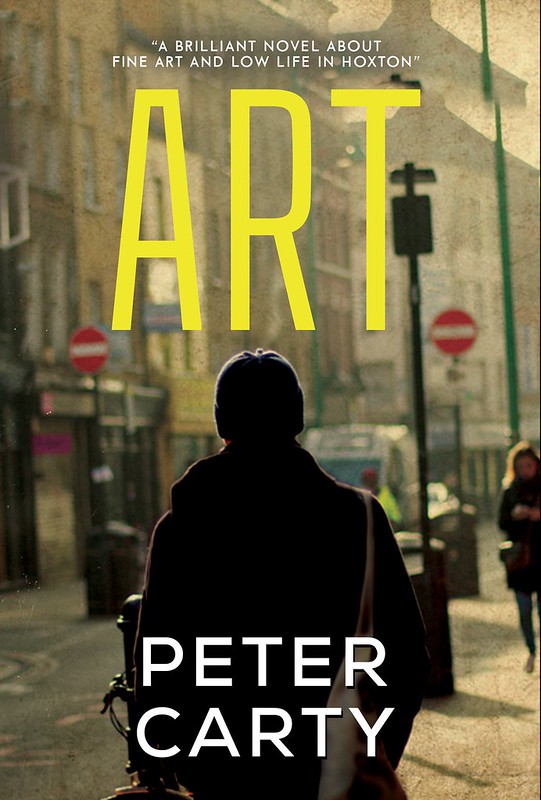
R. Mutt in Hoxton
Ars longa, vita brevis — this is the tragedy at the novel’s heart. It should be underlined that the best art really does last for a very long time. We are still living with the art and through the art that the Hoxton and Shoreditch scene gave birth to. Over the past three decades it’s been one of the most prominent cultural influences on London, and it has risen to become a formidable driving force behind huge amounts of global art and culture. Who would have thought that could have emerged from all that poverty and craziness enacted in those crumbling old warehouses back then?
Peter Carty on his debut novel, Art.
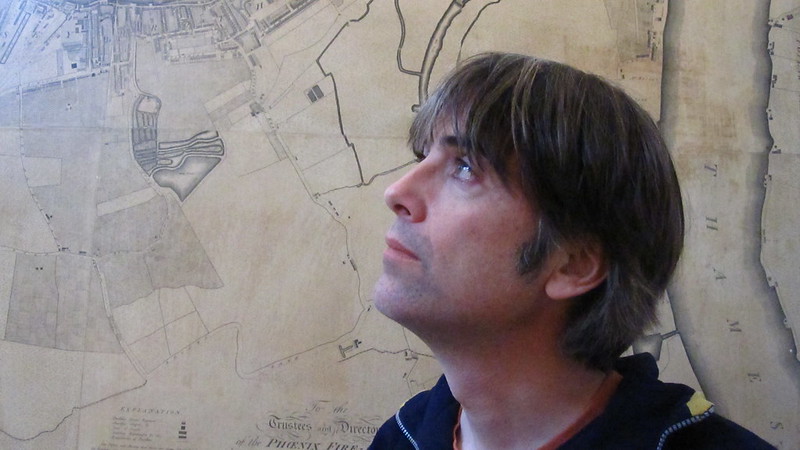
Negative Degradation
They had nothing on him now, those evil fuckers outside. Let them malign him as much as they wanted with their slimy serpent tongues, he was out of here, hallucinating or not. He put everything else back in his pockets; that took a while but it was quicker than taking it all out — it reminded him of re-packing his bags at the end of a holiday and how much easier that was than the packing before setting off. Then he unlocked the door and walked out, striding boldly towards the wash basins.
The lavatory was empty except for a fair-haired youth in a striped T-shirt of blue and white hoops. He turned from washing his hands to stare at Billy, and then into the cubicle he had left.
Read an exclusive extract from Peter Carty‘s debut novel, Art.

A British Distance: Lars Iyer Interviewed
It was only by discovering a British distance, perhaps a class distance, with respect to the high cultural stuff I venerated that I could find a persuasive voice in fiction. Because fiction doesn’t need to be ‘high’: it doesn’t have to resemble Nerve Scales or The Malady of Death or The Stream of Life or To Live the Orange; it can be written in the prose of the world — our world, and be populated with people like us.
Markku Nivalainen interviews Lars Iyer.

Orpington to London Victoria #11 – George Berger Column
In hindsight it’s clumsy, hopelessly over-romantic and not a little squirmy. But Brixton in the early 80s held the ultimate trump card for me. Whatever its faults, Brixton was always alive. And when you’re young, you have a spiritual duty to savour being alive, to suck the marrow from the bone, to make all your glorious mistakes and magnify every emotion until it feels like your heart will burst. To revel in your own genius and that of others — to experience as much inspiration as your heart can handle. Otherwise, why bother at all?
By George Berger.

Nagasaki Soul Huffer
One tiptoes, cringing, through a sordid isle
awash in nowhere’s grim, un-Englished sea.
Here scuttlebutt alarmingly reputes
our Prophet-Shaman-Seer to be marooned.
Those sightings of his sole anomaly
least burdened with implausibility
are clustered ’round this slough of mute despond.
By the mighty Tom Bradley.
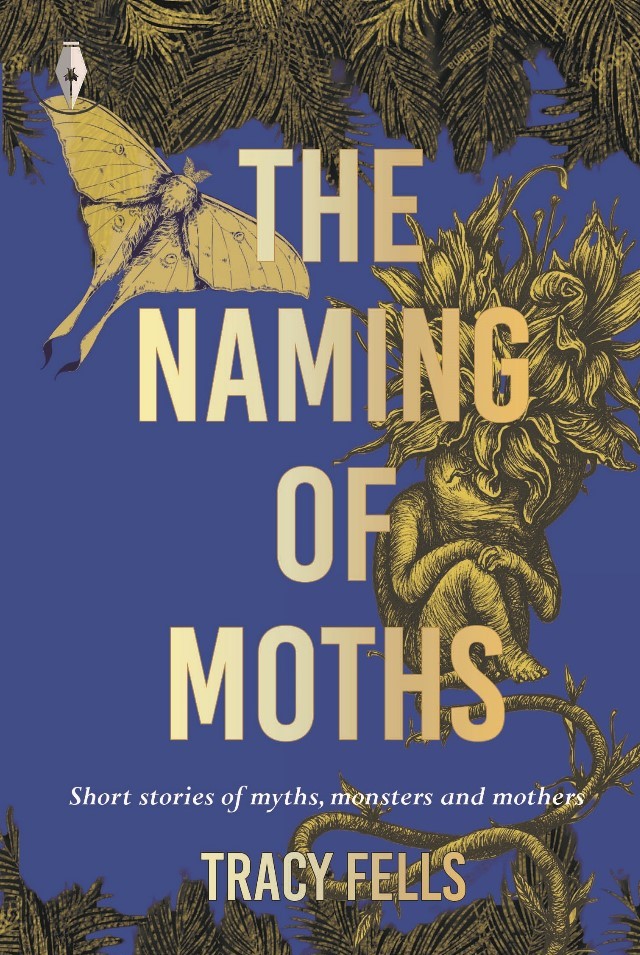
The Naming of Moths: An Interview with Tracy Fells
As an only child, I spent a lot of time entertaining myself and began creating stories about objects around me. I remember announcing I would be a writer at about age six, when I started writing stories to be read out in class, but then life (career, motherhood, etc.) postponed that ambition till my mid-forties. A side-effect of leaving my twenty-year career in clinical research was freeing the head-space needed to seriously start writing, but first I read and discovered many wonderful short story collections. Angela Carter’s The Bloody Chamber was an epiphany, giving me permission to write the stories living in my head. Until then I’d not known magical realism was a ‘thing’. Carter’s fiction launched my writing career.
Katy Wimhurst interviews Tracy Fells.