Going Champing
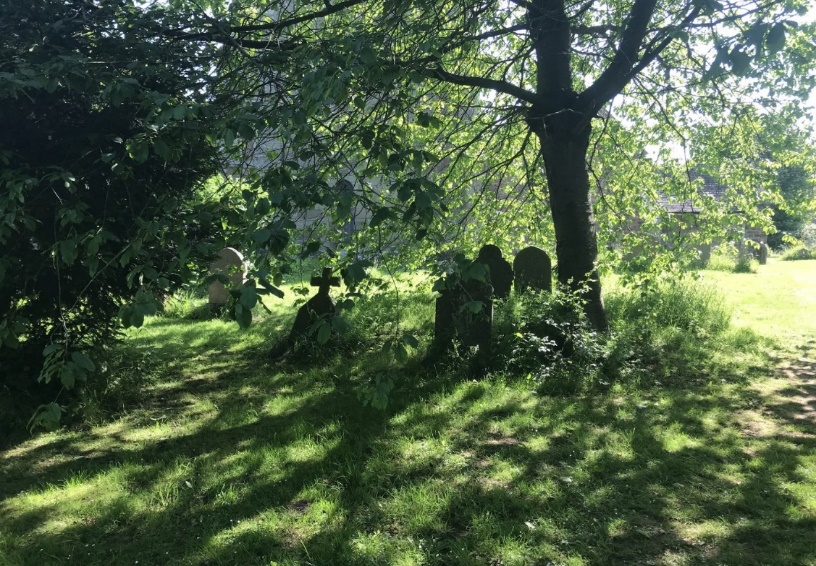
At first, our conversation took an unsurprising route. We sitting in a graveyard on a long summer’s evening, about to spend a night in a church. We were at the age where death and the rituals that engulf it were as central to our navigation of the world as what to have for tea; perhaps more pertinently our recent engagement with them had been both emotionally heightened and compromised by the pandemic. So we chatted about the deaths of loved ones and the funerals we’d been to, we chatted about the process of dying, the intractability of grief. Indeed, it seemed for a while that this was the dialogue to which all champing must lead. Then we heard it.
By Charlie Hill.
Minute 9: Solaris
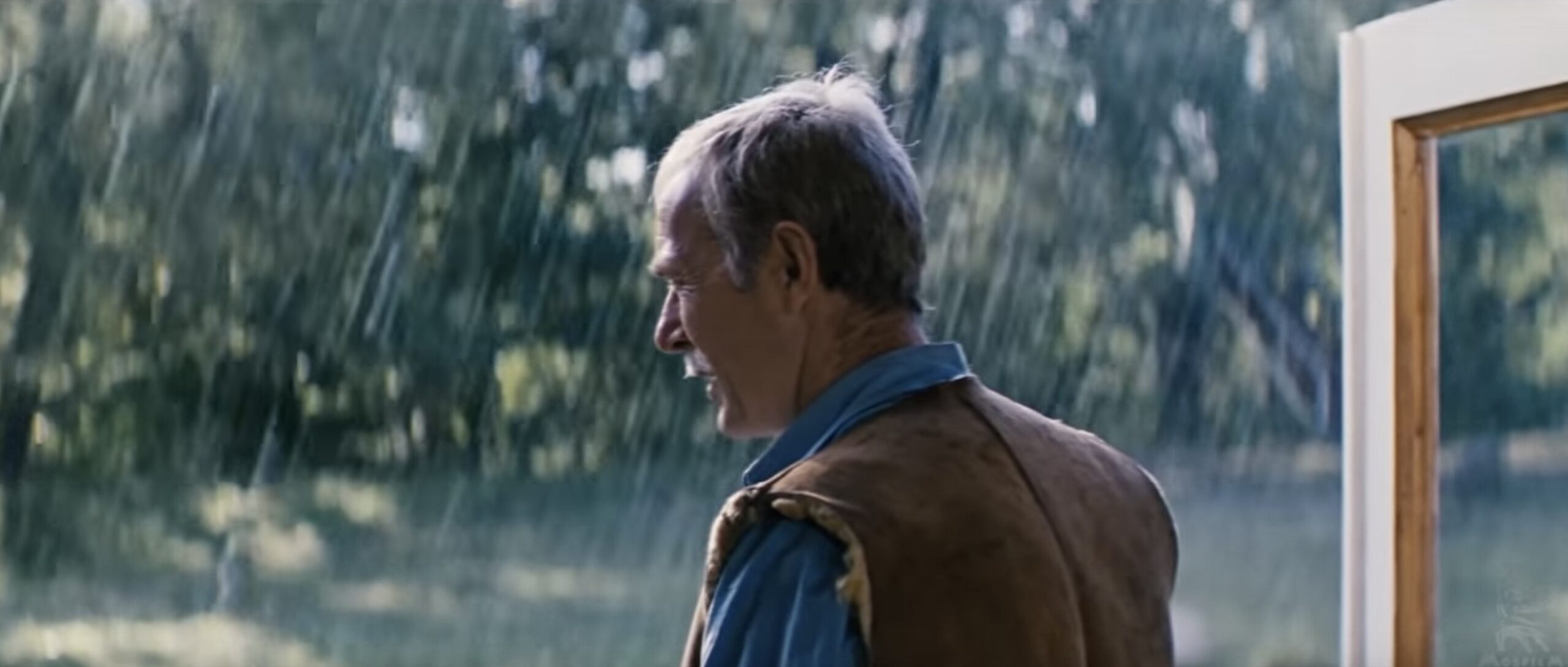
The engine powering this parade of off-kilter lookalikes is the planet Solaris itself. It shows a disconcerting penchant for reaching into people’s minds and fashioning physical manifestations of whatever it finds there. (Kris and company dub these apparitions “guests,” in part because they have no idea what the visitors really are, but also because anything more precise risks existential horror.) The arrivals are seldom comforting, but always revealing. Solaris sends Kris multiple copies of his young wife, Hari – who died of suicide ten years prior, and still bears the injection scars he recalls seeing on her body. Her recurrence is symptomatic of his unceasing guilt and grief. The supercilious biologist Sartorius is given miniature people whose short stature reflects his tendency to look down on others. The drunken, dishevelled cyberneticist Snaut receives feminine figures glimpsed in brief flashes in his bed; the sexual undercurrents of their brief appearances suggest a loneliness that has surrendered to fantasy.
By Alexander B. Joy.

Orpington to London Victoria #10 – George Berger Column
The protestant work ethic is hideously outdated these days, despite the reluctance of reactionaries on both the right and left to come to terms with this reality. I like to think I was in the avant-garde on that one: I had no intention whatsoever of rotting away in some job I hated. Which at that time looked like all jobs. I was far from alone that day in Brockwell Park, which was also a source of comfort. It didn’t even occur to me that there may be jobs out there I didn’t hate.
I decided not to put it to the test anyway, just to be sure.
By George Berger.
You Know It When You See It: Art and Narrative in Landscapes
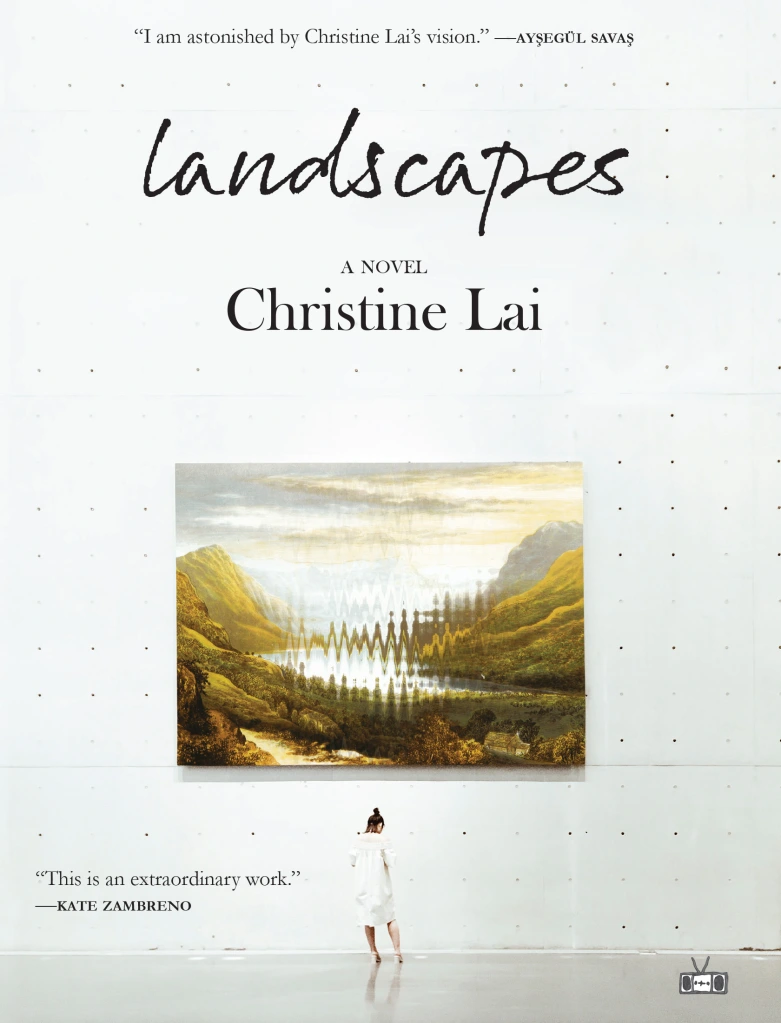
Penelope keeps a diary, and it this vehicle by which we access the majority of the narrative, an uncomplicated technique that causes a few issues as the book carries on. Lai is concerned with making a statement about the importance of art in an age that continually devalues it, setting her novel against a sharp and haunting England and in a near-future that allows for even greater ecological and environmental urgency than found in our present. In this way Landscapes is an important and thoughtful work, calling for the preservation of more than that which will merely allow us to exist.
Dan White reviews Landscapes by Christine Lai.

Welcome Cameron Wade!
Cameron is a London-based writer and poet. His work currently explores textual, photo/film, collaborative and prose poetry, as well as science-fiction and flash-fiction. In his spare time, he is an amateur astronomer and history buff. His work has been commissioned by the National Gallery and in 2023 his debut chapbook I Smell Metal was published by Sampson-Low.
Introducing Cameron Wade, our new Poetry Editor.
Cybergothic Human Typewriter: On Kenji Siratori’s Chronotopologies
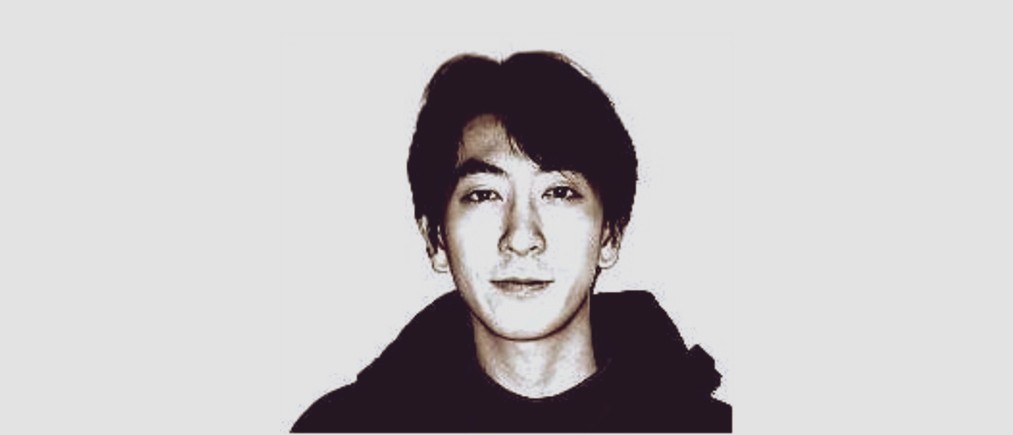
It’s questionable if it’s even accurate to say that Siratori “writes” the texts he releases — at least, if the act of writing implies authorial intention or psychological cohesion in any recognizable sense. Perhaps he generates his writing somehow, deep inside his grimdark otaku lab, feeding the living scraps of natural language into some kind of linguistic degloving machine. …He is a posthuman writing machine, like a cybergothic human typewriter (the words emerging from his digital flesh and hopping around on deformed pseudopodia).
Michael Uhall on Kenji Siratori.
Stray Dogs
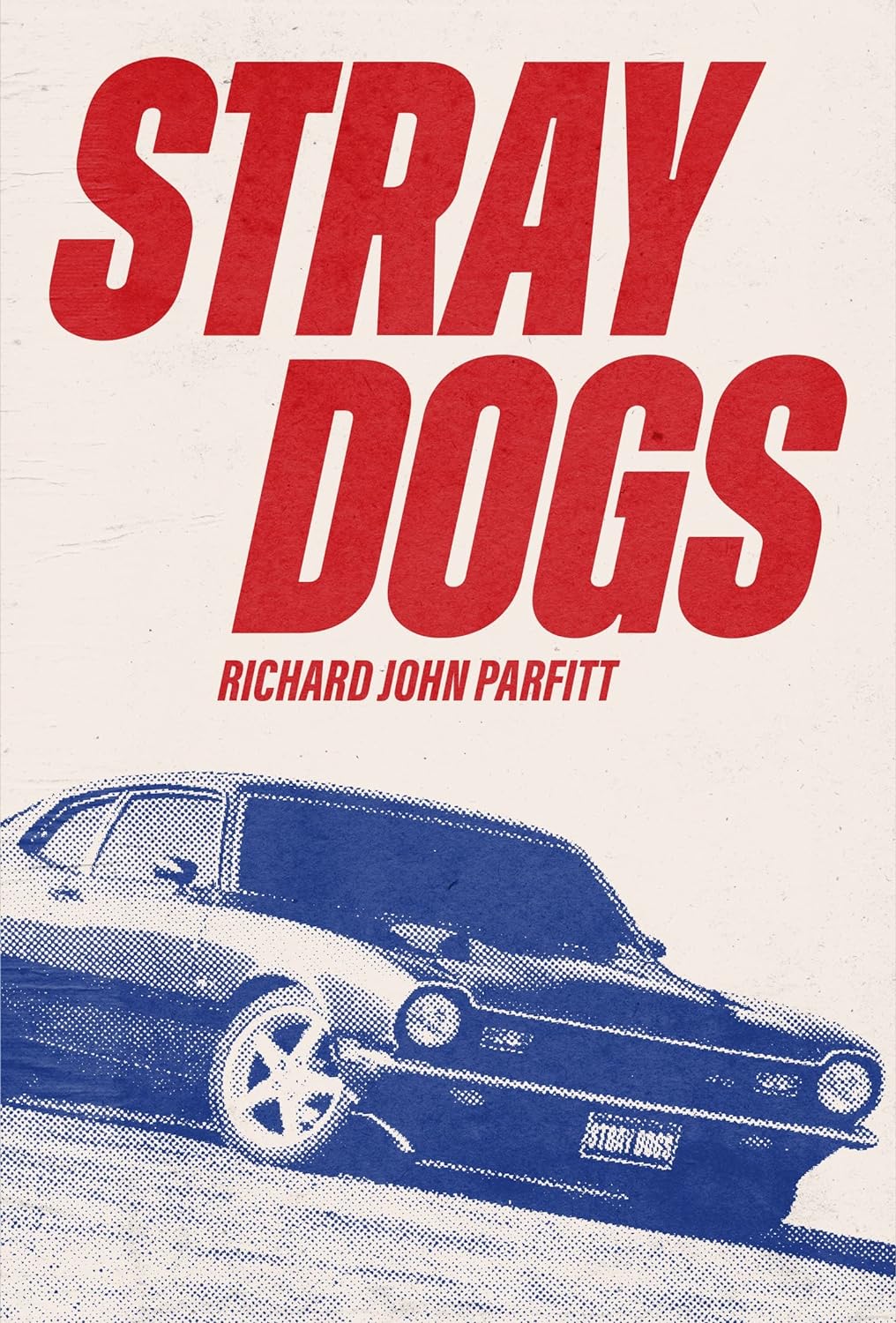
Richard John Parfitt spent his teenage years living in Toronto, having emigrated with his family from the urban South Wales sprawl into which he was born. An ‘out of the frying pan into the deep-fat fryer’ trade-off that led to him dropping out of school, running errands for local hustlers, hawking junk remaindered dictionaries, and witnessing Bowie perform live as the Thin White Duke. Experiences that first planted the (demon) seeds for Stray Dogs, a hard-bitten debut novel steeped in the greasy meat of the city’s downtown Sin Strip at the tail-end of the 1970s. A menacing bygone shadow-world of titty-bars, obscene phone calls, and pissing in the street.
Craig Austin reviews Stray Dogs by Richard John Parfitt.

Travisland
I am essentially against all countries and, if I were to run the world, would rather opt to dissolve all borders and allow for total freedom of movement. Nationalism is, I believe, one of the great banes of existence and sources of violence, war, and conflict. There’s one easy solution to this problem: just get rid of all nations. So yes, elect me global dictator and the world will be a much better place!
Travis Jeppesen interviewed by Oskar Oprey.
Border
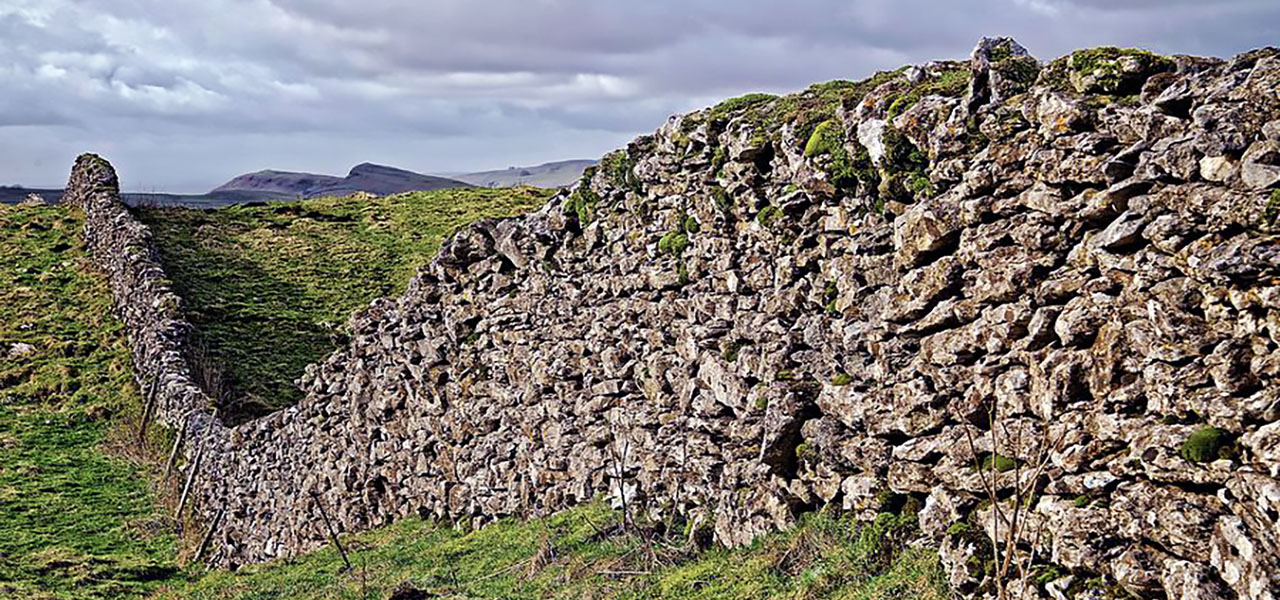
When Old Grandmother was a child, she was taken by her lala (mother) and kalka (father) to the edge place where the steppes turned to stone. Old Grandmother spoke of this: her bewilderment, her fear, her lala and kalka explaining that to be grown one day she would need to prove she could walk alone as a person. In the village place she had heard other children mention it. She had believed what they’d told her were merely stories. That the first morning of a child’s tenth year they would be brought to the edge place to learn how to walk again. “Learn how to walk again”—how they told it.
A short story by Kyle Coma-Thompson.
At a Book Launch in Manchester
We walked together for about five minutes, chatting away. He told me his name was Dean. I wondered if I should tell him that I knew what it was like to be NFA, but every time I said something, he changed the subject. He touched on the implications of a cashless society, how few people gave him money these days, how difficult it was to keep a good spot. He said something about being a ‘dependent’ which I didn’t quite catch. As we turned another corner, he said ‘could you get me something for showing you where it is?’ and I agreed.
He wanted a big bottle of Stella…
By Charlie Hill.
Post History or Breaking the Muse
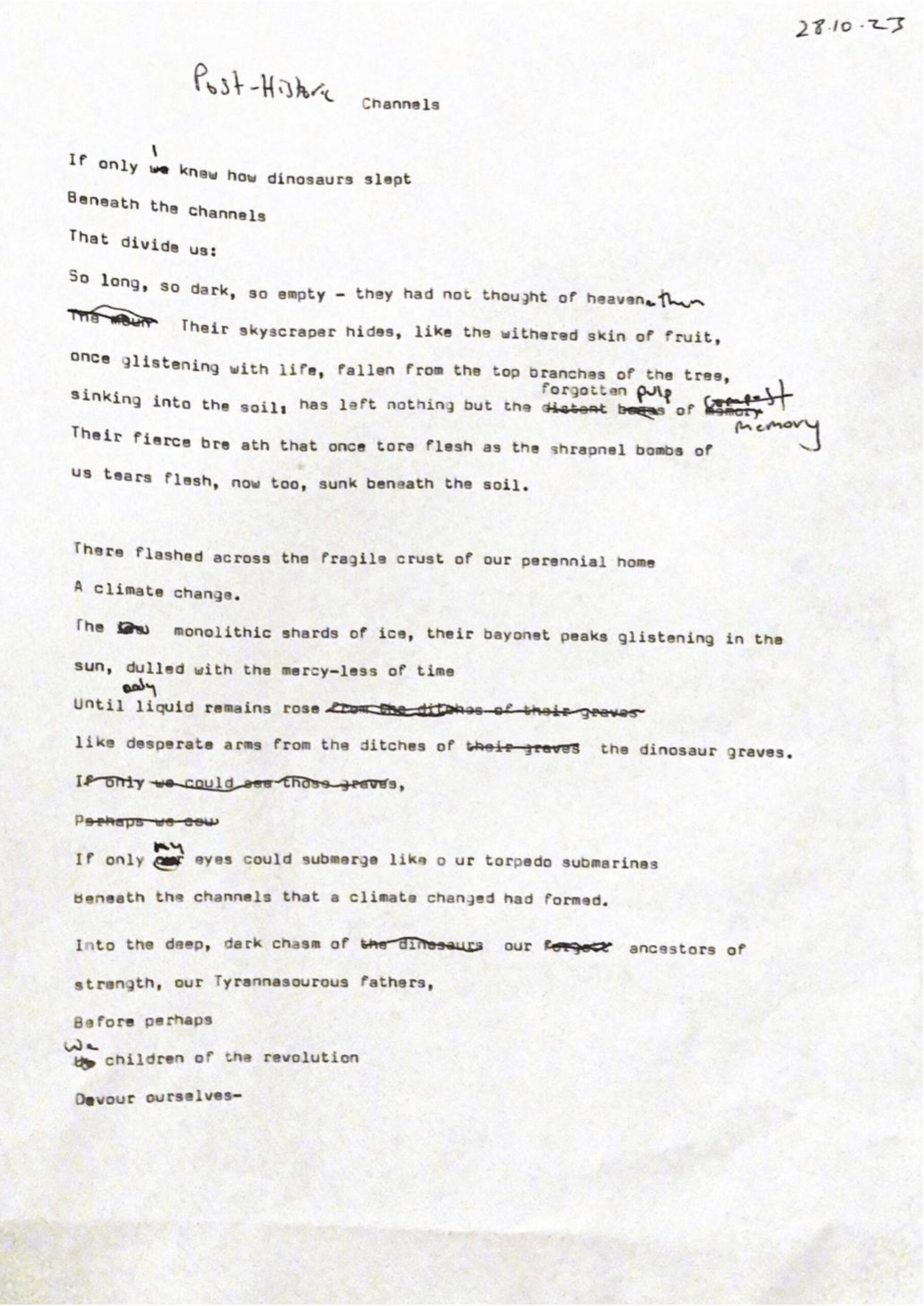
A divine meeting in Windermere could have set me sailing; swaying amongst the gentle waves of genius and serenity. It didn’t. Instead, after returning to London from said place and grabbing the first newspaper in the stand, my brain boat was flooded with dystopian sentiments and I thought it necessary to merge my two quandaries: that poetry is not divine, and that the ‘New York Times, International Edition’ is not the William Wordsworth of Journalism that I once thought.
New Poetry by Matthew J. Sokulsky.

Falcon
“This is most unmannerly, husband,” protested the Duchess. “You hardly ever see your son, you can’t be this unmannerly towards him!”
“And why is it that I hardly ever see him?” shouted the Duke. “He’s too busy in his debaucheries, he only ever visits if his gambling losses and debts require to be paid!”
“I never go gambling!” protested Guy.
“Liar!” screamed the Duke, “You just told me yourself you went to Ascot, and in the company of a notorious whoremaster and profligate!”
“John, really, do stop it!” cried the Duchess, visibly distressed. But there was no stopping the Duke when he was in full gallop.
“Inconveniences and trains of evil attending idleness, tippling, gaming and drunkenness being a short view of the present shame, future misery and final end of ungovernable youth in their drunken excess. What we must do,” he said, spitting out the words, “is pass this prodigal through the sieve. Then your bad habits will be seen by the objects that we see falling through the sieve!”
“Papa!” protested Rupert, “How can you be so cruel! Don’t sieve him, please don’t sieve him!”
The Duke, exhausted, slumped back into his plush velvet armchair. “We would see dice, tobacco, a wine glass, fancy clothes and,” he paused for dramatic effect, “a tennis racquet.”
Read an extract from Falcon by Nina Stanger.