
Latest Features
Four Poems
This guy has some rooting around to do.
A spill is current, at least with the bright berry stains
dotting the fence around the hedges.
By Todd Colby.
Motion Thickness
Sand gales grate your lips
the glaze of your eyeballs scraped and dulled
by their fiercest carress
and endless rags stream behind your running frame
like dried liana hanging from the arms
of a Khmer God in the summer typhoon.
By Guillaume Destot.
Five Poems
These all seem to you good answers.
Now it is your turn. Words,
protect me! And if not words,
then all the possible misunderstandings.
By James Sallis.
Three Poems
last night
I
made a shape w/my mouth
and what dropped out?
a name of one
born
in the town of this stage
By Mike Watt.
The Urge to Destroy
Perhaps Johnson was ahead of his time because by 1973, the year in which Malry was published, he was a man out of time. Johnson was an experimental writer but not in some nancy-boy post-modernist way; he’d done National Service and been touched by the iconoclastic spirit of the ’50s Angry Young Man before it turned to conservative bile. Later the openness and explosive creativity of the ’60s suited the playfulness and cosmopolitan feel of much of Johnson’s fiction. He looked to Europe and the Nouveau Roman and Beckett’s prose (then little appreciated here compared to his plays); and to Brecht too who’s quoted in Malry, for Johnson was a man of the left.
By Paul Tickell.
Three Poems
i am a desperate man who loves the simplicity of painting
and hates gallarys and white walls and the dealers in art
who loves unreasonableness
and hot headedness
who loves contradiction
hates publishing houses
and
also I am Vincent van gogh
By Billy Childish.
hallucination=cell
the end of the cell the DIGITAL_aerofoil of the brain of the madman to the eye of the synapsetic rhinoceros of the embryo that creates the intention of the rhinoceros bar murder of the cloud to my velocity of light=storage of the immortality that flutters to the murder medium of the lightning speed of anti-faust and recover the hell of the micro=larva guerrilla is my soul done to the chaosmic=cyber of BABEL infinite divergence and the cell war of the hell of the sun in the outer space of the brain of an embryo gimmick bisexually??
By Kenji Siratori.
Maryland
Private cloaking systems had kicked off when an inventor found he could go anywhere and be ignored so long as he carried a charity can. Now Failsafe walked invisibly out of the night and through the crowds at the crime scene. It was a media event, all harsh arc lights and generalisation. He followed unseen behind Chief Blince and a trooper as they approached the chapel.
By Steve Aylett.
Ecosystem Discovered in Saatchi’s Pocket
Some funding is allegedly imminent. Rocco submitted sheaves of documentation explaining in a hundred different ways that it wasn’t going to be essentially a Playboy Channel thing like the last one. Cal starts whining about wanting to go. He’s hungover from AM drinking. Courtney wanders off into the kitchen while Rocco is distracted.
By Alistair Gentry.
The White Stuff: An Interview with Tony White
“I was working for the Post Office whilst I was writing this. I mean literally: I wrote Charlieunclenorfolktango at work! And I felt that using a phonetic depiction of speech was really crucial. Ordinary speech is excluded from literature. I didn’t want to use standard English for Charlieunclenorfolktango, because I’d have had to put apostrophes in every other word — it would have been ridiculous. This seemed very important to me at the time; it still is. There I was, working in the Post Office, and surrounded by guys who spoke like that. But where are these voices in literature? They’re erased, absent. And if you bear in mind James Kelman’s idea that ‘diacritical marks are the literary stigmata of class war’, and go back to Dickens and Twain who were not afraid to use a plurality of voices and cultures in their writing, you can quite easily see that Kelman is right. That was one thing that contributed to the idea that this was something important to do.”
3:AM meets up with Tony White.
The Stripper in Her Natural Habitat
Le Urge advertised itself as a European Gentleman’s Club, which meant it wasn’t run by Armenians like most of the clubs in Hollywood and the Valley. The owners, full-blooded Germans, staffed the place with still more Germans. All the bouncers were big fleshy Teutonic golems with hair the color of bleached teeth.
By Jim Ruland.
The Defiant Prose of Stewart Home
His use of deceit and plagiarism is a light-hearted prank, a thrust against the fetish of originality and genius that he sees as being part of the structure of modern notions of art, especially perhaps in fiction writing that draws attention to the power of such ideas. Similarly, the use of shared names, such as Karen Elliot, Luthor Blissett, Monty Cantsin are equally prankster routines designed to reveal modern art’s need for the genius. The unsettling of these ideas–of drawing attention to the fact that ‘Art’ is structured around concepts of genius, of originality, of creativity by producing things that look like art but don’t involve them–is of course what these routines are about. But such work can have surprisingly violent effects and what is interesting about Home is the way he continues to direct his writing through the present age and its canonical authors, philosophers and artists towards a different kind of future.
By Richard Marshall.
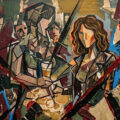

Who’s To Say?: Life and Form in Life of M
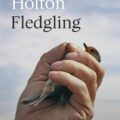
What Do We Really Know of Birds and Men?