
By Young Rader.

I.
Paul, with his good Christian name, wanted to mark his white damask caparisons and liturgical sandals and his cloaks, particularly the one depicting the Tree of Jesse, with a bold and original monogram, one that would immediately and resoundingly promulgate his high and uncontaminated standing in the world to everyone with seeing eyes, and so the boy, whose name he could not be bothered to learn, was brought to him. It was the boy, the baker’s son, who’d designed Manuel’s monogram. Where the boy might have learned this skill never crossed Paul’s patrician mind. He was too enraged to hear others, especially Mechthild—Mechthild with her circlet of verbena and those wildly wide-set, goat-blue eyes that drove him near mad—praise Manuel’s monogram. Manuel’s nobility was not a hereditary condition. He had no longstanding coat of arms. He was merely a knight—a knight!—and Paul loathed him. He ordered that a peacock be skinned without plucking, roasted, and brought to table in its natural envelope. In its beak, a sponge soaked in spirits of wine was kindled, and Paul made his vow: Lo, though it be in defiance of the Peace and Truce of God, he would have Manuel beheaded. Yet before the sword smote the worm’s head, Paul would see to it that Manuel looked upon his monogram and knew it to be the superior of the two.
When the boy was hauled to the palace, reeking of hot ashes and barley, Paul lay down a sheet of parchment and a honed piece of black ochre on the table and instructed the boy to draw Manuel’s monogram. Quickly!
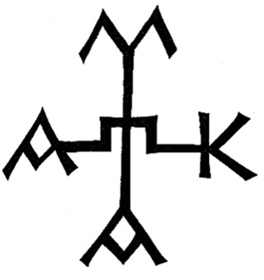
He stared down his nose at what had been sketched. He hated to admit it, but Manuel’s monogram was very striking indeed. He snatched up the parchment, “Floy! Floy!”—and set it ablaze. “I deserve a better one. The best, I daresay.” He pressed his small hands together, as if trying to push through his own matrix. “But how, pray tell, do you envision it? Paul’s the name.” The boy did not supply an answer. Paul pinched the bridge of his nose and snarled, “Well, you clodpate?”
“I have some ideas,” the boy said at last, his voice as meek and drowsy as a pigeon’s coo.
What a dalcop! There were many holes, Paul concluded, in the cloth of the boy’s immoral brain. He’d certainly be delivered to Hell upon his death and there was nothing, nothing at all, that could be done to recast this very unpleasant destiny, and so shall it be. “Show me, then.”
The boy sketched a design.
“No,” Paul spat, “this will not do,” and then the boy composed a second monogram, his hand moving much slower, his pinky creeping elegantly across the parchment like the seeking tail of a dying dormouse. Upon its completion, a magnificent chill, or the Holy Spirit, raced down Paul’s spine and clenched tenderly in his loins.
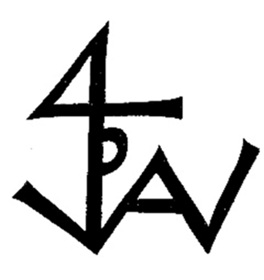
He decided to show the baker’s son some mercy. Instead of pouring boiling vinegar into the boy’s eyes, he took the hewing knife from his belt and pushed its blade through the stalky walls of the boy’s nose. The cut was shockingly crooked. Much blood was spilled. It washed over the boy’s jaw and, to Paul’s displeasure, besmirched his own silk tunic, the one whose silver embroidery chafed his armpits. It didn’t strike him as peculiar that the baker’s son had remained so remarkably still throughout the ordeal. Paul grunted, lobbed the tacky glob of pulp hearthwards for Go-byhynde and Go-bifore to play with and gobble up later, and surveyed his work. Most excellent. He was convinced that the boy’s ghastly visage would drive away any others seeking a competing monogram. This thought pleased him very well.
II.
The baker pinioned the white-hot bowl of a spoon heated in the oven into his son’s wound, cauterizing it, then pushed a ball of uncooked dough over the hole where the nose used to be, trying his best to ignore the smell of scorched tissue. Oh! His son, his boy, who sat in whorls of grass and blooming yarrow, or in the sweet violets growing rampantly over the cool place where his mother and sisters and brothers lay, whispering to the ants and nitid beetles marching across the back of his hand. The baker could hardly withhold his tears. He wiped his son’s chin clean with the hair sieve and watched the boy’s eyes swell shut. “Who did this?”
His son was silent.
“Please, pronounce. Who did this to you?”
But his son, knowing it would only bring trouble, never did say.
For seven nights, the boy dreamt of an irksome midge with clacking, wooden legs. It was God, preventing beasties of any kind to set down eggs bearing larvae in the weeping meat of his lesion. Despite the pain and bloody expectorations and the hot swelling in his head, the boy remained buoyant, a quality that would endure until his death many, many years later.
The baker was not surprised by the brutality imposed upon his son. In truth, he believed he was to blame. The boy had observed him using the paring knife to score the unbaked bread to help control its expansion in the oven and had asked what the symbols meant. The baker, considering his son kindhearted but witless, explained that the simple decorative patterns denoted the sunrise, the moon, and the open, ever observant eye of God.



He even showed his son how to score Latin letters and symbols (P/Q/R/S/W/Y) into the loaves of bread, believing the boy’s curiosity would not persist. That a Black Friar had taught him literacy when he was young had been a long-held secret, a secret his son’s curiosity had inspired him to unloose.
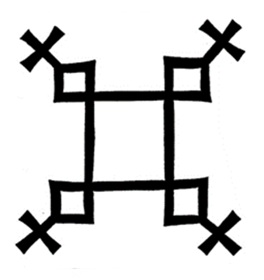
When, several days later, the baker espied three loaves swelling in the mouth of the oven, loaves he had not shoved in for the heat to graze, he retrieved them with the long, wooden peel and was struck by what he saw. The designs carved into them were much more elaborate than any he’d ever devised. “They are beauteous,” he said under his breath, and knew at once it was his son who’d scored the bread with an uncannily skilled hand. “Where are you?” he said, turning in a slow circle, and at last the boy crawled out from under the table where the kneading was done. The baker, when he asked, was told that the intricate patterns symbolized the world, the elements, and the soul breaking through the confines of its mortal frame.


“And where did you learn how to do this?”
His child kept his silence.
Fear was in the baker. He had bestowed the boy with a knowledge which, in their low station, proved perilous. The two of them had been nothing at birth and were to remain so until their deaths. The baker held his hands over the loaves. Steam broke patiently against his tremoring palms. It was dark outside, but the birds were still loud, and though the air was warm and humid, he shivered. He shook out his hands and told his son that they must consume the bread at once. All of it. No one must behold what the boy had designed, for none would understand it, and the baker knew full well that that which was not understood was oft scorned. So they spent that evening devouring the word, the elements, and the soul.
But Manuel the Eckhart had somehow learned of the boy’s skill.
How?
That is not of great importance to this tale, but it must have been from the squire, the one with the queer thumbs, who delivered Manuel his wheaten cobs each morning.
And then the boy had lost his nose.
No matter. Without it, he could live in peace: and in peace he did live.
With a mixture of rye, dried peas, barley, and warm water, the boy made a new nose at the onset of every season and pressed it over the hole in his head. And behold, he was happy.
But it did come to pass that one summer day, while sweeping under the oven, he heard a horse trot nearer, and listened to the birds and insects warning him of a looming arrival. He removed his nose, smashed it between his palms, and smeared ash roughly around the hole to make it look more ruinous.
The white horse halted outside the house, swished its tail, shat, then snorted. Polite words were exchanged between the newcomer and the baker. The boy did as bade and pushed open the door to come outside and give worthy thanks to Paul. When he passed into the bright, warm sunlight, his countenance startled and perplexed his father.
Paul, howbeit, was enormously repulsed and pleased. “Egad, what’s happened to him?”
The worry in the boy’s eyes made the baker’s heart beat hard. “Some mischance, sir.”
“Tut-tut.” Paul scratched his crotch immodestly, thinking. “He doesn’t touch the bread, does he?”
“No, sir,” the baker lied.
“I deem that to be right.” Paul took up his reigns and squeezed his horse with his heels. “Remember,” he said, “it is easy to learn to limp when you live with him who is lame. Hale be thou,” and his horse carried him up the deserted lane.
“Viva Paul,” the baker said.
“Viva Paul,” the boy said.
III.
The baker’s heart grew so tired it could urge nothing to pass through its chambers any more. An obscenely heavy ax cleaved Manuel’s head from his body. An ingrown hair in Paul’s armpit set his flesh to blister and peel, and eventually loosed a deadly toxin into his blood. His body was clad in rich raiment trimmed with fur, and laid in honor within the church’s walls. But to his great horror, his soul did not ascend to heaven. Instead, it was violently cast into a rugged slab of limestone, which, full seven hundred years hence, was crushed into raw meal and wrought into cement poured over a thick sewer pipe beneath a great merchant’s emporium, selling ready-to-assemble furnishings and köttbullar, in the city of Mannheim. A young starling haphazardly pursued a green lacewing, reaping a chunk of its thorax and sending the insect hurtling into Mechthild’s mouth. She died before it could crawl up and out of her throat. She’d been admiring the sunset. Who knows whatever happened to Go-byhynde and Go-bifore, though it’s said unsleeping mortals might spot the hungry glow of their eyes in the dead of night.
There came a diabolical outbreak of plague, and death pursued everyone; and the boy, who became the unleavened-nose baker, with ashes and particles of grain caught in the creases of his neck, carved the soul and the mind and the elements and the planets and the constellations and the orb of the world and God, openness and concealment, the hours and the days and the months and the seasons, running water and waves and eight-spoked wheels and manure heaps and keys and spades and croziers, horses and razed cities and crosses, into countless loaves. Only his eyes were privy to what he begot.
And he devoured everything.
And thus, he remained—invisible.
Until one day when an angel with a head covered in blinking eyes of every shape and color came crashing down into the oven and said: “Look not upon me with your eyes, lest your bones be burst asunder and your blood boil within you.”
The unleavened-nose baker averted his eyes and trembled. The heat was spectacular and singed the hairs on his arms. “What are you?”
“Upon high, I am called Joel.”
“Why are you here?”
“To bring you to Heaven.”
“Me?”
“Yes, you.”
“When?”
“This very moment.”
“Wait,” the unleavened-nose baker whimpered. “May I have one last week upon this earth?”
“I will ask the will of the Lord,” the angel said. The heat subsided, only to spike awesomely seconds later. “Yes,” the angel said. “A week you shall have.”
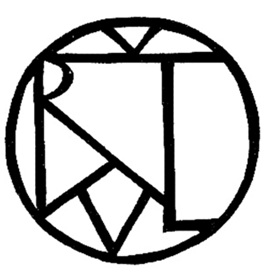
The oven grew cold and the unleavened-nose baker got to work straight away. He scored his monogram into a big stone that would be venerated and kissed by millions for centuries to come. It took him seven whole days and seven whole nights.
And then, quite exhausted, he lay down. As soon as he closed his eyes, he died and went to heaven.
So be it.
Amen.
And so shall it be.
AMEN!
POSTSCRIPT
The images in this story have been taken from The Book of Signs by Rudolph Koch, published by Dover. The final image in the story appears in Koch’s book with the following note: “Byzantine monograms are the most beautiful examples we have of designs composed of letters, and in their construction they all bear evidence of great skill and serious thought. This chapter ends with a beautiful Byzantine imperial monogram, the interpretation of which is, however, unknown.”

ABOUT THE AUTHOR
Young Rader lives and writes in Berlin. His work has appeared in the Chicago Review, Gulf Coast, Little Star, New England Review, New World Writing, Passages North, SmokeLong Quarterly, and elsewhere. His stories have been shortlisted for the Berlin Writing Prize and the Desperate Literature Short Fiction Prize.

