

Margaret C. Anderson and The Little Review
Throughout the history of The Little Review, government and legal systems used blankness against them, such that blankness became censorship. It’s interesting to think about the ways the editors use blankness as something that seems in fact very full, pregnant with possibility and meaning. Like Wolfgang Iser’s notion of the constitutive blank, vacancies/empty space actually help build up a new aesthetic object. The blank issue remains a line of flight, a point in the story that remains open, where anything could have happened, and where becoming itself was what was crystallized.
Emily Friedman on a modernist journal.
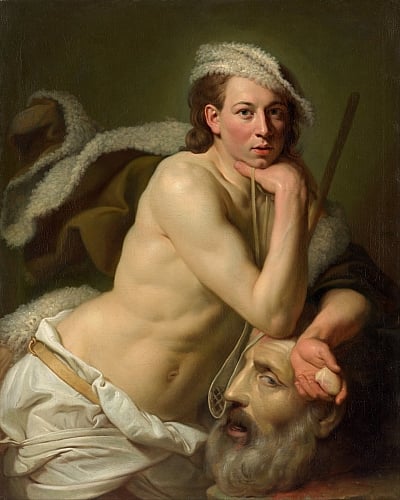
Eurostar (Extract)
Now though, whenever I see a sparrow cocking its head to one side, or taking a dust bath, I find myself wondering if Barry’s spirit is inside it. In fact, in that small, fluttering moment I really do believe that there is a greater power connecting all living things. And although it might sound silly it always makes my eyes prick with tears, in part because there has to be a reason.
An exclusive extract from Susan Finlay‘s superlative The Lives of the Artists.

Necessary Fantasies: The Broken Circle Breakdown
The film tells us, right from the beginning, specifically how that dream will shatter. After the harmonies of the band onstage come the heavy silences of the second scene: Elise and Didier’s six-year-old daughter, Maybelle, has cancer. The story is told in a non-linear way: Maybelle is ill, Maybelle is born, Elise is in the band, Elise learns how to sing, Didier watches a man attempt to revive his wife, Didier proposes to his future wife. Not in that order. It is impossible for the viewer to believe in a fantasy of the hero’s journey — to hope that after hardship comes a gratifying sense of resolution. We know too much, all the time. The broken timeline speaks to the concept of the fantasy and its impossible anchorage in time: it does not exist in the present, is in fact defined by its remoteness to the present, and cannot be realised in the future if it is to remain a fantasy.
By Mathilde Merouani.
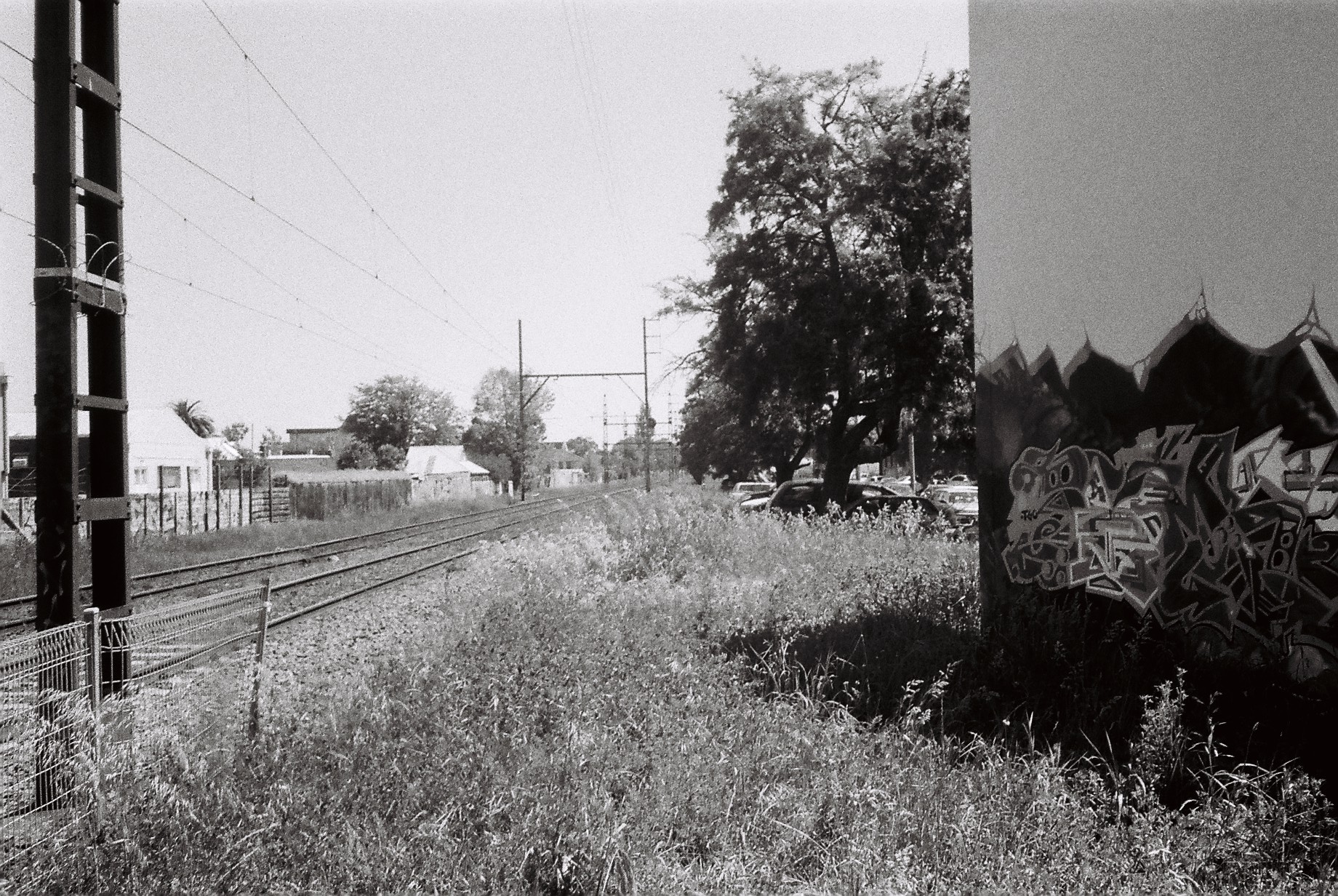
Small Pleasures
3:AM fits. We met through 3:AM. We didn’t, really, but it’s possible. We both read 3:AM religiously. Small books brought us together; small books made by large people too large to be “general” — to us, at least. He emailed me from Melbourne in 2012; he asked questions around the titles I was publishing and many times felt like my only devotee. The only logical thing to do was to marry. We eventually did — marry — but then he got ill and left me with a son and this document to publish. …This is a review of a life, written in its last week; the moments remembered he was soon to part from.
By Matthew O’Shannessy. Introduction by Rebekah Weikel.

Mérat and Nerval
Mérat and Nerval also shared a love for the theatre and adored the actresses they saw on stage — whose reality could never live up to the idealistic impressions of them created in the poets’ imaginations. In 1853, when Mérat was thirteen, Nerval’s Odelettes were published, containing ‘Une Allée du Luxembourg’, a poem set in the gardens that would become Mérat’s favourite part of Paris — and overlooking which he would later live many of his happiest years. The poem’s theme of an idealised love, happened on by chance amid the beauties of nature, which seems to promise perfection but ends in loss and grief, could almost be a template for Mérat’s own love poetry.
Read an extract from Tim Michell‘s Albert Mérat: Rimbaud’s Seer.
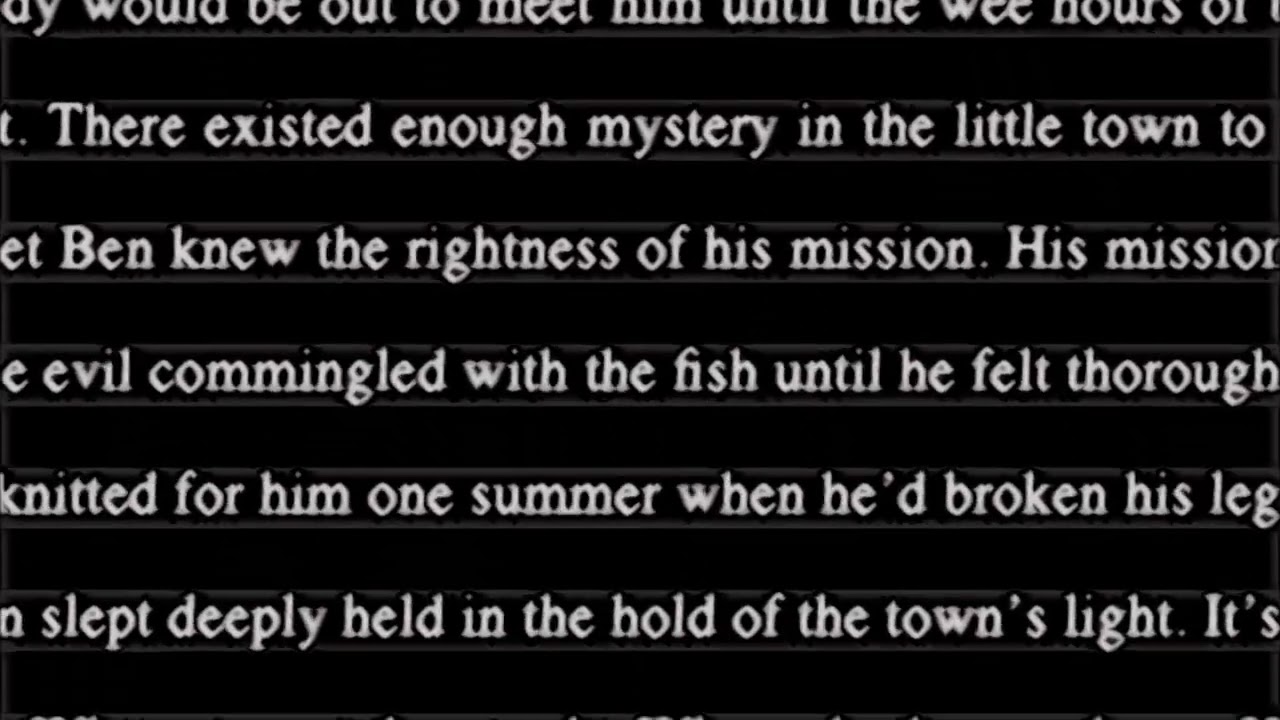
On Writing Ebb, Without the Letter
Limiting yourself is oddly opening. Limiting your view of things, like stopping yourself from doing something, brings this sense of bliss when you do some close thing to this. This feeling like you’re freed up from thinking one style. This feeling like you’re freed up from being bogged down in your every moment mind. The mind of every moment is too open to every flitting possibility. The mind with one limit put on it knows where it might like to go. To run even. This mind brings out something new in you. Like Wittgenstein’s brother. The composer. The piece written for just one of his sets of fingers. The possibility there. Tehching Hsieh’s work, opening himself to the possibilities in limiting himself for long stretches. The possibility opening up from this kind of thing. I only wish to tell someone to consider it. The possibility even in just considering it. This might be enough. Cut yourself off from something. Limit yourself. See the things which creep out from the sides of the thing you’ve skipped.
Grant Maierhofer on writing his constraint-based Ebb. Can you guess which letter he has chosen to exclude? Find out by reading the opening of Ebb which follows the essay.

Minute 9: We’re All Going to the World’s Fair
She’s not concerned with how she looks. This is no cautionary tale about vanity or performative femininity. Something else is happening here. Our girl is not looking to be told she’s cute. And whatever she’s looking for, I sense, she’s not so sure she wants to find it. Her eyes are searching, pleading, unguardedly expressive — in other words, they are heartbreaking.
By Lindsay Lerman.
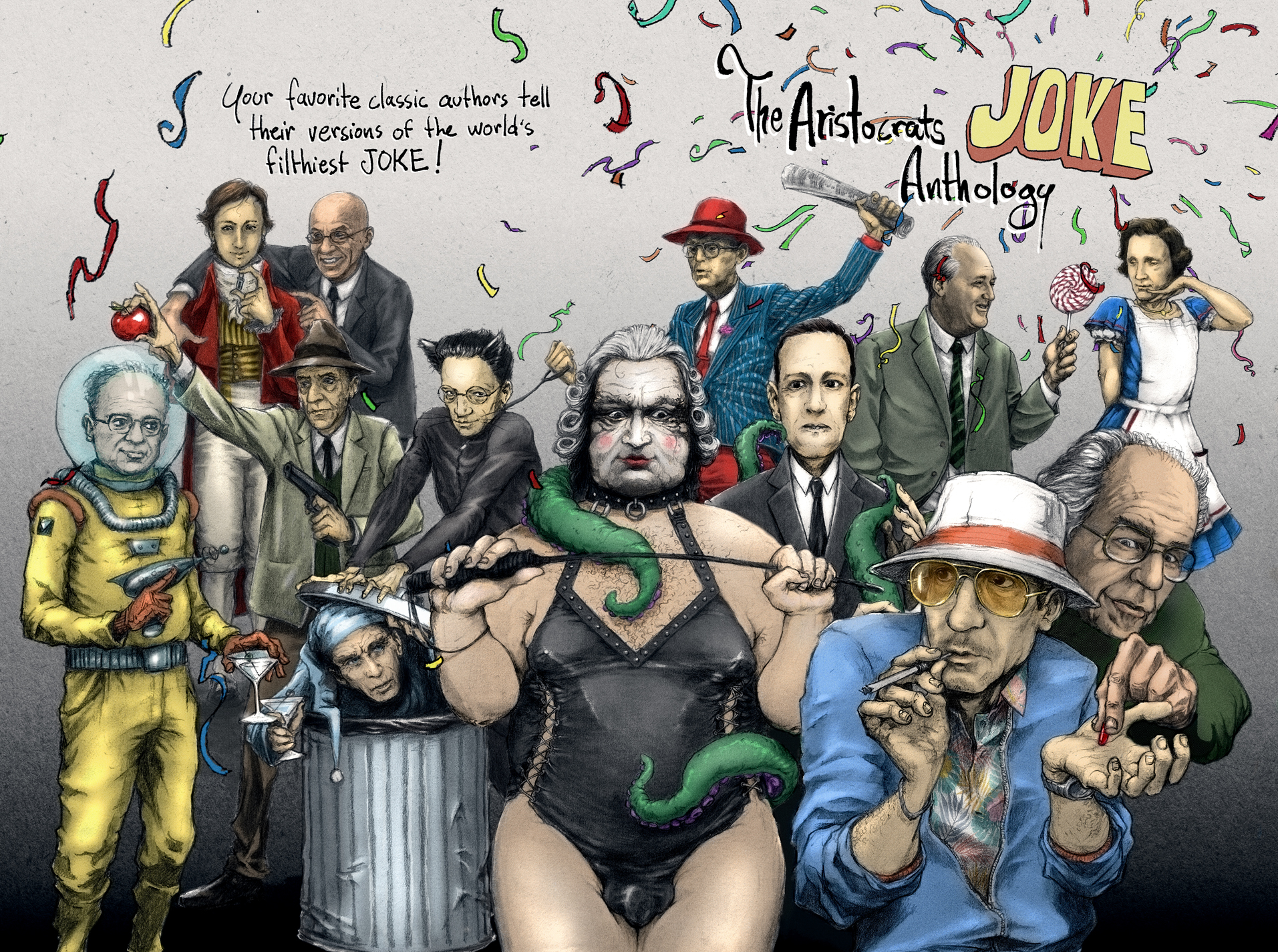
The Aristocrats Joke
Writers are not necessarily overly stupid people, and we’re aware of what’s afoot on both the domestic and international fronts. We know the pimps whom we’re begging to turn us out like whores are not “literary” at all, but agents of tyranny, hot war, genocide, and all the other inevitabilities of late-stage capitalism. But, being mere creatures of a day, and subject to the usual human appetites, we crave personal fame as a substitute for the self-respect that the free enterprise system fails to provide. We grovel for the balm of approbation to be rubbed on the thin-skinned blisters bubbling over our narcissistic egos. Hence the need to puff up our curricula vitae with book publications, and the eagerness to submit to the rigors of our Stylist.
Read Tom Bradley‘s introduction to The Aristocrats Joke Anthology.

Minute 9: Performance
I’ve lost count of how many times I’ve seen Performance. I’d seen it thirteen times before 1976. No matter to which strata of the sclerotic British class structure you belonged in the early seventies, you were woven into the social fabric by the music you absorbed, the books you read, the bands you saw, the squats or rentals where you lived, your connections to the hardcore criminality of the drug scene that fuelled the sixties/seventies outsider culture.
By Des Barry.

Orpington to London Victoria #7 – George Berger Column
And then, finally, I have a vision that changes everything. A vision of my father as a frightened little boy, one who had a far tougher upbringing than I did, for all my whinging. A scared little boy who doesn’t understand his harsh surroundings. A tear running down his five year old cheek. A barefoot boy who left school at 14 to get a job and look after his disabled mum, his father having passed away due to an accident on the docks. A boy forced to be a man way before his time.
By George Berger.

Minute 9: Portrait of a Lady on Fire
If the patriarchy defines the rules of the society in which the narrative is set, however, then it sits on the periphery. The focus, instead, is on how desire builds and is felt, as Marianne and Héloïse become lovers. The relationships in the film that are defined by power, ownership and oppression, are the antithesis of the one formed between Marianne and Héloïse. As the latter begins to paint the former we see an affair born between equals. And, tellingly for a film that is about the relationship between artist and sitter, it is through the act of looking that this equality is engendered. Throughout, director and writer Céline Sciamma creates a visual language that is a purposeful act of transgression.
By Emma Jones.

An Introduction to the English Translation of Dig Where You Stand
Dig Where You Stand prompts workers to become researchers, to follow the money and the power it represents, confers and reproduces. It invites them to take on the role as experts on their job and industry and “dig” out its hidden histories to produce a new picture and understanding of that industry and their position within it as a vital step towards social and economic transformation.
An extract from the introduction to Sven Lindquist‘s Dig Where You Stand.

