

We Were Kid Gods
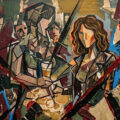
The parentification and autonomy demanded of us was astonishing. We were expected to constantly defend a socialist-Marxist, feminist ideology. It was incredibly frightening to be exposed to these ideas and be expected to apply them when we didn’t have the emotional maturity. The roles we were expected to play were not flexible. You had to be a “kid” not a “daughter”. There were theorists around like Barrington Moore who said, “loving your children is out of date.” To me, these ideas were quite possibly the words of alienated adults reproducing the dialogue of their own inability to bond with their parents. All these things led the book to the theme of “home.” For despite everything the community set out to do, it didn’t foster any sense of being a “home”.
Susanna Crossman talks to Stu Hennigan about her memoir, Home is Where We Start.

It Bleeds
You shake the box again, feel the shifting weight. Only slightly, though – it’s something small. And useful, you hope. Like a pencil – you could stand to make some notes.
Or maybe it’s another clue. Galvanised by this hope, you hurry to open the box.
There is nothing inside. What made the noise? You shake the box again, hoping something might fall out, and as you do, you find the cardboard itself is weighty – the inner flap of the lid was simply knocking against the inside.
Ah, you think. But this is what a twist should be: constructed from the thing itself. Infuriating, inescapable. You had no firm beliefs about what the box would contain beyond the belief that it contained something. You should have known, therefore, it would contain nothing at all. You laugh at yourself.
Read Tess Little‘s essay on mystery from the new Writing the Murder collection, edited by Dan Coxon and Richard V. Hirst.

An Evening of Adventures
Remember The Golden Age? Not the film by Buñuel and Dali but that elusive stretch of time before you began to feel the quartz of the earth pushing into your intestines, cutting them to ribbons? What were the postcards you wrote to yourself back then when you were free to paddle in the ocean? In An Evening of Entertainments Stephen Sunderland offers the detritus of those memories drifting back like flotsam to the shore, half remembered from dreams and other times of frenzy; and gloved in effluence. Somewhere in there are the keys to a rusty lock or two. Be careful what you try to open.
New poetry by Stephen Sunderland.
Collected Poems
These are fragments from Roland Barthes’ Fragments d’un discours amoureux, selected and rearranged following semantic, visual, lyrical and abstract patterns, and then used to create new meaning. Follow the lines, or not.
New Poetry by Rosa Crepax.
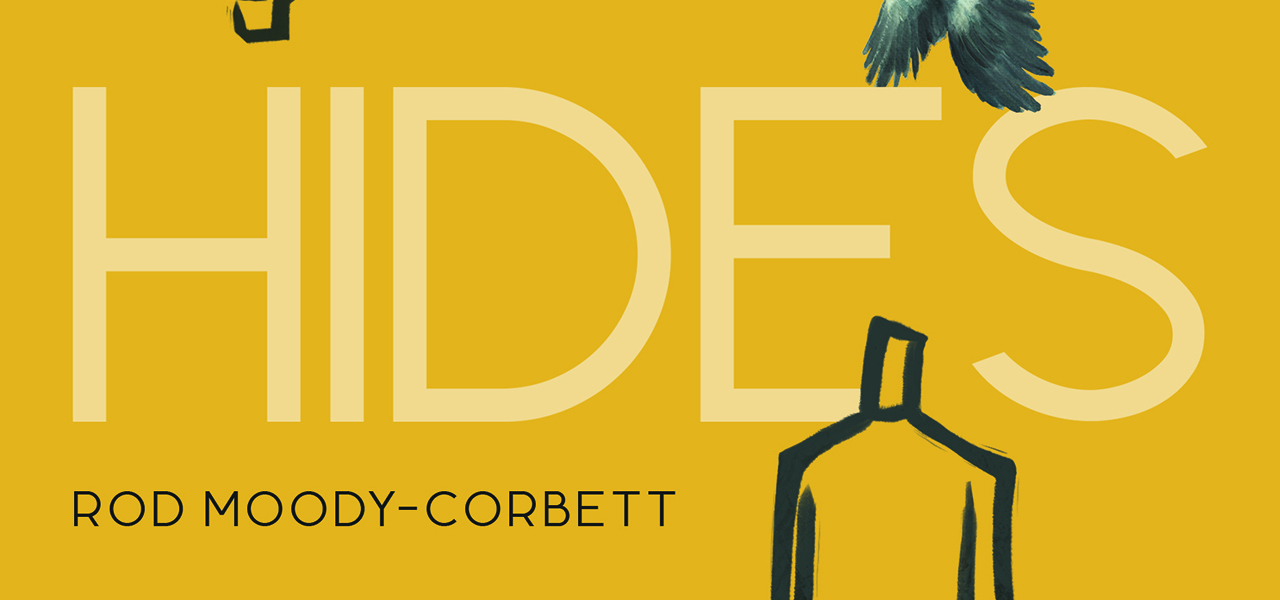
Q&A: Rod Moody-Corbett, Hides
In Malcolm Lowry’s last letter to David Markson (dispatched about a week before Lowry’s death), he offers the young Markson the best piece of writing advice I’ve ever read: “Do you know which stars are which and what bird is flying over your head and what flower blossoming? If you don’t the anguish of not knowing is a very valid field for the artist. Moreover when you learn something it’s a good thing to repossess the position of your original ignorance.” By which I understand Lowry to mean basically this: good to own the app that tells you what shrub is what, what redstart warbles where, but better, artistically, to reinhabit a noticing uncluttered by the most graspable fact.
Rod Moody-Corbett interviewed by 3:AM‘s Fiction Editor, Daniel Davis Wood.
Something Stinks
I’d always prided myself on my sense of direction, my ability to compass the obscurest circuits and cityscapes, but it occurred to me that I had no idea where we stood in relation to our cabin, or where—gazing down the beach, admiring its spiny issuings and swirls—we’d docked. This minor disorientation asserted a strange terror over me. It was akin to the episodes of sleep paralysis I experienced with disturbing frequency as a boy—immobile, encradled in the thick paralysis of REM sleep, my mind utterly awake to its imprisonment. In the darkness of those nights faces formed in my room. I would see a tall laughing man with a skinny black moustache who would look at me and, the instant our eyes locked, suddenly stop laughing; or else a dark shape that somewhat resembled my grandmother: the stern bulk of her skull feeling its way over my blanket, across my chest, the weight of its breath, or my own, hissing. I would try to speak, to ward these apparitions away from my unshifting limbs, but my lips wouldn’t summon a word. Time, it seemed, was my only salve. But there would be no apparitions here, no delusive visitors.
Read an extract from Rod Moody-Corbett‘s Hides.


Maps of Imaginary Towns: An Interview with SJ Bradley
Realistic characters make anything believable, even when your story’s set on another planet. Even in short fiction, it’s useful to have a full sense of your character, who they are, how they might act in any given situation. It helps that I’ve worked in so many public-facing frontline roles, and that I meet such a lot of interesting people every day at work. I’m also an avid listener of other people’s conversations, in the library and on the bus and in the street and in the supermarket. Sometimes I wear headphones so it looks like I’m not listening in, but secretly, I am. I’m a terrible ear-wigger. Never say anything important near me, because I’ll file it away somewhere and it’ll end up in a story.
Katy Wimhurst interviews SJ Bradley.

The Gulls
When the seals hot-trot, the crabs walk. When the sand mites flicker, the sunfish prima-donnas beyond the breakers. The old-hand sandpipers strike at the backwash strandhoppers, have been since daybreak low. When apexers rove under the wind-white, five fingers out, somewhere, a patrol boat wakes a line of skiffs. The mollusks have already shelled the berm, on account of the gulls. Somewhere in the disappearing tidepool, the hippofish dawdle. At this moment, the shiners bolt under dapples of screensaver-blue. The green flies trifle at the ankles, beneath a canopy of hatred. The inland crane stalks while a fresh striper washes up rolling. The ocean claws away at the sand while the contingent hinterland smiles with fire. But the gulls always reap. The gulls, the gulls, the gulls reap. They reap at dawn and they reap at dusk. From morning till afternoon, they reap. Reap, reap, reap, the gulls—they reap.
A short story by Albe Harlow.

The Use of Photography
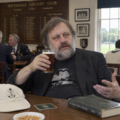
These two books cement a juxtaposition that has long been in Ernaux’s work: a line sketched between the inside and outside world. The close relations Ernaux knowingly writes of, are predominantly shown in private spaces that enable extended intimacy. The public and outside spaces are reserved for witnessing those she does not know. There are factors that demand this distinction such as affairs in both Simple Passion and The Use of Photography. In the latter, Ernaux writes, “A hotel room, with its double impermanence, temporal and spatial, is for me a place where the pain of love is felt most acutely. At the same time, I’ve always had the impression that making love in a hotel is without consequence because there, in a sense, you are nobody.”
Sophie van Well Groeneveld reviews The Use of Photography by Annie Ernaux and Marc Marie alongside Annie Ernaux and Photography edited by Lou Stoppard.