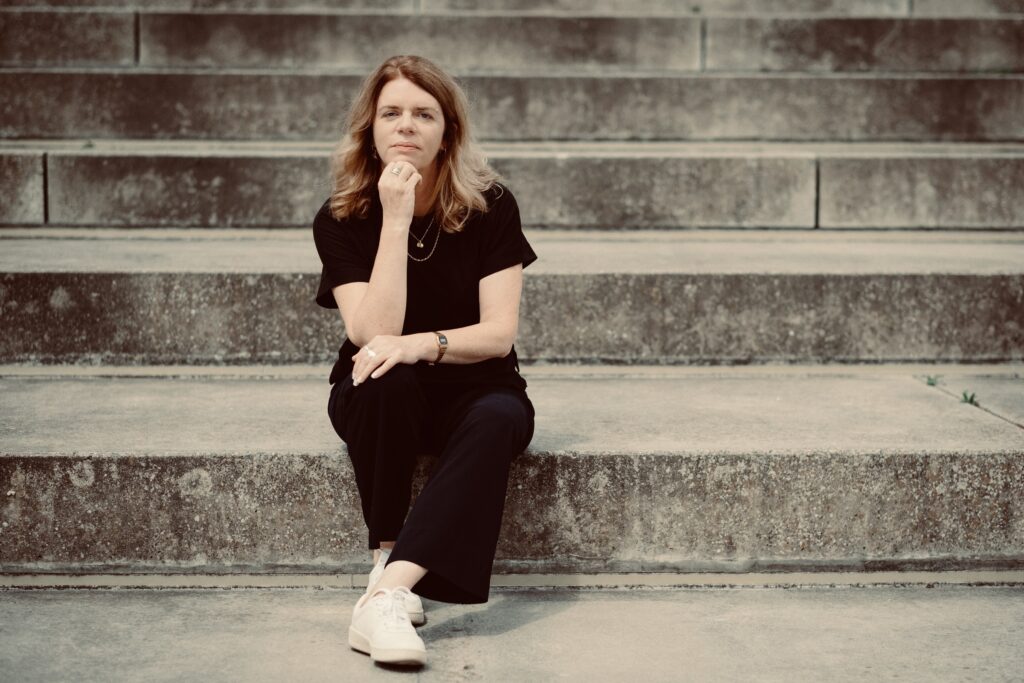
Susanna Crossman interviewed by Stu Hennigan.

In the turbulent late seventies, six-year-old Susanna Crossman and her siblings were transplanted from the comfort of suburbia to the decaying splendour of an old mansion house in the heart of the English countryside when their mother decided to become part of a Utopian community. Here they joined a group of at least fifty others who were determined to free themselves from the tyrannical shackles of capitalism and patriarchy by remaking the world and living a life of liberation, hermetically sealed from the pernicious influence of mainstream society.
Home Is Where We Start is Susanna’s account of that time. It’s a fascinating memoir which takes a multi-layered approach to its subject, combining an impressionistic narrative giving an oneiric child’s-eye view of life at the house (which, in Jonathan Gibbs’ words, “seems in her telling to loom and shimmer like a dream always a breath from nightmare”) with a laudably dispassionate retrospective assessment in which she uses her razor-sharp analytical skills and a breathtaking range of literary, philosophical and socio-scientific texts to try to make sense of how her unconventional upbringing shaped the person she is today.
*
3:AM: You’ve written and published across many forms – award-winning short stories, essays in Aeon, and you have a novel, The Orange Notebooks, coming out next year with Bluemoose. You’ve even published a novel in French! What made you decide that now was the time to write this memoir?
Susanna Crossman: Non-fiction forms that draw on life have always fascinated me. Even before I wrote the memoir, I’ve often played with these, particularly in my essays, like “The Battleground: Fieldnotes from la maternité“. Home Is Where We Start began with my essay in Aeon “The Utopian Machine” (2022). I was at a point in my life where I wanted to write about my commune childhood and finally felt able to tackle the tougher parts alongside the joy. When I was younger there was so much media attention; I had been interviewed so many times by newspaper and TV. It was like I had a script that I’d picked up from the adults. “This is a community, not a commune,” “Our life is normal” “We are privileged” things like that. It took me a long time to get past the narrative that had been ingrained in me as a child. The essay allowed me to find my own voice.
3:AM: So you carried that narrative into adulthood? Like in The Body Keeps the Score when Bessel van der Kolk talks about the idea of a “cover story” that trauma victims use to gloss over things they either don’t want or are unable to talk about?
SC: Exactly. I was so sealed off as a child that my upbringing was normalised (I learnt not to mention the 50 people, collective meals, the mansion, the kids running wild, the trauma). Then, when I entered adult life, if ever it came up and I was asked to describe it, I’d laugh and say something like, “a little rock ‘n’ roll” or, “It was like Lord Of the Flies.” And that would be the end of it.
3:AM: Just batting it away, dressed up as a joke. Next question…
SC: Yeah!
3:AM: Just to go back to the original point, when you wrote the essay, then, did you have the memoir in mind? Or was it meant to be a standalone piece?
SC: The memoir wasn’t even an idea at that point (though I’d written bits and pieces over the years). I was very lucky that I got to work on the essay with [Aeon editor] Marina Benjamin, and she helped me get to the core of the subject – a good editor is like an osteopath, finding where things block. Suddenly these words and a voice emerged. But it was a total surprise when it went viral.
3:AM: I remember watching it at the time, thinking, shit, this is fairly getting round! I saw it a few times on my social media timeline being talked about by some of my usual cronies, then it started appearing more and more and all of a sudden it was fucking everywhere. Bearing in mind that was 2022, you said – this has all happened very quickly, hasn’t it?
SC: Oh God, yeah! Once the essay went viral, I starting getting contacted by editors who were keen to explore and develop the idea…
3:AM: So you didn’t pitch it?
SC: No.
3:AM: How did you decide that Penguin Fig Tree were the right people for it? Was it just a feeling?
SC: It was a feeling. There was a real chemistry when I met Helen Garnons-Williams and her editorial assistant Ella Harold. I knew straight away they were ethical and weren’t after a misery memoir, and I knew they would be rigorous in how they wanted to go about it.
3:AM: How long was it from the essay being published to the book being commissioned?
SC: Only three months.
3:AM: Bloody hell! It really was fast, then! Moving on from there, there are so many different ways to go about writing memoir: did you know how you were going to do it from the start?
SC: The voice that emerged in the essay was a guide: a mixture of the lyrical and poetic, which shows the world through a child’s eyes, interwoven with critical analysis.
3:AM: I thought you captured that brilliantly, not necessarily in trying to completely mimic or pastiche the language of a child, but certain bits of vocabulary and turns of phrase that really help to evoke a child’s perception of this reality…
SC: To write the child it helped that I have a very good memory, I can recall things that happened from when I was two years old. I also work with children, and I have three kids of my own. A child’s world is a beautiful but incredibly powerful moment of existence. It was crucial to me that I try to capture how amazing it all felt at the start. I went from grey suburbia to this big old manor house with expansive grounds — it was as if the whole place was a magical fairy kingdom and we’d been given the keys.
3:AM: Was that a feeling you came to on your own, that sense of wonderment, or did it come from the adults?
SC: A lot of it was borne out of our own experience – a huge sense of space and freedom. But a lot of it was imparted by the adults. We were constantly told we were lucky to be liberated and have the opportunity to live in this radical world. We were kid gods!
3:AM: Was it something akin to being radicalised, in today’s parlance?
SC: It was more of a process of enculturation, whereby all these novel experiences and ideas became completely normalised. As there was so little influence from the outside world, it became an accepted way of thinking and living. We had a different language (we called our private living spaces Units) different social structures (divided into groups: the Adults and the Kids), nearly everything was done collectively (decided at weekly meetings were the Adults raged), and through the process of enculturation we – as Kids- embodied this way of life.
3:AM: Enculturation is a great word, I’m gonna stick that in my back pocket in case I need it one day! Did you need to do much preparatory work before you started, given that you’d already had the essay to get your eye in, or did you launch straight into drafting?
SC: There was a lot of reading beforehand. I must’ve read two, three hundred books…
3:AM: That’s really evident in the text, I think, but I’m going to come to that later if that’s okay. What kind of things were you reading?
SC: So many things! Memoir writers: Pragya Agarwal, Lily Dunn, Ali Millar… I wanted to read as much as I could to help me decide how I was going to shape it. I’ve always been a fan of hybrid memoir, so I was also delving into work by Olivia Laing, Brian Dillon, Svetlana Alexievich, Maggie Nelson, Jaqueline Rose. It’d take me all day to list them.
3:AM: Alexievich is devastating. The way she constructs those polyphonic narratives is genius to me. I’ve always liked the Hobsbawm/EP Thompson school of thought, where history is written from the bottom upwards, that revolutionary idea – at the time – that history is lived and experienced by the masses, so why should the narrative always be told through the lens of the deeds and misdeeds of a tiny number of extremely powerful men.
SC: Absolutely. In Greek theatre there’s the chorus, and their role is vital. The narrator is onstage acting out the story, and the chorus provides the voice of the city. You need to hear from everyone if you’re going to try to get the full picture. This book is written from the voice of the child/young teenager, a silent witness to the radical trends of the 70s and 80’s – what happens when we try to reinvent the world.
3:AM: Outside of the literary, were there any other things that influenced it, or fed into the process in any way?
SC: Visual artists have always been instrumental in showing me how you can take the intimate narratives of everyday life and translate them into art. When I was a teenager I was fascinated by Tracy Emin, how she exhibited the cigarette packet her uncle was holding when he died in a car crash. Suddenly something that would normally end up in the bin was elevated to a different, aesthetic status. Or someone like Charlotte Solomon, who told the story of her family during the Holocaust in a series of watercolours. It’s the idea of how you can take these elements and enable them to become a form of art. Emin talks about art as broadening our understanding of human existence and that’s a very powerful concept to me. There is a quote from Sarah Kane that I love about on the genesis of her play Blasted: “I asked myself: ‘What could possibly be the connection between a common rape in a Leeds hotel room and what’s happening in Bosnia?’ And then suddenly this penny dropped, and I thought: ‘Of course, it’s obvious. One is the seed and the other is the tree.'”
3:AM: The social history was weaved superbly into it, I thought. You mention CND, the Miners’ Strike, Greenham Common, the IRA, some of the larger protest marches that took place at the time etc; there’s also a lot in there about punk. Having that context as a backdrop shows that your experience, or that of the community, wasn’t something that sprung up out of nowhere. It didn’t happen in a vacuum.
SC: I did loads of research in the British Library to set the book in a social-historical context. I wanted that element to be as factual as possible to ground Home Is Where We Start in time and place. This counterbalances the subjective narrative where there can be no objective truth. For years, I have been influenced by a historiographical movement called Microhistory and the work of Ginzberg. Microhistory looks at a specific place, person or event in history to illustrate larger themes in macro history. In the British Library’s feminist archive, I looked at things like the radical review Spare Rib, and documents from the different political movements. They have all of Eva Figes’ personal correspondence and articles, writing on women’s liberation.
During the research, I was struck by how violent the 1970s and 80s were in the UK, the yearly deadly riots, bombs, hunger strikes. It was also shocking to look back at Spare Rib because I read it from when I was six or seven. The articles about how marriage was legalized rape must have been liberating to the adults at that time, but were confusing and frightening for a child. 4-3-2-1 by Paul Auster was also a big influence on the way I decided to deploy the social context in this book.
3:AM: In her essay “Authenticity and Textual Violence”, Heidi James opens by saying, “A successful act of life writing could reasonably be described as a reconstitution of facts bound up in a quasi-narrative form, in other words, a life rendered to a story. These ‘facts’ are of course open to interpretation and misrepresentation. And what of the gaps, the holes, the silences — the missing testimonies, lost letters, journals shredded and burnt, and simply forgetting? The spaces that open up and cannot be filled? How can writers piece together the episodes that delineate a life?” Having read all those books before you started, I’m wondering if you think that memoir can ever be truly objective? Bonus points if you can answer this without using the Didion quote about telling stories!
SC: [Laughs.] You have to acknowledge as a memoirist that your memory is fallible. I know that if I were to write this book again in five years, it’d be very different to this one. Traumatic memories are the only ones that remain set in stone. Everything else, as Paul Ricoeur writes, is ever-changing and that we (in a positive way) reshape memories to the narrative of our lives; this is why statues need to be considered in terms of post-colonialism – because leaving them as they are reinforces the original narrative irrespective of how much the acts of the people themselves is documented and critiqued.
In terms of objectivity, there’s a Chinese-French philosopher called Francois Cheng who talks about being “in the truth.” As a writer, I think you have to be consistent with the ethical and artistic choices you make. Truth is complex. For instance, I wanted to talk about how incredibly damaging some second wave feminism was during my upbringing, while still being a feminist myself and recognising the extraordinary things second wave feminists did and said. On a political level that’s what’s interesting about personal narratives – they’re about re-understanding the shape of a life as part of a collective experience as well as a personal one. The Years was a big influence in that sense.
3:AM: I was blown away when I first read that, the idea of the collective autobiography and that sweeping historical narrative that’s still intensely personal in places. It’s the Hobsbawm thing again…
SC: …or the Greek Chorus. I love it when the prosaic becomes extraordinary in The Years and the minutiae becomes hugely significant. Ernaux archives objects. I think objects are such a useful literary source, we can question what is considered sacred (like reliquaries, meant to be part of the Cross) or destined for the rubbish tip? Objects tell stories.
3:AM: That’s the power of objects, right? A piece of splintered wood can become an artefact of metaphysical transcendence if that’s what’s projected onto it.
SC: Yes, and it’s the same thing that means Tracey Emin’s fag packet becomes a work of art. A lot of the chapters in Home Is Where We Start use objects in that way. I’m an inveterate hoarder and have a great attachment to “things”. Any object is an extension of body – from an anthropological, sociological, and psychological point of view. Objects can also be looked at festishistically . In one chapter, I tell the story of wooden elephants my sister brought back from India and gave me as a gift when she was nine and I was seven. She had gone away for months with people from the commune. Throughout my life these elephants accompanied me, were on shelves in different countries, in different rooms. In my memoir, I confronted the shocking story behind the elephants, the tragedy that happened to her during the trip to India and my relationship to these objects.
3:AM: “Things” can become talismanic without us even realising it till the process has long-since finished.
SC: Exactly.
3:AM: When you and I were chatting a few weeks ago I was really surprised when you told me that in French there’s no word for “memoir” and that people like Ernaux and Eduard Louis are actually considered to be novelists. I’m not a fan of Louis myself and always had him in the autofiction camp – not that that’s a bad thing per se, Christ, I write enough of it myself! – but I’ve seen Ernaux’s work listed as fiction on occasion and wondered what the deal was with that. Could you explain a little bit more about that for the readers, cos it was fascinating to me.
SC: So, yeah, like you say, the idea of memoir in French just doesn’t exist. What they have instead is something called écriture de soi, which means “writing of the self.” It is a literary form ( like a novel) and involves making a pact between the writer, the reader, and the narrator in terms of understanding who the narrator is…
3:AM: …sort of like setting out the ground rules at the start?
SC: Absolutely. We choose our narrator like we would in fiction. In the case of Home Is Where We Start, the pact was that the narrator was me as a child and then a teenager – narrating the story of my life, and then a second narrator, me as an adult, interrogating those stories today and trying to make sense of them.
3:AM: We may have touched a little bit on this already, but can we talk about the breadth of the references you use? You work in a lot of ideas from some fairly complex theorists without it ever seeming impenetrable or inaccessible. Was it difficult to strike a balance between theory and storytelling? And how did you manage that in terms of audience? So on the one hand you’ll have some readers who aren’t gonna be fazed by you talking about, say, Winnicott, RD Laing and Foucault in the space of a couple of paragraphs at the same time as quoting some incredibly diverse literary writers like Kundera and Sarah Kane; whereas at the other end you might have someone like my mam who thinks the story looks interesting but hasn’t got a Scooby about any of that stuff…
SC: I think it probably took three or four months to find the balance between telling the story and providing the critical analysis. Although the integration of philosophy and theory is present in all the work I do in France (as a writer, clinical arts-therapist and lecturer). It fed in naturally.
3:AM: It’s something you do in all your work, from what I’ve seen. It’s not something that’s unique to this particular text.
SC: Absolutely, yeah, it’s present in most of what I write and do, in my artistic collaborations. I read a book ten or fifteen years ago by Pierre Hadot, Philosophy as a Way of Life (1995), which talks about philosophy as a practice to aid us in forming our thoughts or interpretations of something, rather than being used as a way of informing us about what our opinions should be. I’m also a strong believer in the French éducation populaire, the idea that complex thought belongs to, and should be accessible to everyone, and that it shouldn’t be dumbed down if it dilutes the message. I use a lot of etymology in the book to show the origins of words so that I can explore why I’ve chosen to use specific language, or phrases. Like when I analyse the phrase “the personal is political,” which was coined by Carol Hanish. There’s a lot of intellectual property that’s taken for granted when it becomes so much part of the vernacular…
3:AM: …like “don’t sweat the small stuff.” I’m kidding, but…
SC: (Laughing.) You’re right, though. I think it’s important to recontextualise things because often we use language unthinkingly, when in reality the words have moved a long way from their original intention. I also wanted to use the theory – and a wide, varied selection of it, as another way to help get the balance between the individual and the collective…
3:AM: The chorus again.
SC: Yes. We keep coming back to this, but the Greek chorus idea is really central to what I do.
3:AM: When people hear the word “commune” there can be an automatic stereotype that comes to mind — the hippy trope of acid-dropping longhairs burning incense sticks and throwing peace signs — but the one you describe is very different. Do you think readers will be surprised by that?
SC: One of the main drivers that motivated me to write the book was the desire to show that my childhood had more in common with growing up in an institution and the sense of abandonment that comes with it; part of that was wanting to dismantle those stereotypes.
3:AM: It’s interesting you say that: “institutionalised” was a word that came repeatedly to mind when I was reading the book, and I’ve been waiting for the right moment to drop it in! You used a great word earlier – “enculturation”. Is there a link between those two concepts in terms of describing or explaining aspects of your life in the commune?
SC: Institutionalisation and enculturation are part of the same process that can happen in any closed community. Super Cannes by JG Ballard is a great example of a dysfunctional gated community. The sociologist Erving Goffman is brilliant on the dangers of hermetic groups and how they develop distorted beliefs. It was an odd thing when I was researching 70s movements to read the theorizing about the liberation of children: why kids should be free to play, why there should be no more corporal punishment. But then to have experienced an alternative which was a rigid mould, where children were simultaneously expected to be these miniature, militant workers’ rights mouthpieces and free-spirited flower children.
The parentification and autonomy demanded of us was astonishing. We were expected to constantly defend a socialist-Marxist, feminist ideology. It was incredibly frightening to be exposed to these ideas and be expected to apply them when we didn’t have the emotional maturity. The roles we were expected to play were not flexible. You had to be a “kid” not a “daughter”. There were theorists around like Barrington Moore who said, “loving your children is out of date.” To me, these ideas were quite possibly the words of alienated adults reproducing the dialogue of their own inability to bond with their parents.
All these things led the book to the theme of “home.” For despite everything the community set out to do, it didn’t foster any sense of being a “home”. The constant coming and going of people, and the fact that we were enforced to have immediately close relationships with those who’d only just arrived was a hugely dissonant experience for a child. Imagine eating breakfast with forty people every day.
3:AM: Just for context, could you give us a little bit of background on how the community operated from an ideological standpoint?
SC: The ideology/set-up was quite blurred and varied over the years, but mainly it was non-incoming sharing (so people could have outside incomes and varying degrees of wealth), socialist, feminist and aimed to be self-sufficient.
3:AM: What do you think it was about the post-war era that led to so much social unrest and thinking that challenged the preceding social “norms”?
SC: People have been experimenting with these utopian living models since the 19th century, and history shows they generally arrive after a collective trauma, war being a prime example. Yet utopias are a flight from the monsters of the age – rather than staying within society and dealing with it, people withdraw to create an ideal world. With the boomer generation there was relative affluence, which also allowed the escape. Now there’s so much economic instability, it’s more difficult for people to imagine alternatives.
3:AM: And like Mark Fisher says, that enforced precarity, erosion of workers’ rights, zero-hours contracts and all the other bullshit people have to put up with, is a deliberate ploy from malevolent political interests to deprive people of not only the financial means but the time and headspace to even contemplate any other way of life because they’re lost in the day-to-day business of how to keep their heads above the water.
SC: Oh god, yes!
3:AM: There’s a lot of cognitive dissonance at play in so much of what you write about. Like when you say at the start “we are the kids and we have leaders even though we are all equal.” Or the huge dissonance in the matter of free will – the adults chose to be there; the children did not. I’m also interested in what you say about the idea of “double-tracking.” Could you explain a bit more about that, please?
SC: The term was coined by writer Tom Wolfe and later explored in a book by critic Rosanna McLaughlin, who describes it as being “a bum with the keys to a country retreat”. Double-tracking is to be establishment dressed as counterculture. It was often like this for the communal adults. The house was an adventure they lived through, a freeing-up, a chosen experiment, whereas for kids it was our life.
3:AM: There seems to be a tendency for experiments in utopian living to end up repeating the negative structures they set out to dismantle, which can result in terrible consequences. On a micro level, Jim Jones, David Koresh – extreme examples to be sure, yet far from unique; at macro level, post-Revolutionary France, Soviet Russia. Why do you think that is?
SC: At the micro level what most utopian experiments have in common is the idea of a ‘new’ societal system, a rethink of domestic living/family, an element of back to nature, and often a little esoteric/intellectual flavouring. Also they withdraw. It’s the essential difference between Utopias and revolutions. For the utopian models (different to post-Revolutionary France or Soviet Russia) breakdown often occurs due to finances, infidelity, in-fighting, an inability to invent the new world and mend the roof/do the dishes and the fact that people have children and no one’s thought where they fit in.
A lot of the book is about the difference between intention and impact. Foucault said, “People know what they do; frequently they know why they do what they do; but what they don’t know is what they do does.” So while the intention may have been to liberate children from the shackles of patriarchy and capitalism, the impact wasn’t really considered – like what happens if those kids go to school, where life operates according to structures and rules that are vastly at odds with those within the community? Or on the flipside, when people come to the commune to visit. One of the problems with Utopian models is disregarding what came before – the blind fervour of recreating the world overrides everything.
3:AM: So you end up with a situation where so much emphasis is given to seeking freedom and liberation from the past that people never consider what they’re actually going to do when they achieve it. Liberation becomes the endgame whereas it should actually only be the first step on the journey. But because no one’s thought that far ahead you get caught up in this insular world where it’s fucking Groundhog Day just trying to keep the thing going, and that’s where you end up with Monty Python’s Judean People’s Front versus the People’s Front of Judea – stupid arguments about tiny points of political dogma that are totally insignificant in the schema of what’s meant to be being achieved.
SC: that is so right. Or stupid squabbles over who’s doing the washing up. And it’s those rows that come to dominate. But I think that being cut off from the outside amplifies any dysfunctional aspect. With no outside influences and no alterity, there’s no interrogation of the community versus the wider world. I realised very young how different life in the community was to the outside world. It was so difficult switching between the self I was expected to be in each of those places. I think somewhere like a squat can be more successful because they’re not hermetically sealed from the world outside.
3:AM: That kind of ever-shifting self is a concept that preoccupies so much of my own writing, the way personality is mutable and the masks we’re able to construct to protect us in certain situations. We touched on it at the start with the idea of the “cover story.” Did you continue to wear these masks into adult life?
SC: I think we all wear masks in different environments. However, when I was little I never took them off, and was constantly in survival mode. In life, surviving and being are two completely different things. I learned so many life skills as a child – how to organise things, how to talk to people, how to be independent, how to cope in a crisis. But I never learned how to be. The last lines of the book relate to this. Home is the place where you can be and reimagine yourself. As I child I was constantly trying to fit in because I was bullied at the commune and then at school.
3:AM: And because it’s reactive, it’s always a response to a situation of environment that prompts a change in behaviour or the way you present, so in a sense even though you’re always shifting between the various selves you’ve created at different times, the one you never project is your true self because you’re so lost in the day-to-day performances of your life you never get chance to find it.
SC: Yes! Because being is comfortable, and beautiful, a letting down of barriers, not having to feel ashamed, or as if you’ll be judged.
3:AM: How long did it take you to learn to “be”? Or are you still learning?
SC: After about 15 years away from the commune I realised, like, what’s wrong with me? Why am I like this? Why is every day like a war?
3:AM: A war against who? Or what?
SC: A war just to exist. My instinct was always to focus on surviving, dangers. It was very hard to shift when I’d lived like that for so long. I’m definitely still learning but I am pretty at ease with myself in general.
3:AM: From my own experiences in therapy, those kind of realisations are where the work starts, I guess. Okay, the penny’s dropped, now what am I gonna do with this…..? One last question to finish up: do you see yourself as a survivor?
SC: I don’t identify myself as a survivor, personally, no. I don’t have a problem with other people using that language but I’ve never defined myself like that. The survivor/victim binary doesn’t take into account the huge spaces where the surviving actually happens; to me that’s where the story is, where life is. Most stories (fictional or real) are interesting because they relate how a specific character deals with a specific situation. In the book I describe how my sister and I had very different reactions to the commune. Inside the commune, she was rebellious and I was always trying to conform. Outside the commune, she was conformist and I rebelled and became a punk. I wrote a piece about this for Vogue. We both had extraordinary mechanisms of survival.
3:AM: Another example of it being easier to consider labels instead of people.
SC: Exactly. And I think memoir gives us a way of looking at things from outside these small boxes. I did a book event a while ago with BDSM performer Ariel Anderssen, who wrote a brilliant memoir about her upbringing as a Jehovah’s Witness. Afterwards, she was telling me that often people think her current life is a reaction to her childhood; but she stated quite clearly that she knew from a very, very young age what she wanted to do. I think it’s amazing in life when you can reckon with your past, and reconnect with your childhood dreams. From the age of six, I always wanted to be a writer — and I like to think I am where I am today in spite of my childhood rather than because of it. Free to be myself.
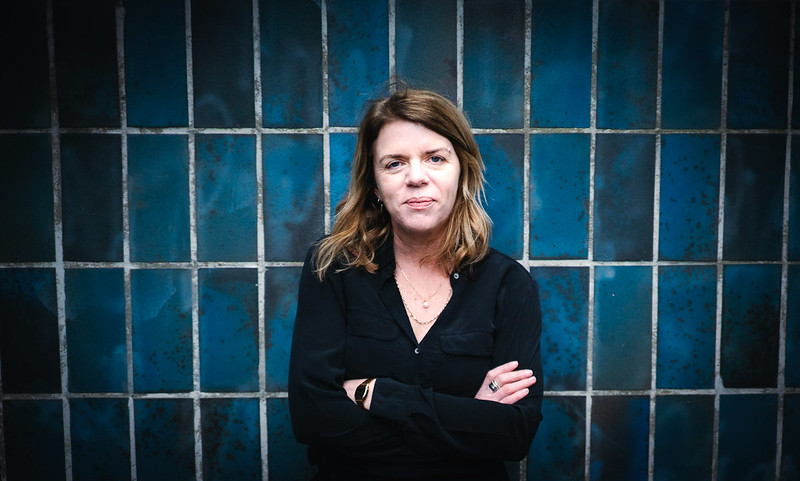
ABOUT THE INTERVIEWEE
Susanna Crossman is an essayist and award-winning fiction writer. Her memoir, Home is Where We Start, was published by Fig Tree, Penguin, in 2024. Her new novel, The Orange Notebooks, will be published by Bluemoose Books in 2025. She has recent work in Aeon, The Guardian, Paris Review, Vogue and more. She regularly collaborates with artists and filmmakers. When she’s not writing, she works on three continents as a lecturer and clinical arts-therapist. Born in the UK, Susanna Crossman grew up in an international commune and has lived in France for over half her life.

ABOUT THE INTERVIEWER
Stu Hennigan (above) is a writer, poet, editor and musician from the north of England. His book Ghost Signs (Bluemoose) was shortlisted for two national literary prizes, including Best Political Book By A Non-Parliamentarian at the Parliamentary Book Awards in 2023. His short fiction, essays, poetry and criticism have been featured by Prospect, 3:AM Magazine, Lunate, Lune Journal, Broken Sleep Books, Poetry Birmingham Literary Journal, Massive Overheads, Visual Verse and Expat Lit. His next book, Disappear Here: Bret Easton Ellis’ America, a social and cultural history of America from 1970 to the present day as seen through the lens of Ellis’s novels, will be published by Ortac Press in late 2025. He also plays guitar in the rock band Kamień.

