
What you call clouds – I call smoke
That’s how I find the box of heads. Unlatching the lid, the case is long and rectangular, about a foot and a half by six inches. It is built especially for the heads, with each sequestered away in its own perfectly sized compartment, and the interior lined with gray velvet. Opening, they all gaze up in unison from their cubicles. It’s creepy. Their stare follows me where I move. Four little man heads, and the other three are women. Each alternate, so first it’s a boy, then a girl, and then another boy. It’s orderly, sort of voodoo or demented duck-duck-goose. Half matted, their hair feels real, like too real, cut away from a wig or from scalped dolls. The second from the left smiles vacantly, her teeth showing, and eyes too shiny. Dark eyes and skin pale luminous off-white.
Read an extract from Jared Pappas-Kelley‘s Stalking America.

Orpington to London Victoria #9 – George Berger Column
This is Dulwich College: a private school and semi-official groomers to the future inhabitants of the corridors of power. And Nigel Farage. I finished the previous chapter with my old primary school friend talking about the lightbulb wars in the train tunnel. He was a Dulwich College pupil and was in the same year as Farage — “a bit of an oaf” he recalls, in telling language. They would sing the contemporary hit by XTC “Making Plans for Nigel” to him, I’m told, but presumably without the menace that might have accompanied it had it been sung by pupils of the other school in the tunnel wars.
By George Berger.

The ABCs of Post-Everything Depression
This was the year the earth failed to end. Families huddled together in anticipation—so many sunspots exploding at once, waves of radiation hurtling across suburbs to ruin sprinkler systems and glue roadkill to the pavement, not to mention the meteorites passing by, third molars of the sky impacting formidably and ever downward, dislodging drainpipes, charring farm fields—and still, no apocalypse.
A short story by Nathaniel Duggan.
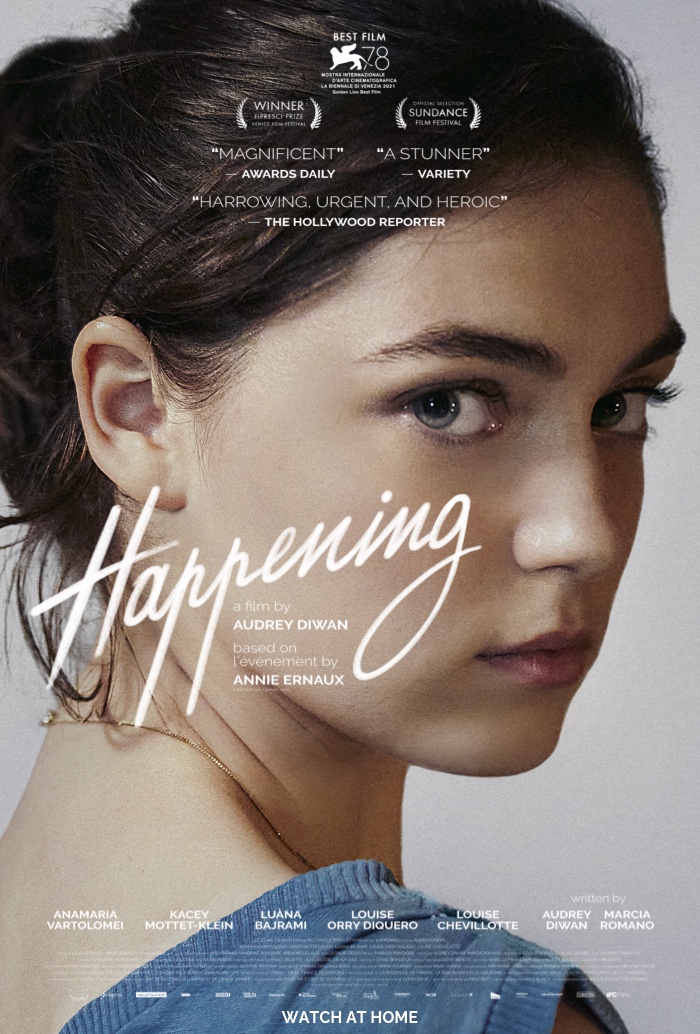
Minute 9: Happening
They are smoking and chewing gum and talking about desire in each preceding scene, of which there are four, all saturated in visceral blue: a mood, a reflection, an evocation of sex, the hottest part of a flame. We are piecing it together, one fire at a time. Everything points to an emergency, but Anne, the narrator, is strident in her denial and refusal to acknowledge her own looming catastrophe.
Christine Hume on the 9th minute of Happening by Audrey Diwan.
Local Bones
The stars are as beautiful as dead lovers a billion years away! she cried, then hitched up her skirt and began the climb. We were all so proud of our ladder of bones, long enough at last to reach the sky. It rattled as she ascended, sprinkling us with an unfamiliar dust. Farewell! we called, Farewell! and, although she didn’t look back, Good luck to you among the music of the spheres! Her many petticoats receded into the shell-blue morning sky, a frothy farewell.
A short story by Zoë Meager.

Welcome to New London
When I’d started writing in the summer of 2013 the aim had been relatively simple: to document a new London that was emerging from the ashes of the Olympic Games. My previous book, This Other London had been inspired by topographical writers of the early twentieth century who’d explored the new London given birth by the expansion of the railways and had seen suburbs sprout in the fields around the city. My walks in overlooked London were a rediscovery of their territory. So now I felt I had a duty to do the same in this century as nascent villages and suburbs were once again spawning across the capital.
Read the introduction to Welcome to New London by John Rogers.
Scream Like a Baby (I Am a Laser)
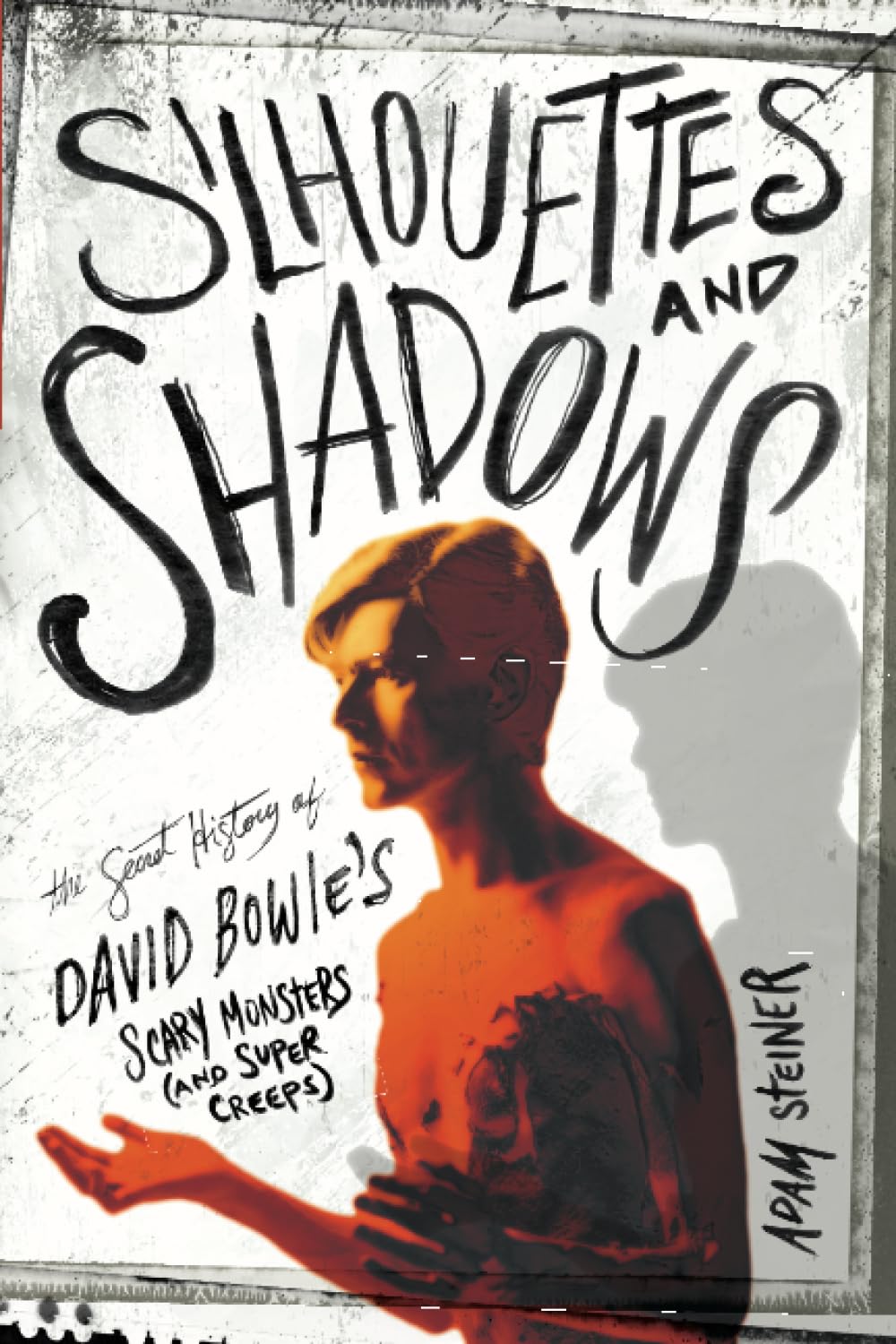
Bowie’s earliest influences provoked an interest in the sexualised power of music performance and its associated fashions. Bowie claimed the proto-glamor and sensuality of Elvis, feeding off of Little Richard’s hyper-sexualised preacher energy, from the hip-thrusting beginnings to the Vegas jumpsuit of rhinestone self-eclipse, as being closer to the feminized glitter and make-up of glam rock than many would allow: “If his image wasn’t bisexual than I don’t know what is.” Bowie long flirted with bisexuality as a lifestyle choice, and homosexuality as a business decision, trying anything and everything promiscuous, he offered himself as metrosexual figurehead for the early 1970s as a hangover from the previous decade.
Read an extract from Silhouettes and Shadows by Adam Steiner.
Poem Brut #159 – Each of the tentacles

Each of these visual poems is a multitemporal document that begins with a walk on a beach in search of objects of interest to photograph and ends with the beachcombing of a collection of found texts in search of phrases. These found phrases, reassembled on the surface of the photograph, re-enliven the images during periods of time when I am far from the beach and longing to return. In moments of landlock and heightened desire for the meditative pleasures of walking the coastline, I return to my photographs. These photographs are a part of the record I keep of rare beach walks. When I return to this record in my Manchester flat, it gives me a renewed sense of the surreal and mysterious quality of things encountered at the edge of the tide. The collage poems I create on the surface of these photographs are responsive but also impulsive: they rely on a randomness that is in tune with the chance discoveries made on the beach.
In the 159th of the Poem Brut series, new poetry by Francesca Brooks.

Cake Genius
Anouska has fashioned seventeen tiny marzipan peonies. Leon is weeping over a failed custard. Padraig is doing something with smoke. His is a life of drudgery and his creations represent the possibility of becoming something greater than himself. This is the sort of endeavour where, despite high stakes, everyone is supportive of everyone else. The only exception is Charles, who makes no secret of his competitiveness, his desire to be designated the Cake Genius. He visibly smirked in rehearsal when everyone else’s key lime pies turned out like crap. But even Charles isn’t so bad. When it comes to being an excellent baker, even the most chalk-and-cheese personalities have more in common with each other than with those who don’t bake at all.
A short story by Michael Conley.
How Does That Old Song Go?: Deserter’s Songs at 25
I can’t think of many other such drastic changes in direction that a band has taken in modern guitar/rock music. Maybe Johnny Cash with his American Recordings series. Maybe. Donahue has said that playing in the early days of Mercury Rev was like being in the middle of a whirlpool, but the waters of Deserter’s Songs are calmer, and deeper. It’s an album made by a band with nothing more to lose. They made it thinking that no one would hear it except themselves.
Richard Skinner celebrates Mercury Rev‘s Deserter’s Songs.

A Great Desire to Walk off with Someone Else’s Groceries
What is a puppet? It’s an imitation. A pretend person attached to a real person by strings or wires or something. The puppet is a good analogy for the Heads, whose personas hang loose from their selves. David Byrne, with his puppetish jiggling, snapping into position, bouncing till he aches: here is a man so out-of-touch with his own celebrity that his stage costume barely even touches his body.
Carly Stone on the rerelease of Stop Making Sense.

Sea Weeds
My father strangled the family cat. It felt more like an arbitrary fact than something that had really happened. I have no memory of the event itself, just the aftermath. He had those white rings around his nostrils and his eyes were tight. He was back from another night out pub-crawling along the seafront, and he’d been arguing with Mum. I could guess what it was about, but I don’t know how it came to that. I just know he wrapped his fingers around the cat’s throat and snapped its neck. Mum howled, but she didn’t tell anyone. She hugged me in my princess pyjamas, snot dripping down to my chin. She had pit stains on her nightie and blood under her nose. She got nose bleeds when she was stressed.
A short story by Emily Black.