Don Juan’s Reckless Daughter at 50
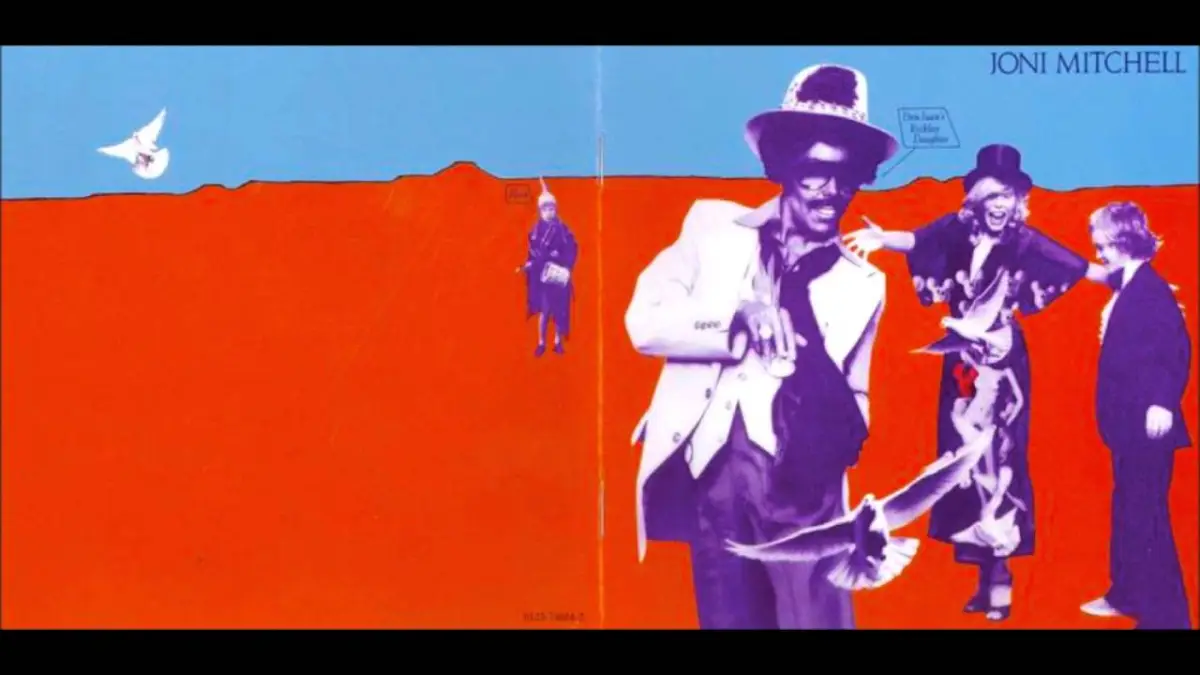
Much misunderstood at the time, the album received mixed reviews when it was released in 1977 at the height of punk. It lost Mitchell her commercial viability. “The Tenth World”, “Jericho” and “Off Night Backstreet” were all released as singles in the UK but did nothing. As the years have gone by, though, the album has grown in stature and reputation. What before seemed artistically muddled now appears as a clear act of supreme self expression. In its ‘carnivalesque’ aspect, Don Juan resembles The White Album by the Beatles or Sign O’ the Times by Prince (a huge Joni fan), and because of the huge variety on it, it’s the only Joni album for me that can still surprise.
By Richard Skinner.

A Pilgrimage of Earwigs
They come from the damp, the doorjamb’s rotten wood gone the color of old bread. They come from under the planter, the igneous rock in the front garden bed where the budding mouse ears hide wet soil that teems with them. They come from the eastern side of the house, from under the abandoned silver grill destined for Free Dump Day: from the lid and from the corroded wiring and from the slitted vents where fire once poured now come earwigs.
A short story by Chris Murphy.
Speaking In Prosthetic Tongues
Not long after World News for the Worldly World heralded the arrival of the prosthetic tongue, skeletons began appearing on the streets, hellbent on speaking out. Earl came across one while on his way to a dentist’s appointment. “Ask me a question, any question, I dare you,” said the skeleton. “Alright, alright, you got me. The answer is one. Ha!”
Earl’s lower left molar throbbed with dull pain and a root canal awaited him. He had never seen a skeleton walking around before. The skeleton allowed its tongue to drape over its teeth. A tremor traveled like a reflex down the pale pink organ. Earl thought, “That’s a long tongue.”
A short story by Thad Fowler.

The Slippermen
1. Habitat
You reside in the top story of an abandoned building in a unit known as a symmetrical skybox. It features floor-to-ceiling glass walls on opposite sides of the building for observing the external world.
To the west exists an animal sanctuary with artificial constructs known as trees. The sanctuary houses howler monkeys, black and gray, small and ropy. In the center is a retention pond in which the monkeys play and frolic or drown each other.
To the east lies the super ocean, pewter like the sky, roiling with dead sea life and toxic blooms. Almost hourly, the ocean births hurricanes, magnetic storms, and poisonous gases.
A short story by Patrick Pujolas.

Hexagrams of the Heavens: Hejira at 50
The song, full of light and air, may well be the most purely beautiful on the album, with Victor Feldman’s soulful vibes and Larry Carlton’s pointillist guitar harmonics as fine as the vapour trails at those icy altitudes: ‘It was the hexagram of the heavens / It was the strings of my guitar’. The lyrics are exquisite. Each verse presents a conundrum from which there is no escape. The strings of her guitars might well be the bars of a prison; ‘life becomes a travelogue’ with no exit; paradise is false; the roads are ‘cursed and charmed’; Icarus flies too high and plunges to his death; and, finally, she crashes into someone’s arms.
By Richard Skinner.

Agnostic
Convergent evolution is a phenomenon by which two similar-looking species come into existence via completely different strands of evolution. For example: slugs. There are a lot of them, all over the place, all over the ground, crawling and slithering and writhing in various states of amorphousness. They all derive originally from one mollusk which had upon its back a shell and begat all the rest. Time passed. Descendants went in different directions and grew other stuff, like horns, and became different colors, like yellow, and decided to get rid of the shell without telling the others. But then many of the others just so happened to have the same idea, separately, because maybe the shell was heavy. And that’s what me and this one friend I have are like. And I know I’m taking liberties, because I’ve never been in the tiny beansprout mind of a slug before, but my friend understands how evolution works, I don’t have to explain it to her and I never would because that’d be condescending, and yet she doesn’t actually believe it’s real.
A short story by Meghan Proulx.

One Good Look Is What You’re Worth
If someone asks you—like say the USPS guy passes by you where you’re tossed belly sunward on the lawn and on his way to the mail slot asks you—hey there kid what’s new, you say nothing much, except lately what you’ve been up to is you got the hang of holding your breath real nice & long, a good three minutes plus some change, is why you’re lying on the lawn like starfished with a belt three notches tight around your chest so you don’t cheat, until your eyes go flat & milky and your mom yells thru the kitchen window at you quit messing around and get your ass up off the grass and stop embarrassing the mailman.
A short story by Max Steiner.

By its Bad Side
From the perspective of the present we would call any such indictment — if indeed one can be detected — weak. But we would thereby miss the crucial point that, for a long time, it wasn’t really possible to condemn one’s own people for committing atrocities unto another people. There wasn’t an accepted language for it, other than the discursive mode of mere description. This, anyway, is what Robbins argues in his latest book. It is the long, fraught emergence of precisely this concept — the capacity to name, recognize, and narrate mass violence against noncombatants not as misfortune or necessity but as a distinct moral and political scandal — that Bruce Robbins charts in Atrocity: A Literary History.
Benjamin Libman reviews Atrocity: A Literary History by Bruce Robbins.

Transubstantiation of the Soul: An Interview with Sue Fox
I want to find keys into my being and know how it works. Just as there are the 12 stages of the decomposition of the body, there are also the 12 stages of orgasm. I am like my own doctor always working out what is going on and reacting accordingly and aesthetically. We can be the masters of our own bodies, recording all the information and gaining insight and understanding its intelligence. I could feel my cunt talking to me on every level and was interpreting it and laughing with it and what it had to extoll, like a puppet’s mouth, like a ventriloquist doll. The cunt is the mouth of creation, the holy grail.
John Wisniewski interviews Sue Fox.

All the Answers and All the Power in All the Wrong Places
As with most Protomartyr songs, Scott Davidson and Alex Leonard (on bass and drums respectively) have spun tectonic plates on which to serve Greg Ahee’s angular, blissful guitar and Joe Casey’s vocals. Casey appears like a disgruntled college tutor that has snatched up the mic at a town hall meeting to denounce the corrupt, cruel, conservative citizens. He weaves about the stage barking poetry and intelligence into the room, which is received and reflected back by the surging crowd’s raucous voices and jabbing index fingers. There is something straightforward and righteous about Casey and the blissed out musicians backing him.
David Henningham on Protomartyr at the ICA in London.
Where the Intimacy Lies: An Interview with Polly Barton
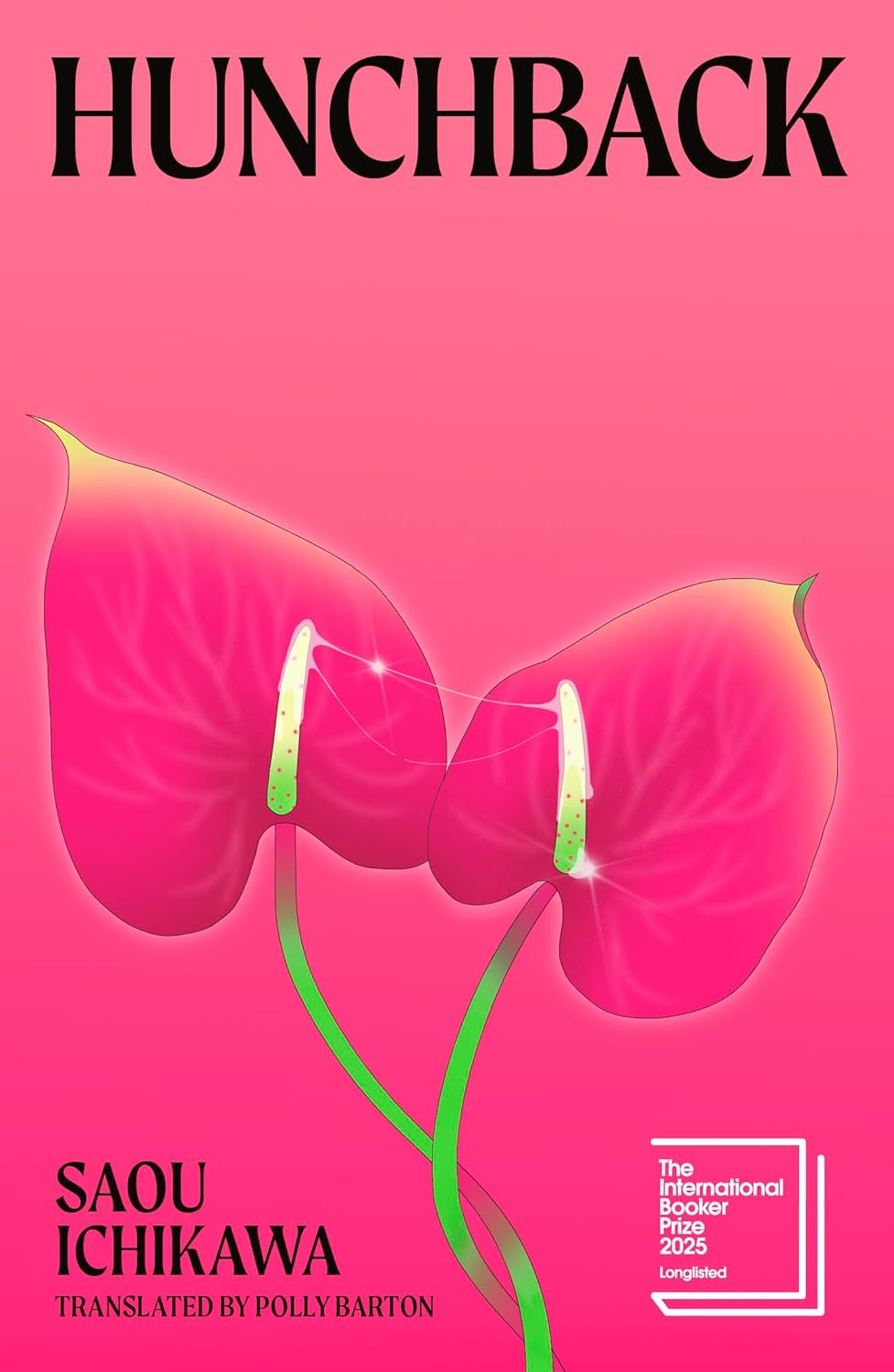
People talk a lot about fidelity in translation: over time, I’ve come to see the kind of fidelity that matters as that of being faithful to the spirit of the work, its voice, rather than the individual words. It helps that this idea of a ‘literal’ translation is often either impossible or literally meaningless when working with a language like Japanese: I think that has contributed to shaking me free from the compulsion to always cleave as closely as possible to the precise configuration of words in the source, and to tap in instead to a broader conception of the holistic scene conjured up by the text, as read within its native context.
Polly Barton talks to Katy Wimhurst about her English translation of Hunchback by Saou Ichikawa.