
Dear Father, Who May Not Be In Heaven
In Homolovi, surrounded by storm clouds, faced with a hissing bull snake, I decided—like a fool—to pray to my father for guidance. The last time I’d prayed, my mother had lost her left foot to an alligator. I was seven and although my parents hadn’t raised me religious, I was aware of the concept of God. But because I lacked any spiritual guidance, I could only conceive of God on the same plane as Santa Claus: somebody you prayed to in order to receive the objects of your desire. Actually, I associated Jesus with Santa and I associated Jesus with God. I did not fear God; I wasn’t worried about going to Hell. My parents never invoked His name, at least not directly. My father, steadfast in his quaintness, opted in the few times he did exclaim anything for My word! or Oy!, and my mother didn’t exclaim at all; she’d hum until she got what she wanted, which was either a natural return to homeostasis or an apology. But no, that’s not right, I think, trying to ignore the lithe, black tongue of the bull snake, the darkening clouds of my lowest moment, because she did exclaim; Omp! she’d shout, yes, she’d Omp! in place of stomping because she found it difficult to stomp without a foot…
A short story by Caleb Berg.

Slaughterhouse 666: Kicking and A-gouging in the Pus and the Gore and the Fear
Imagine all those sentences, those paragraphs – the birth of a novel now lost among New Year’s resolutions in discarded Moleskine notebooks, or in folders on laptops with .txt files for passwords, or summoned on a walk through Lumphini Park with the burden of a stillborn incipit that you must remember to write down as soon as you get home but know that it will be lost in the purgatory of forgetfulness. How many millions of them are there that never got further than that – the abortive exordium that sublimates before the ink can fix its potentiality into the permanence of a page? These are the truncated fragments, the skeletal torsos of a literature that refuses to be born. Each one is a failure – a false start trapped in the eternal becoming of a thought.
Steve Finbow reviews Seven Coffins for the Killer by James Havoc.

Hesitantly Surfing the Looming AI Tsunami (Part One)
The truth is that Mars is a launchpad to nowhere. Rather than attempting to save the planet by investing funds into programs that might help the cause, Musk suggests that we leave this deteriorating planet behind and move on to pastures new, but he is also implying that a vast majority of the population would be left behind as well. Most of us won’t be able to afford a one-way ticket to the red planet. All this chat about colonising planets is nothing to do with the average person on the street. We’re not invited!
Chris Kelso interviewed by Graham Rae to coincide with the release Shadowspheres.

In Town, Earlier Than Usual
The women wearing this style were carrying cups of coffee. They were hurrying and looked serious and hard-pressed, as though they were quite high-powered – account managers for companies transitioning from advertising or graphic design to AI-collaborative advertising or AI-collaborative graphic design perhaps – and were struggling to accept the effort they had to put in to merely stand still in a role that wasn’t nearly as much fun as they had once imagined it might be. I didn’t know whether to feel sorry for them or not.
By Charlie Hill.

Lingering Quietly Beneath the Suface: An Interview with Rick Castro
A leatherman drove up on his Harley, took a quick survey of the exhibition, came up to me and said, “I’d like to purchase two photos” (my first sale). He then said, “I would like to publish your book” (my first book). The leatherman turned out to be Durk Dehner from the newly formed Tom of Finland Foundation.
Rick Castro interviewed by John Wisnieski.
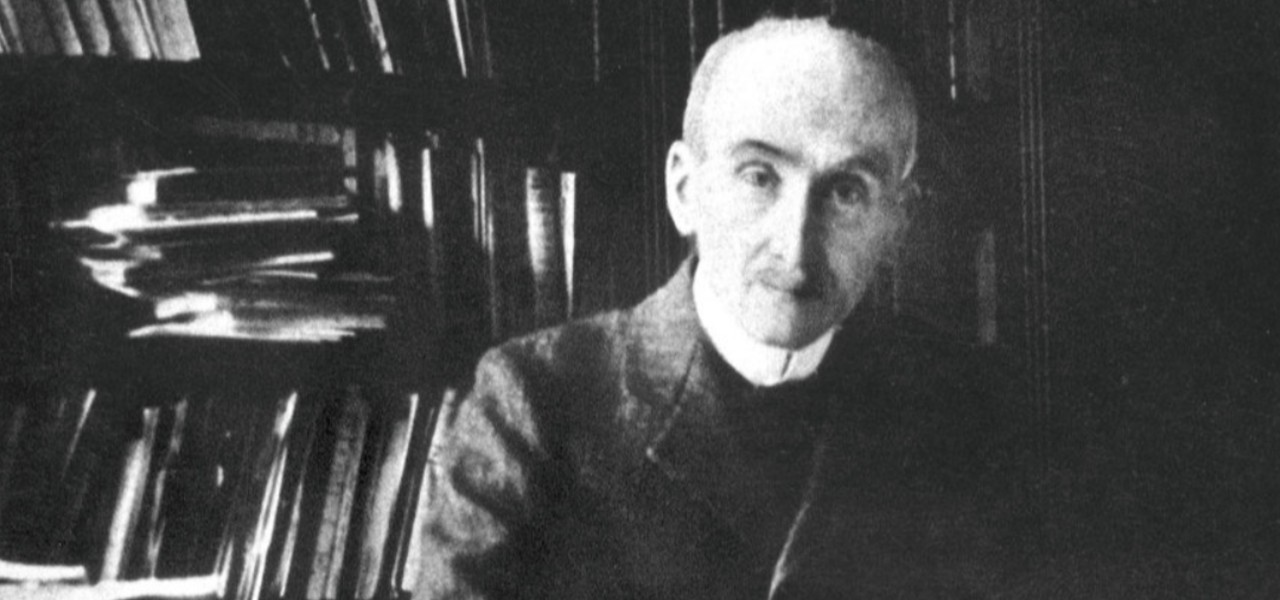
Matter and Free Will
Suppose that there were certain human abilities—I decline to call them merely mental, lest all the problematic assumptions of the Cartesian philosophy be imported at once—by which the gathering of thought and concentration and will might move matter, with the addition of only one further condition. This condition being not the familiar (though inexplicable not only to the dualists but inadequately captured by the idealist and materialist philosophers as well) realization of will in the movement of the human body (my will raises my arm, my arm raises my glass), but instead that condition of fully sincere and passionate belief: one’s will (here I cannot say “mine,” as I have never discovered such an ability in my own experience) raises one’s glass into the air directly, no more defying gravity than does an arm and hand, but countering force with force, here that force formed by an adequate strength of belief, rather than muscle.
A short story by Ben Roth.

Angst
As soon as the telephone thrummed, I knew. I was in the back bedroom. It was the last room in the world. At that time, the stories that came were telling me what they wanted. I could believe anything, for I’d stopped believing myself. Lying there, defenceless, without papers. Without remedy strong enough to keep me alive. Without being dead. But prey to the ache of hope. All the languages were spoken in the world except mine. All the books were writing to me, except the one I’d have liked to read. No one ever wrote that.
Read an extract from Angst by Hélène Cixous, translated by Sophie Lewis.

a plant enters the supermarket
a plant enters the supermarket without a receipt. the clerk doesn’t stop it. the plant looks at him. he feels seen for the first time by something that is not a customer. in the frozen food aisle, the plant opens its leaves like hands. the clerk takes note with the scanner. the plant absorbs the cold’s humidity. the clerk becomes slightly dehydrated. their connection begins as an involuntary data exchange. the clerk’s badge starts pulsing in a photosynthetic rhythm. the registers record a change in chlorophyll level in the system. the store manager doesn’t understand.
A short story by Federico Federici.

What is the Archive?
“Light,” he said. A single gooney drew a black curve against the stars. We watched it fly out over the water, out of our sight. “Light, yes. Aetiology in its purest form. A pathway to the past. And beyond that, perhaps, to a time before. Maybe that’s what truth is, Lil — a time before the past. For many years, I didn’t see it. I set myself the task of naming, numbering and tagging — a taxonomy of disconnected dots. The archived artefacts. Except these dots, when scrutinised closely, come apart. They are not dots at all, but themselves constellations, made of their own dots, and they in turn . . . the fractal geometry of the search for truth, Lil. It might drive a man to madness. But step back, or lie back rather, and, holding the gaze steady, focus not on this or that, but on the entirety. Better yet, slacken the optic muscles — let the whole thing blur, just a little bit.”
Read an extract from The Coast of Everything by Guillermo Stitch.

A moral guide to stealing
I: INTRODUCTION
Background
Following the shitshow that was this year’s holiday season, I [Primary Moral Actor] have made the decision to drive my rented Renault Clio down to mother’s to tell her precisely what I think about my stepfather’s homophobic comments and general behaviour over the Christmas period before he gets in from work at three p.m.
Secondary Moral Actors
John, a homophobe: at work
Lesley: making tea (also, later: in the back bedroom)
Preamble
While Lesley is fumbling with a pack of Hobnobs in a daze and boiling the kettle for the third time to make the cup of tea she offered me twenty minutes ago, I spot a very chic pair of trousers [Ethical Catalyst] drying on the radiator in the downstairs bathroom.
A short story by Holly James.
American Sllop
I. In which Dr. Hawthorne comes to town ~
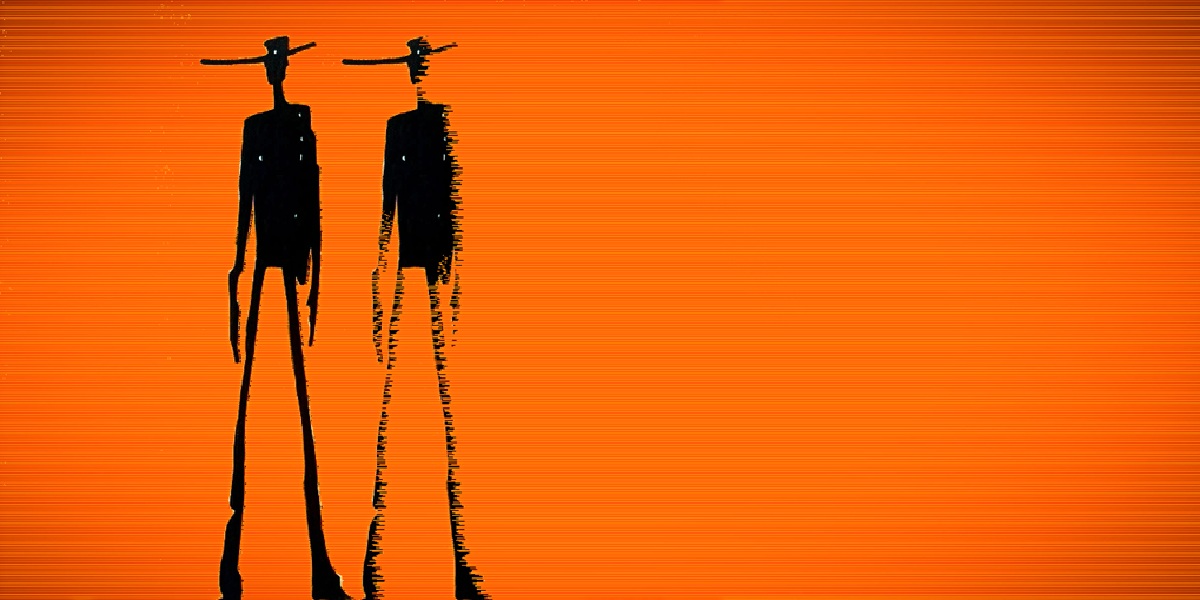
The snakeskin wagon that caused such bluster in the broadsheets from Oregon to Illinois kicked dust over the saloon steps. The menfolk—wranglers, drunks, malingerers—took to hollering, and someone rang the rusty church bell.
Jesse, the Calloway orphan, hung back, careful not to impede the homesteaders and traders and their women and children skittering through the bone-dry dirt to see Dr. Hawthorne himself lay out his wares, or more specifically, his ware: a hinged box barely big enough for a decent-sized hog.
As Jesse traipsed his two-headed donkey Buridan along to gawp, the flies and the stink of the freakish beast curled the lips and twitched the moustaches of his estranged townsfolk. The townsfolk collectively chuntered and pondered, until the prancing Hawthorne flapped out his beaver-tailed coat and jigged around the inanimate sideshow as if some holy spirit compelled him.
“This, good sirs!” He hooked a wandering eye. “This is your gen-u-ine prayers answered. Your leisure, your artifice, transmogrified!”
A short story by Ian Johnson.

Salo
The bedside stool held her book and homemade book corner, which she’d learned to make from the internet. At the moment the algorithms were sending her crafting ideas, but some fashion ones too, so she already knew what kind of waist she was supposed to have when she grew up. She’d started wearing a belt but could only last a few minutes. Now when she undressed she’d sometimes squeeze the flesh around her middle and the next day she’d do a few star jumps. Once she said she was on a diet and didn’t eat her weekend Haribos.
A short story by Caroline Clark.