
An interview with the Gentle Author, by Andrew Stevens.

3:AM: Your blog, Spitalfields Life, has an overarching premise behind it, a ‘promise’, even, to write every day to make 10,000 stories about life in Spitalfields.
GA: I’m in the eighth year of the blog, with about 2,600 stories. I’ve interviewed about eighteen hundred people, that’s eighteen hundred pen portraits.
3:AM: Was it always your intent to have a mix of photographic archives and reportage, and those pen portraits?
GA: It’s sort of evolved really. I started out interviewing the people on the doorstep, but geographically it expanded and other elements started to come in, especially photography, as you say. It became involved with telling people’s life stories and that led to the political aspects of it. I interviewed so many shopkeepers and began to realise they were really struggling and out of that those shopkeepers got together and formed the East End Trades Guild. Then I became involved in campaigns to save buildings and that became the East End Preservation Society. So the whole texture of it has evolved beyond what I originally expected.
3:AM: When you started the blog eight years ago, the tone and scale of development wasn’t as pronounced or aggressive even, as it is now?
GA: This is a complex issue really. If you look at John Stow, who wrote the first Survey of London in the 16th century, the reason he wrote the Survey of London was because in his lifetime the population of the city doubled. They built all these tenements and in his childhood he remembered all these people doing archery in the street and dancing, everybody knew each other in his neighbourhood. But by the time he was an adult that had all gone, so he felt this sense of loss and that it was imperative to record the city as he knew it. I think this reflects a wider quality of London as a city which is very seductive and people become very engaged with the London they first know, either growing up here or the city that they came to and that’s totally tangled up with their formative experiences. And when you first know the city you have this sense of delusion that London ‘belongs’ to you and of course what happens in the city is it changes and you feel it’s being taken away from you, so you end up in the situation where you feel like a stranger in the place you know best. And that’s the kind of paradox of London really, but in parallel with that, I do think there’s been an escalation in the last few years, due to globalisation really and the domination of corporate culture. The quality of Spitalfields has always been derived from its proximity to the City and the fact that people could rent premises here at low cost and produce things to sell to the rich people over there in the City. You can see that going back over a thousand years. But what we’re seeing at the moment are huge developments whereby properties are taken away from large numbers of small businesses and replaced by huge corporate interests, that’s very shocking for the people here.

3:AM: Any developments in particular?
GA: The two obvious examples are the Fruit and Wool Exchange, which was a large building with 200 small businesses in it, all employing local people and against the wishes of the local councillors that was demolished. That’s now set to be the corporate headquarters of an international law firm, who won’t employ any local people and similarly with Norton Folgate, where the needs of Tower Hamlets are for more affordable workspace and more affordable living space. But again, the decision of the council to keep that urban landscape as it is was overturned by the Mayor of London, to destroy the fabric of a conservation area to pave the way for 10-storey blocks of corporate offices which have floorplates going from street to street.
3:AM: That was Boris Johnson when he was Mayor? He’s a kind of pantomime villain in all this.
GA: I’d say historically there’s been two figures who’ve been symbolically destructive in the history of Spitalfields. The first was Henry VIII, who in the 16th century destroyed the Priory of Spitalfields, which was a hospital open to everybody, a mixture of a homeless shelter, a care home, a hospital, all these kinds of things in one and he turned everybody out and had it demolished. The outbuildings were given to his friends to live in and he turned the grounds into his artillery ground, so that was immensely destructive. But the second most destructive person was Boris Johnson, who again overruling the wishes of local people grabbed two massive portions of the neighbourhood for the City of London and for international business interests that won’t benefit us at all.
3:AM: Spiegelhalters was saved though.
GA: I have mixed feelings about all of this. For instance, people here reel at the scale and speed of change, but I can see it’s almost as if we’ve come through a storm really and we’re out the other side. Yet I can also see an algorithmic curve, with Crossrail coming in it also means that Brick Lane will be as central as Bond Street and all that entails. I’ve been doing interviews with small businesses here who are facing 300 percent rent increases and more than doubling of their business rates, all at the same time. So were going to see a massive emptying out of commercial premises here, from independents, which means there’ll be a massive wipe-out of independents in the next two or three years.
3:AM: As a blogger, you’ve been quite influential in setting up a preservation society and a trades guild, what was your role in galvanising and bringing these people together?
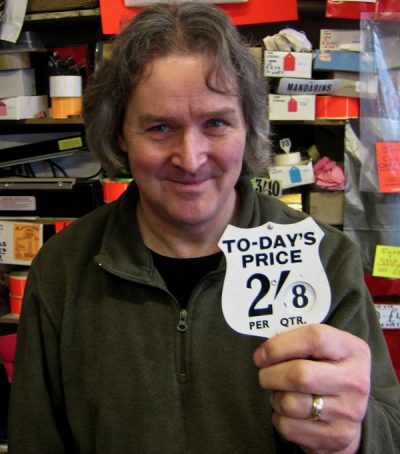
GA: Really it all came from Paul [Gardner] here, as I’d written about him and Gardners Market Sundriesman, which is the oldest established family business here since 1870 and he sells paper bags, the cheapest paper bags in London, he tries to sell them as cheaply as possible and have the lowest profit margins, there’s a certain amount of money he needs to clear each week, about £250 which he lives on. He’s universally revered here and I believe performs a kind of public service in the sense that he supports hundreds of small businesses and, in many ways, manifests the culture of the place. He’s sort of on the borderline of what you might consider to be commerce becomes culture. Anyway, Paul was under strain and I realised that there were others under strain, so 200 of those businesses met in Christ Church to found the East End Trades Guild to try and have some kind of voice collectively.

3:AM: Beyond that, the blog acts as a kind of interrogator of place, albeit pseudonymously?
GA: Both of my parents died, quite close to each other, and after they died I realised they’d both died the same age of their lives. Because I’d taken a career break to be carer of my mother for five years, when I wanted to start again, I had to make decisions about what I was going to do with the rest of my life and I worked out how many days I had left until I reached the same age as both of my parents had died at. The total was 10,000 days and as a writer, I’ve always been very disappointed with my own output and so I thought “You’ve got 10,000 days here, what would be the best way to use them?” And I thought the best way to use them would be to produce 10,000 stories and to address the culture that was on my doorstep, by writing the stories that nobody else was writing. But this was edged into in a very innocent kind of way, without any grasp of what that would mean.
3:AM: But why the Gentle Author?
GA: That was because I didn’t want it to become about me, I wanted it to be about the subjects or about the people I am writing about and I wanted it to be about the person presenting these characters and to advocate them, but I wanted to factor me out of it as much as possible. All I really wanted to reveal was that my intentions were benign.
3:AM: You’re not from here originally?
GA: I come from Devon and my first job was here in the Bishopsgate Institute and this is the only part of London I ever felt comfortable in because I was brought up with the idea that you speak to people in the street, or you thank the bus conductor, you talk to people and engage. I always found the city, London, very alarming because of the lack of this, because in the East End you can still greet somebody and they’re not surprised by it. These are some of the reasons I felt comfortable here but in the last year, I discovered that my great-grandmother lived 50 yards from where I live now and the family left here to go to Devon in the 1880s. Before that my ancestors were shoemakers in Bethnal Green, I’ve got ancestors who were baptised in St Leonard’s Shoreditch. I’m not in any sense mystical about it or feel that I’m like a homing pigeon, but what it reveals is something about the incredible diaspora from the East End historically.
3:AM: Likewise, my garment trade ancestors at St George’s German church in Whitechapel and my son at the Brazilian church St Anne’s nearby more recently, so it goes on. We can’t really discuss that or all 2,000 odd stories, so I will just mention those where we have a common connection, for instance, Viscountess Boudica. How did that story come to be written?

GA: I’m always aware or searching for people are willing to be witnessed or portrayed, those who want an audience [laughs] or who could benefit from one. I saw Boudica in Brick Lane and it was clear that this was somebody who had a story and had an audience [laughs], so I just walked up to her one day and asked if I could interview her, that was the beginning of our friendship. Also I felt that Boudica was an innately benign character and it was slightly alarming to me that people either felt threatened by her or derisory, I felt that by writing stories that I could actually introduce people to her in a sense, it meant that when they next saw her that they would be more comfortable to talk to her.
3:AM: It was only via your blog that I could gain a sense of her complex and layered personal history, I know that you’ve charted on there a kind of what happened next. She’s now in the Midlands because the housing authorities made her move on from the area under the cuts?
GA: What I understand is that she lived on benefits and these were reassessed and suspended while that went on, so she had no income and this meant she couldn’t pay council tax or rent. So they took her to court for non-payment of those and the reassessment of her benefits was very much to her detriment and very much mishandled, so she was suddenly in a situation where she had no income and with court action for debts and eviction, all at once. Through the blog, we managed to raise money to pay off her debts but it was clear that the powers that be were going to use it as an opportunity to move her out.
3:AM: Are you still in touch?
GA: Yes, though she’s still struggling and they’re pursuing her for even more debt.
3:AM: Clive Murphy, who has been published at 3:AM and read at our events at Indo in Whitechapel a decade ago, is someone else you’ve shone a light on the existence of. Can you say why?
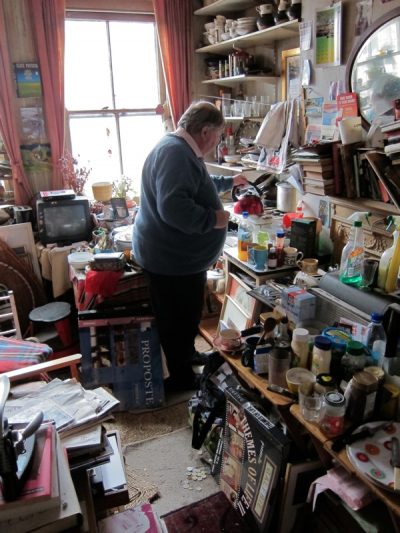
GA: Clive’s an oral historian who came here in 1973 and moved into a flat above the Aladin restaurant on Brick Lane. He started doing oral histories but he took a very different approach to the one I take in the sense that he basically wanted to do a book about each of the people he interviewed [laughs], so that meant doing interviews over very long periods and editing them into full-length text autobiographies, if you will. There were a string of these published, he’s also a novelist but he’s an inspiration to me, a wonderfully magnanimous character. For the last 20 years, he’s been working on the oral autobiography of the Cat Lady of Spitalfields, Joan Lauder, which I’m very passionate to try and publish.
3:AM: Then there’s the Mulberry Tree.
GA: The one in the grounds of the Chest Hospital? Yes, this is a very strange situation where a tree that has been understood by generations to be of significant history. It’s one of the mulberry trees imported by James I at the beginning of the 17th century and stood in the bishop’s palace in the grounds of what became the London Chest Hospital and in the records of the Royal London Hospital from the beginning of the 20th century there are accounts of the tree, so it’s widely understood to have this preservation order on it. Essentially, as far as anyone can tell, it’s the oldest tree in the East End and a relic of the era before the East End was built, a connection to an earlier time when it was brought in to create an indigenous silk industry here, so it obviously tells a story about the manufacturing history here. But what’s happened now is that the former Chest Hospital has been sold to a developer, who is proposing an extremely overblown development and their very first action was to propose a building where the tree is and they’ve been given permission to move it, even though it’s a protected tree. In essence, the actions of the authorities to ‘protect’ the tree are just to work with the developer and have it moved, which I find very puzzling and I can’t understand why you can’t build a building around it or in another place. Why is the assumption that a protected tree, which is not supposed to be touched should just be moved, just because someone wants to build a building? You have a building there which tells a story of philanthropy and it’s been taken and exploited for financial gain, in a development of luxury flats which has a very low percentage of affordable housing. I’m not a religious person, but something like that is as close to sacred as you can get really and I find it deeply disappointing. I think it will be looked back on as a judgement on our times.
I was equally amazed when they discovered Shakespeare’s theatre in Shoreditch, where Hamlet was first performed and to me that’s a site of global cultural significance, important for this country and the world culturally, I couldn’t believe the first response was ‘Let’s put a shopping mall and a tower block of luxury flats on top of it’. I find this really laughable, I can’t even begin to grasp how people think that way.
3:AM: Part of the blog’s appeal and the reason it’s garnered such a wide readership is your ability to peer into all these hidden places, was that a motivation for you to set it up?
GA: Oh yes. As I child I always wanted to go behind the counter in shops, I could never understand why you couldn’t just talk to everybody. Where I grew up everybody was retired, it was all old people and I was the only child on the street, so I just used to go and knock on all the doors of these people when I was six years old and say ‘Hello, can I spend a day with you?’ So I spent all my time with these old people, doing their gardening or making apple pies and stuff. I’ve always had this fascination or curiosity and the beauty of the blog is that it licenses you to do that and nobody thinks it’s strange.
3:AM: It unlocks these places for you?
GA: It also comes back to a belief in culture and what I see as value in culture, which is a different thing from economic value. So I suppose I set out to celebrate or champion the things which I believe are of value, which might not otherwise be celebrated.
3:AM: The blog’s Spitalfields Life, but you don’t limit yourself to just Spitalfields as such. Where do you draw the line?
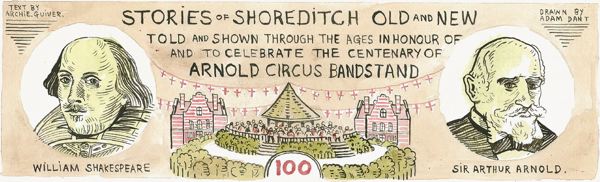
GA: We’re sitting here [in the Golden Heart] in the parish of Spitalfields, as it was created in the 1720s, what’s now the ward of Spitalfields Banglatown in terms of elections for local councillors. But if you go back 300 years, then it was generally understood that all the land east of Bishopsgate to the River Lea at Stratford was Spitalfields. They were the ‘hospital fields’ quite literally, so for example when people talk about Spitalfields Silk, that meant silk that was produced between Bishopsgate and the River Lea. Here in Spitalfields you see all these big houses that were the merchants’ houses, all the weavers were in Bethnal Green and beyond, their houses, which were wooden, have not survived. So, I suppose, I see Spitalfields as a catch-all term really, I think it expresses a certain kind of culture and way of life. It’s the centre of gravity of what I do, but I don’t restrict myself geographically and indeed we’ve gone outside the East End, outside London occasionally, for stories which I feel relate to themes and threads that I’m writing about.
3:AM: Such as?
GA: Such as the hyacinth farmer [laughs], who has the national collection of hyacinths that he pushed up from 120 to 265. He’s up in Waterbeach, Cambridgeshire, but what happened was historically his family grew fruit and vegetables and sold them to the Spitalfields Market in a van twice a week, but the increase in industrialised agriculture all around him took away the economic possibility of that so he had to do something else. His alternative was to become Britain’s only hyacinth farmer, so that’s a story where it might seem leftfield to go to Waterbeach and interview a hyacinth farmer, but then you discover it’s completely connected to here. A similar question was when I interviewed Britain’s last walnut grower and they were intimately connected with the market as all their produce came through the market. Spitalfields Market was, through the railway, the destination for most produce for the east of England.
3:AM: OK, so is there anyone would you automatically rule out to consider for interview?
GA: We don’t do celebrities or big politicians.
3:AM: Have you had any approaches? Who?
GA: Yes, we’ve been courted. I think what happens is that PR people think that if I was to write about somebody it would give them street credibility. So I’ve got this line now where I say ‘You’re too big for Spitalfields Life‘. The point is those people get plenty of coverage elsewhere and I’m there to write the people who are not getting any coverage anywhere else.
3:AM: As you said earlier, the blog’s generated a number of other activities for you, which include your own paid for courses on blogging. Do you feel the need to impart what you’ve learnt along the way as a craft or is it just income generation for you?
GA: What happened originally was that when Hachette published the first Spitalfields Life book, The Guardian approached me and asked me to run a course. When I did the first course I had no idea what I was going to do, but I’d had this experience when News International were going to put up a paywall around The Times, they approached me because they were very interested in how I seemed to have a very engaged relationship with the readership and they felt that if their paywall was going to succeed they needed to do that to. So they said ‘Would you be happy to come in and have a chat with us?’, so I went to them and went into the boardroom…
3:AM: This was at Wapping?
GA: Yes. And they said ‘We think that you’re Rupert Murdoch’s worst enemy in terms of what you do. And what we mean by that is that 30 people like you could wipe us out.’ So I feel by doing the courses and encouraging others to write blogs, that’s what I am doing.
3:AM: Trying to bring down the Murdoch empire?
GA: Yes. The internet’s what you make it and there’s lots of negative aspects, but one of the positive aspects is that more voices can be heard and different stories can be put forward. I love doing the courses as the people who come on are really serious and want to do this, without exception people have wonderful ideas. They’re always euphoric, so I do that three times a year and it’s a wonderful thing to do. These things seem to complement each other and the challenge has been to balance it all, between producing a story every day, the political involvements, running the courses and publishing books.
3:AM: How did you end up also becoming a publisher then?
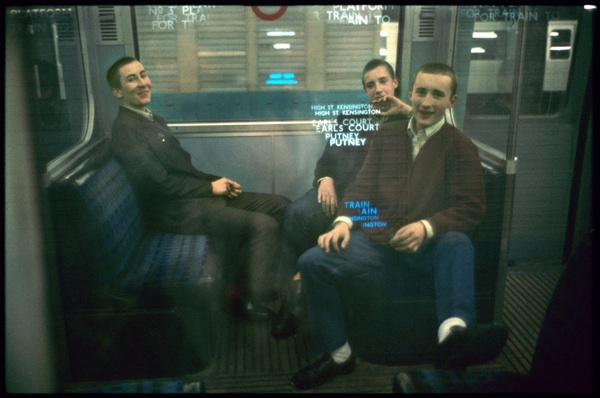
GA: That happened quite accidentally really, in the sense that the first book was published by Hachette, which is the third or fourth biggest publisher on the planet and hugely successful. But I just felt that there was a tension between their ambitions and my ambitions and it made me realise that I could just do them on my own. There are certain bodies of work that come my way, like Horace Warner’s Spitalfields Nippers where you have a photographer who photographed the poorest children in Spitalfields around 1900 and he’s a great photographer by any standards but was completely unknown and through the family we found this album that had never been seen and it felt imperative that somebody had to publish that. But that’s also expanded to other photographers, like Bob Mazzer, the tube photographer who’d spent 20 years trying to get a book published and had been rejected by everybody and it was clear from the response on the blog when I published those pictures that people loved these pictures and that we ought to do it. Also, I suppose most poignantly Colin O’Brien, who had started taking pictures of his everyday life in 1948 and carried on until a year ago, it seemed to me that nobody had recorded that span of time for the everyday existence of Londoners and that it was a brilliant and unique canon of work. We were able to produce a dignified monograph of that, except what didn’t know is that when we published the book he died a year later. It was quite a disarming and disturbing experience but I am so relieved that we did that and Colin’s legacy is secure and he went from being a photographer that wasn’t on the map to one with a reputation. Now no one can write about photographers in London in the second half of the 20th century without writing about Colin O’Brien.
3:AM: You’ve documented the visual culture well, but what about literature of the East End?
GA: We’re moving in that direction, yes. We published our first book last year which wasn’t about pictures and my first book Spitalfields Life was a textual work with illustrations secondary to that. But last year we published a major historical biography of Joseph Merceron, who was this 18th century magistrate and gangster who built Bethnal Green for his own nefarious purposes. Somebody had spent 10 years writing a very brilliant biography and uncovering this story which was entirely unknown yet goes a long way to explain how the 19th century East End came to be. It’s generally assumed that the human catastrophe of the 19th century East End was something that happened naturally, like a rain shower, but it simply wasn’t. There were people who built the most appalling housing in order to profit by it, people did it deliberately, they built housing without drains to save money and then the cholera came. Merceron built dozens of pubs, he constructed Bethnal Green like the Mob constructed Las Vegas, there were more pubs, more gambling houses, more whorehouses than the rest of London put together. And the human catastrophe that he was responsible for is still being worked out, so it seemed to me a very important narrative that sits behind a lot of the other historical narratives and I was very proud to be the publisher of that. Then last week we’ve republished A Hoxton Childhood which was Albert Jasper’s memoir of growing up at the start of the 20th century in Hoxton and he wrote a sequel which has never been published until now which is about what it’s like to be middle class and live in a suburb when you’ve had a 19th century childhood in the East End. So many people have travelled that journey and made that bridge so it seemed important for me to put the two books together and to give the whole thing dignity and exposure, especially dealing with Hoxton which is part of the East End so devastated that there’s very little left of old Hoxton.
In that sense, it’s all about important narratives for the East End. There’s been a widespread assumption for quite some time and unfortunately still persists that the East End is, in itself, the antithesis of culture. I believe that what I am about is promulgating the sophistication of the culture of the East End and it’s my belief that almost everything we believe to be the culture of London actually came out of the East End. I suppose the books we publish are bodies of material, whether it be text or pictures that I believe are really important and I believe there’s an appetite, that’s why we do it. As the books are funded by the readers, I cannot publish a book unless the readers actually want to pay to have it published anyway, so all those things go hand in hand.
We’re publishing a book in October called the East End Vernacular, which is a history of painting in the East End in the 20th century, focusing on the artists who painted East End streets and there’s a continuous thread there of artists that are mostly disregarded. The East London Group, who painted between the wars, have recently returned to prominence, but there are people post-war and before, but the idea is to tell a story there which is being completely ignored and create a beautiful picture book which will show how artistic styles evolved and how the landscape that the artists were portraying also changed.
All images: Spitalfields Life
ABOUT THE AUTHOR
Andrew Stevens is Senior Editor of 3:AM and lives in East London.

