By Alicia Bones.
About a month ago, my father’s aunt Sylvia told me about our way-back-when ancestor who was supposedly displaced Russian royalty. Old Vlad was shy around cattle and preachers and liked to drunkenly poeticize about the Fatherland. I couldn’t remember a time when Sylvia didn’t have a rattling glass of vodka in her hand, and when she told me that story she leaned in close, her breath reeking, and said, “That’s why I am the way I am. You can’t stop blood, can you, Muriel?”
I’d been wanting to feel like a part of something, so the next day I asked Henry, our town’s tattooist, to ink a nesting doll on my lower back.
Henry asked me why I, a thirtysomething spinster—he spit the word out of his gummy yellow teeth—wanted a tattoo “on your shaking flesh.”
I knew he was being an asshole, but what did I care? I found the jiggly, nearly-gelatinous flesh above my ass appealing. “I don’t give a crap what you think, Henry,” I said as the sharp needle pierced me.
A week later, my longtime-absentee father called me to say he was planning a trip to Yorkshire to visit his ancestors’ graves. He’d just gotten word that our relatives traveled in what he called the intestines of the Mayflower. “Fish and chips have always had a particular appeal to me,” he said. I found his voice snobby for the first time. “Met up with this cousin in Scottsdale who told me our family was chimney sweeps. Sooty people. I feel like I have that burned-up smell lingering in my nostrils.”
I was excited that Dad was excited. I’d once enjoyed haggis myself, and suddenly a lot of things made sense in a way they hadn’t before. “I never knew for sure, Dad,” I said, “but I could have guessed.”
I felt sorry and stupid about my Russian tattoo then. All that suffering. All those intestine-bound people. I was English, mostly. Or English also. I could feel that English blood coursing through my veins. I went back to the tattoo shop and had Henry put another tattoo on my back. This time he drew a crumpet with steam swirls next to a pot of clotted cream. When I asked if lemon curd should be part of the design, he said, “Nah.”
I liked my tattoo. But just as I was admiring it in my bathroom mirror the next day, I heard a knock. It was my mom. She lived only a few blocks away, so she and I had dinner together every other night. When I opened the door, Mom was excited. “I got the results of our blood tests, Muriel,” she said. “The one for me. The one for you.” She handed me the results. I wanted to see the prominence of my British blood, so I scanned the sheet until I found the percentages of my family heritage. They were:
- 15 percent Russian;
- 20 percent English;
- 20 percent Czech;
- 20 percent Dutch;
I scanned to the bottom of the page and found a surprise:
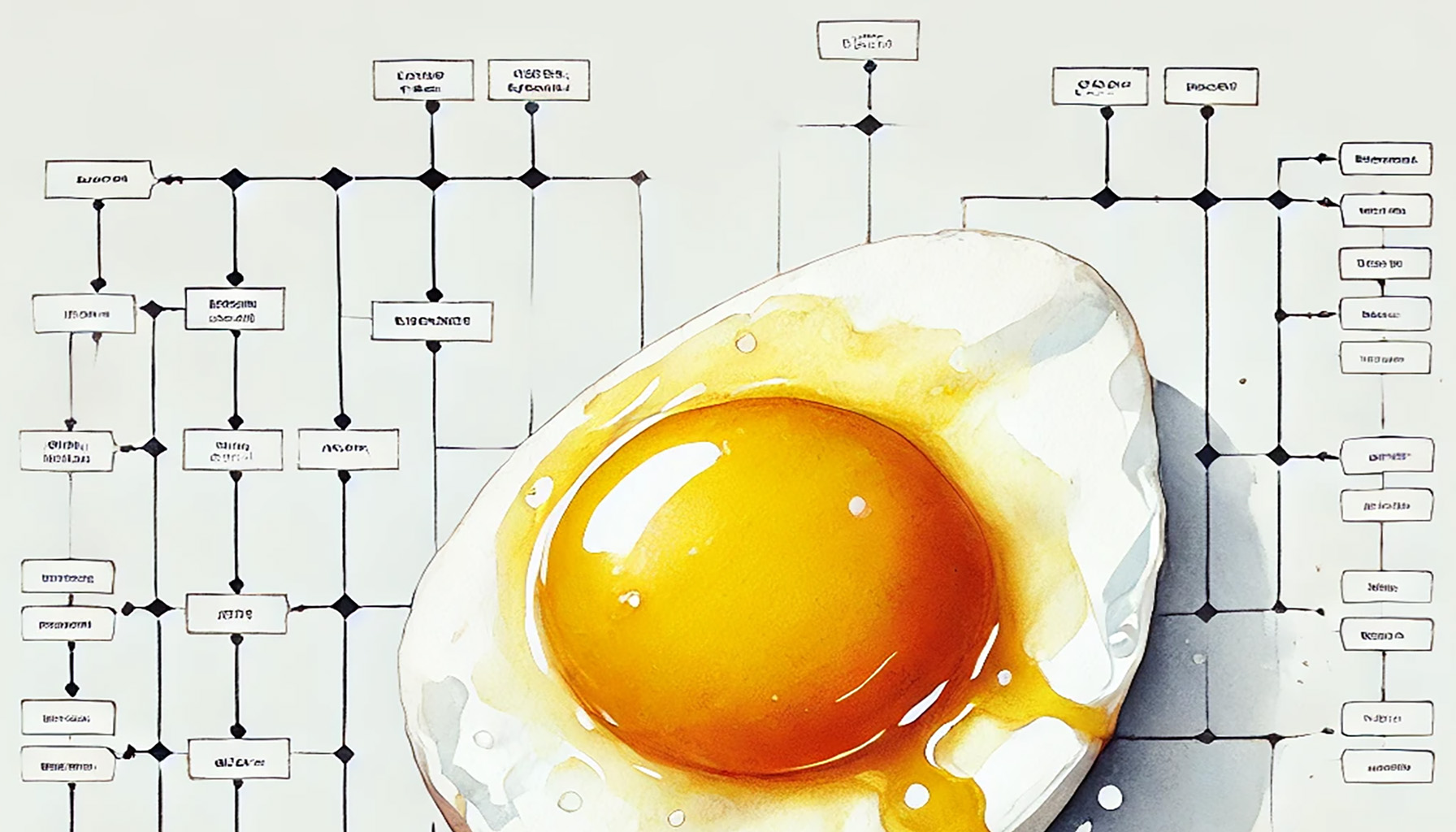
- 25 percent Egg.
Shocked, I looked up at my mother. She was beaming. “I’m fifty percent,” Mom said. “My mother was entirely Egg, and I never knew. Honey, we’re Eggs.”
I swallowed hard. I thought of all the eggs I’d eaten for breakfasts past, all the eggs I’d cracked on my frying pan, the sizzling sound and the smell their fragile flesh made while they cooked. I imagined the pain of my relatives, their gelatinous, one-eyed smiles as they told me, telepathically, Hey, it’s OK, Muriel! while they died; I imagined their crispy corpses sloshing around in the gallows of my stomach. I pictured blue, green, orange eggs. I’d always thought they were better-looking than Henry or Dad or even our attractive president as they peeked out so prettily from their cartons at the grocery store. Maybe this was why I’d never been with a man. I’d had so much failure in my life, in my profession, and I realized it was because of my lineage, because I would always be something unformed, unfertilized, something thwarted and inadequate.
“We’re the oldest people there are, Muriel,” said Mom. “I just know that we were born first. There were no chickens before us. How could there be? No chickens before eggs, Muriel. There were no birds at all, no sea creatures. Certainly no humans.”
I saw my mother differently then, her smooth exterior so permeable to failure, to trickery, to sadness—to cracks. Like Aunt Sylvia said, you can’t stop blood.
“How could we not have known?” I whispered.
“That’s right—how could we not have known?” Mom said, embracing me.
Burying my face bin my mother’s shoulder, I thought of the ovular shape of my head, the black, irregular spots on my hands and back. I’d never known that my mother was an Egg, and I’d certainly never known that I was one, but it was obvious to me now: our features, our sensibilities, our weaknesses. I didn’t care what else I was. This was how I felt connected to the world. I had to embrace a whole new set of burdens and responsibilities. My new knowledge was powerful, yet debilitating: invigorating, yet fraught with obligation. I couldn’t believe my body had kept something so important from me. Eggs were my people. I’d never forget that again.
ABOUT THE AUTHOR
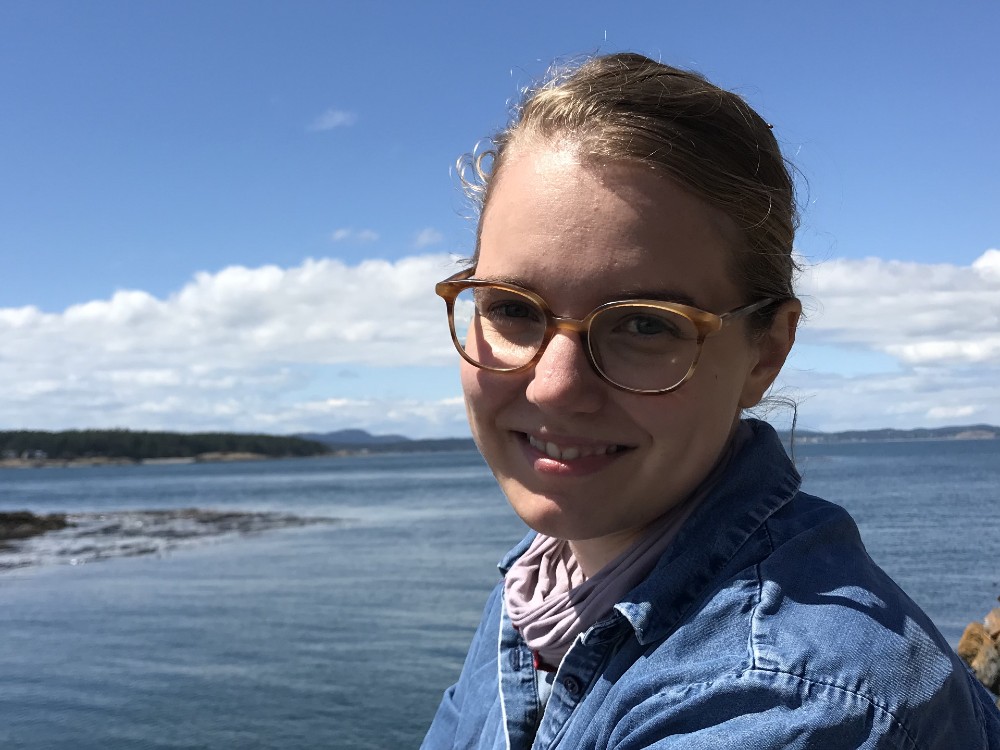
Alicia Bones is a Seattle-based writer and research analyst. Her fiction has been published in Vol. 1 Brooklyn, Paper Darts, and Fairy Tale Review.

