

Protocol for a First Date
1. Wear clothes.
a. Also:
i. Bullet-proof glasses.
ii. A PM2.5 filtration mask.
iii. Shoes suitable for riding your e-board and, if required, running.
2. When you reach the coordinates, tuck your e-board under your arm.
3. Look for a wall of thriving Pandorea Pandorana climbing the metal mesh we installed.
4. Brush away the native vine to find the elevator door with a faded staff only sign.
a. Resist the urge to assess the vine’s moisture levels or tend to it.
5. Once inside, enter the number sequence listed in the location file and the elevator should descend.
6. Walk down a long concrete corridor. The entrance to the bar is through an industrial fridge door. Wait for your date outside.
7. As your date approaches, visibly dab the sweat from your nose and have a captcha on your device ready.
a. The captcha must be so complicated that it is approaching abstract art.
b. Your date may have up to ten attempts.
c. They may be a decoy. Do not give them any identifying information until they have passed.i. If they are not a decoy, they will feel reassured that you have taken such precautions.
A short story by Karina Ko.

Quincy the Calvinist Turtle
Richard Varma, the illustrator, draftsman, and muralist, died of natural causes earlier this year in Wichita, Kansas. Varma is perhaps most notable for his collaborations with Sirin Volokhonsky, better known as Professor Metzinger, the children’s author whose bizarre public appearances often overshadowed the sad, whimsical lyricism of his work. They began their collaboration in the early 1960s. The whereabouts of Metzinger’s final manuscript were unknown to most for nearly a quarter of a century. A malevolent rumor persisted that it was destroyed along with its author in a Hungarian prison riot. Others buoyantly claimed that Metzinger had managed to smuggle it away via a sympathetic guard, moments before his death, like in a Hollywood melodrama. But Varma’s own passing has revealed a mundane, yet pleasant, truth. The manuscript for Quincy the Calvinist Turtle, Metzinger’s last known piece of writing, was sent to Varma a few weeks before Metzinger’s death.
A short story by Avee Chaudhuri.
Silly Dance, No Mercy
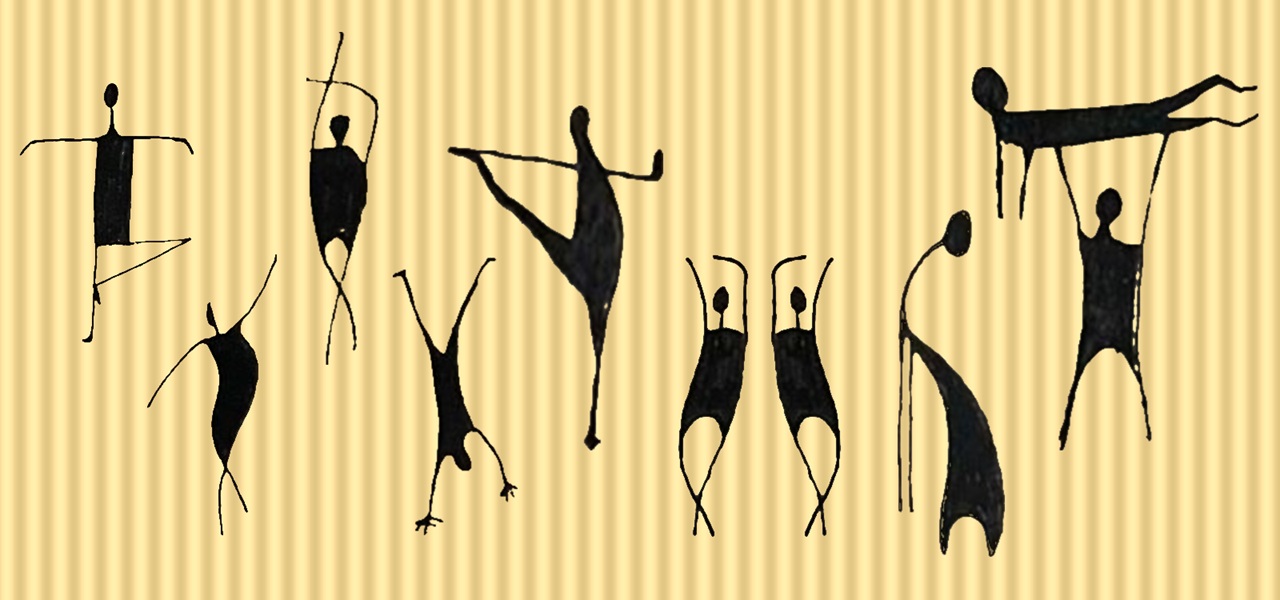
He did a silly dance in a bar, a dance so silly that it had no regard for choreography, ego, or social order. At the afterparty he talked about civil religion, his gentle head at rest on the cushion of a sunken couch. Hours later, over the laps of their friends, their eyes met –hello– and a passage appeared leading to a light, empty plain. The silence of the place fell through them both with the weight of a sky. Woah! The air was cold, but the kind of cold that reminds you this is the real world and something indeed might happen. Gail had emerged from a private room of shock and all of this cannot be the case, this cannot be the case—to here. For Tom, it was the same. They sat face-to-face, eyes wide. There is no way to describe any of this because there is no way to describe any of this—that is the point of where they were. Gail and Tom still thought understanding and escape were the same thing and they had found it. Actually, mutual understanding is a trap or loop. Sorry, I’m getting ahead of myself—my bad! That evening was followed up by a stream of inevitable years until Tom, for reasons that amount to self-preservation, went away.
A short story by Emily Featherman.

Dear Father, Who May Not Be In Heaven
In Homolovi, surrounded by storm clouds, faced with a hissing bull snake, I decided—like a fool—to pray to my father for guidance. The last time I’d prayed, my mother had lost her left foot to an alligator. I was seven and although my parents hadn’t raised me religious, I was aware of the concept of God. But because I lacked any spiritual guidance, I could only conceive of God on the same plane as Santa Claus: somebody you prayed to in order to receive the objects of your desire. Actually, I associated Jesus with Santa and I associated Jesus with God. I did not fear God; I wasn’t worried about going to Hell. My parents never invoked His name, at least not directly. My father, steadfast in his quaintness, opted in the few times he did exclaim anything for My word! or Oy!, and my mother didn’t exclaim at all; she’d hum until she got what she wanted, which was either a natural return to homeostasis or an apology. But no, that’s not right, I think, trying to ignore the lithe, black tongue of the bull snake, the darkening clouds of my lowest moment, because she did exclaim; Omp! she’d shout, yes, she’d Omp! in place of stomping because she found it difficult to stomp without a foot…
A short story by Caleb Berg.
Matter and Free Will
Suppose that there were certain human abilities—I decline to call them merely mental, lest all the problematic assumptions of the Cartesian philosophy be imported at once—by which the gathering of thought and concentration and will might move matter, with the addition of only one further condition. This condition being not the familiar (though inexplicable not only to the dualists but inadequately captured by the idealist and materialist philosophers as well) realization of will in the movement of the human body (my will raises my arm, my arm raises my glass), but instead that condition of fully sincere and passionate belief: one’s will (here I cannot say “mine,” as I have never discovered such an ability in my own experience) raises one’s glass into the air directly, no more defying gravity than does an arm and hand, but countering force with force, here that force formed by an adequate strength of belief, rather than muscle.
A short story by Ben Roth.

a plant enters the supermarket
a plant enters the supermarket without a receipt. the clerk doesn’t stop it. the plant looks at him. he feels seen for the first time by something that is not a customer. in the frozen food aisle, the plant opens its leaves like hands. the clerk takes note with the scanner. the plant absorbs the cold’s humidity. the clerk becomes slightly dehydrated. their connection begins as an involuntary data exchange. the clerk’s badge starts pulsing in a photosynthetic rhythm. the registers record a change in chlorophyll level in the system. the store manager doesn’t understand.
A short story by Federico Federici.

What is the Archive?
“Light,” he said. A single gooney drew a black curve against the stars. We watched it fly out over the water, out of our sight. “Light, yes. Aetiology in its purest form. A pathway to the past. And beyond that, perhaps, to a time before. Maybe that’s what truth is, Lil — a time before the past. For many years, I didn’t see it. I set myself the task of naming, numbering and tagging — a taxonomy of disconnected dots. The archived artefacts. Except these dots, when scrutinised closely, come apart. They are not dots at all, but themselves constellations, made of their own dots, and they in turn . . . the fractal geometry of the search for truth, Lil. It might drive a man to madness. But step back, or lie back rather, and, holding the gaze steady, focus not on this or that, but on the entirety. Better yet, slacken the optic muscles — let the whole thing blur, just a little bit.”
Read an extract from The Coast of Everything by Guillermo Stitch.

A moral guide to stealing
I: INTRODUCTION
Background
Following the shitshow that was this year’s holiday season, I [Primary Moral Actor] have made the decision to drive my rented Renault Clio down to mother’s to tell her precisely what I think about my stepfather’s homophobic comments and general behaviour over the Christmas period before he gets in from work at three p.m.
Secondary Moral Actors
John, a homophobe: at work
Lesley: making tea (also, later: in the back bedroom)
Preamble
While Lesley is fumbling with a pack of Hobnobs in a daze and boiling the kettle for the third time to make the cup of tea she offered me twenty minutes ago, I spot a very chic pair of trousers [Ethical Catalyst] drying on the radiator in the downstairs bathroom.
A short story by Holly James.
American Sllop
I. In which Dr. Hawthorne comes to town ~
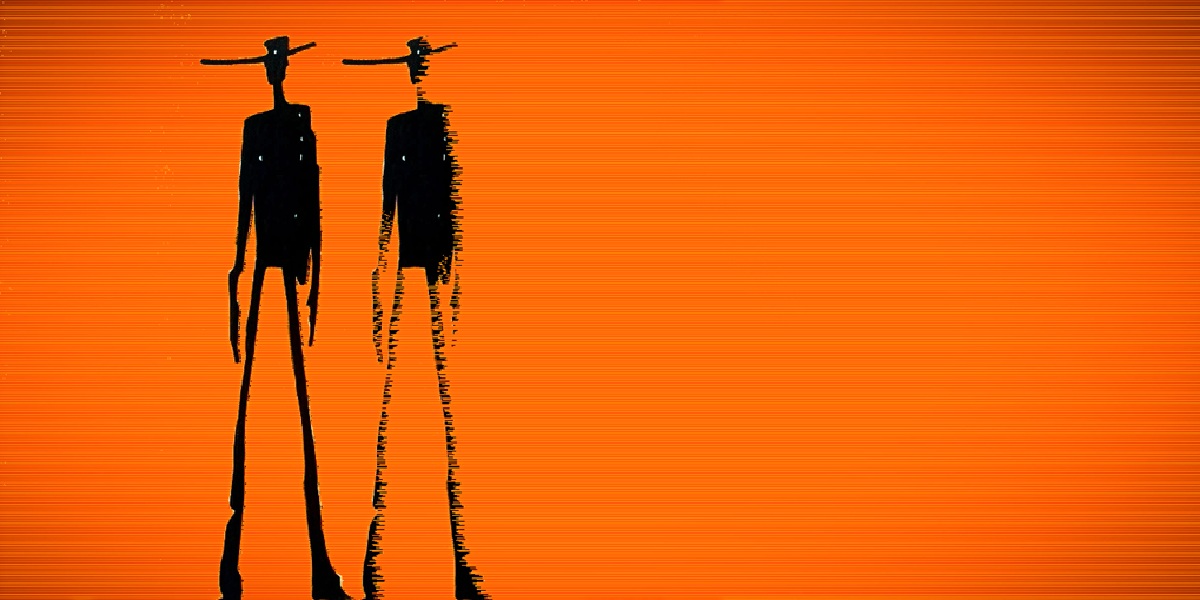
The snakeskin wagon that caused such bluster in the broadsheets from Oregon to Illinois kicked dust over the saloon steps. The menfolk—wranglers, drunks, malingerers—took to hollering, and someone rang the rusty church bell.
Jesse, the Calloway orphan, hung back, careful not to impede the homesteaders and traders and their women and children skittering through the bone-dry dirt to see Dr. Hawthorne himself lay out his wares, or more specifically, his ware: a hinged box barely big enough for a decent-sized hog.
As Jesse traipsed his two-headed donkey Buridan along to gawp, the flies and the stink of the freakish beast curled the lips and twitched the moustaches of his estranged townsfolk. The townsfolk collectively chuntered and pondered, until the prancing Hawthorne flapped out his beaver-tailed coat and jigged around the inanimate sideshow as if some holy spirit compelled him.
“This, good sirs!” He hooked a wandering eye. “This is your gen-u-ine prayers answered. Your leisure, your artifice, transmogrified!”
A short story by Ian Johnson.

Salo
The bedside stool held her book and homemade book corner, which she’d learned to make from the internet. At the moment the algorithms were sending her crafting ideas, but some fashion ones too, so she already knew what kind of waist she was supposed to have when she grew up. She’d started wearing a belt but could only last a few minutes. Now when she undressed she’d sometimes squeeze the flesh around her middle and the next day she’d do a few star jumps. Once she said she was on a diet and didn’t eat her weekend Haribos.
A short story by Caroline Clark.

A Pilgrimage of Earwigs
They come from the damp, the doorjamb’s rotten wood gone the color of old bread. They come from under the planter, the igneous rock in the front garden bed where the budding mouse ears hide wet soil that teems with them. They come from the eastern side of the house, from under the abandoned silver grill destined for Free Dump Day: from the lid and from the corroded wiring and from the slitted vents where fire once poured now come earwigs.
A short story by Chris Murphy.
Speaking In Prosthetic Tongues
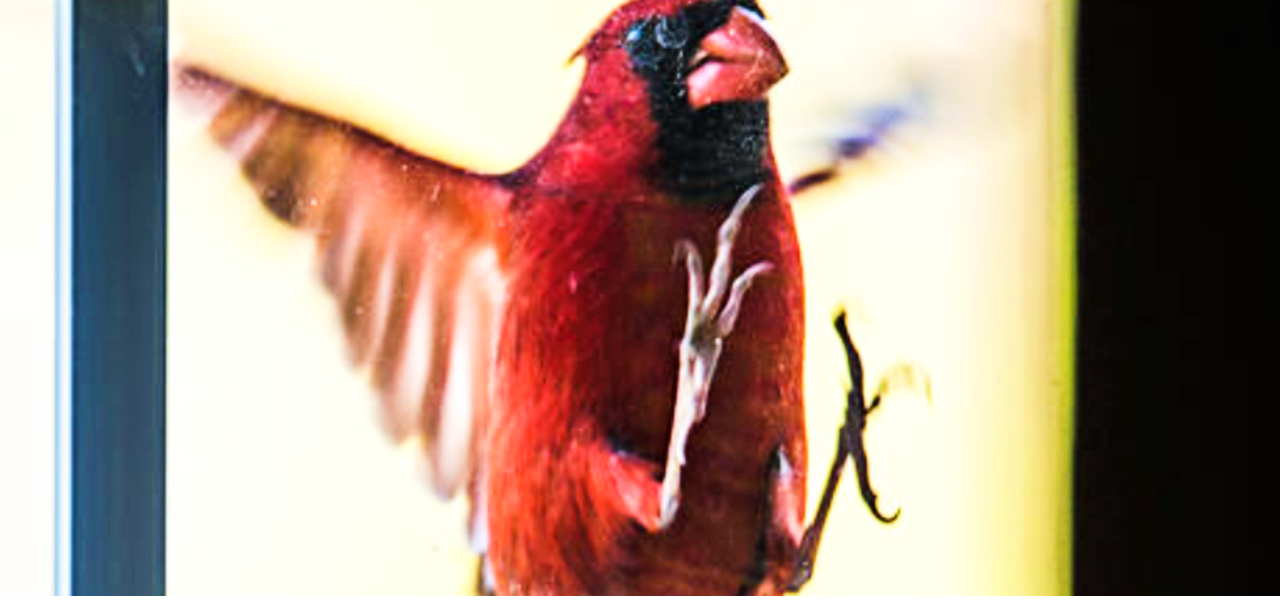
Not long after World News for the Worldly World heralded the arrival of the prosthetic tongue, skeletons began appearing on the streets, hellbent on speaking out. Earl came across one while on his way to a dentist’s appointment. “Ask me a question, any question, I dare you,” said the skeleton. “Alright, alright, you got me. The answer is one. Ha!”
Earl’s lower left molar throbbed with dull pain and a root canal awaited him. He had never seen a skeleton walking around before. The skeleton allowed its tongue to drape over its teeth. A tremor traveled like a reflex down the pale pink organ. Earl thought, “That’s a long tongue.”
A short story by Thad Fowler.

