

Diamond Life
Two years later, it was quite the surprise to see Dahlia Diamond’s ‘Single’ status update on Facebook, complete with Divorce Party photos. Champagne at the Bowery Hotel bar with her besties and high fives with smirking, handsome men. Digging further online, I found a mention on a minor gossip site: ‘Stylist-to- the-stars Dahlia Diamond divorces jewellery designer Hunter Hennequin, brother to fashion giant Nelson Hennequin, citing irreconcilable differences.’ In her own words: ‘We still love each other and shall remain the best of friends. We continue to support each other in our work. Hunter is a rare talent.’ I couldn’t fault her diplomacy, but ‘rare talent’ was a stretch when attributed to outrageously priced silver pendants of naked girls riding dolphins and wolves. Whether he outsourced it or not, Hunter’s metalwork wasn’t even up to par, and all his clients were celebrities Dahlia had styled. I could only imagine her regret in signing a prenup.
Read an exclusive extract from Diamond Life by Anna Maconochie.

Protocol for a First Date
1. Wear clothes.
a. Also:
i. Bullet-proof glasses.
ii. A PM2.5 filtration mask.
iii. Shoes suitable for riding your e-board and, if required, running.
2. When you reach the coordinates, tuck your e-board under your arm.
3. Look for a wall of thriving Pandorea Pandorana climbing the metal mesh we installed.
4. Brush away the native vine to find the elevator door with a faded staff only sign.
a. Resist the urge to assess the vine’s moisture levels or tend to it.
5. Once inside, enter the number sequence listed in the location file and the elevator should descend.
6. Walk down a long concrete corridor. The entrance to the bar is through an industrial fridge door. Wait for your date outside.
7. As your date approaches, visibly dab the sweat from your nose and have a captcha on your device ready.
a. The captcha must be so complicated that it is approaching abstract art.
b. Your date may have up to ten attempts.
c. They may be a decoy. Do not give them any identifying information until they have passed.i. If they are not a decoy, they will feel reassured that you have taken such precautions.
A short story by Karina Ko.

Living the Fairy-Tale Life: Paula Rego, Psychoanalysis, Taking Flight
Whether we go to therapy or art or other ritualistic practices that prise open the dark stories dancing around in us all, we end up in the same strange place, I think, with versions of these characters and their stories. I wrote my novel as my own kind of fairy tale, simply because life itself is full of these magical, strange characters — but it was not until coming face to face with Rego’s fairy tales that I understood the point of it all — to allow the weirdness, however discomforting. To allow a sort of sickness to be aired and so cured, perhaps.
Christiana Spens on the Munch Museum’s Paula Rego retrospective, psychoanalysis, ballet, and The Colony, her new novel.

Orpington to London Victoria #13 – George Berger Column
Bromley hasn’t changed. Petts Wood has got worse, if anything. Reform are hovering on the edge of winning the next election and here’s the human and vibrational evidence, in two pubs that are so different from my local pubs in Seaford. And it would be very easy to get depressed if I lived in these parts. I wonder if this makes me some kind of snob, and decide that if it does, I’ll just have to live with that. Embrace it, even.
George Berger reaches the end of the line. Again.

Hell of Solitude
In the epigrammatic essay ‘Art and Other Matters’, Akutagawa mentions Cézanne, but it’s Satie I think of. Hell of Solitude – the grim title is misleading – is Satie-esque: surface simplicity meets technical complexity, playfulness and utter seriousness walk hand-in-hand, brevity is a delight, evanescence a risk of life, and form to be used capriciously. Both artists refused to engage the world on anything other than their own artistic terms, and posterity is now able to recognise their value.
C.D. Rose reviews Hell of Solitude by Ryūnosuke Akutagawa.

Quincy the Calvinist Turtle
Richard Varma, the illustrator, draftsman, and muralist, died of natural causes earlier this year in Wichita, Kansas. Varma is perhaps most notable for his collaborations with Sirin Volokhonsky, better known as Professor Metzinger, the children’s author whose bizarre public appearances often overshadowed the sad, whimsical lyricism of his work. They began their collaboration in the early 1960s. The whereabouts of Metzinger’s final manuscript were unknown to most for nearly a quarter of a century. A malevolent rumor persisted that it was destroyed along with its author in a Hungarian prison riot. Others buoyantly claimed that Metzinger had managed to smuggle it away via a sympathetic guard, moments before his death, like in a Hollywood melodrama. But Varma’s own passing has revealed a mundane, yet pleasant, truth. The manuscript for Quincy the Calvinist Turtle, Metzinger’s last known piece of writing, was sent to Varma a few weeks before Metzinger’s death.
A short story by Avee Chaudhuri.
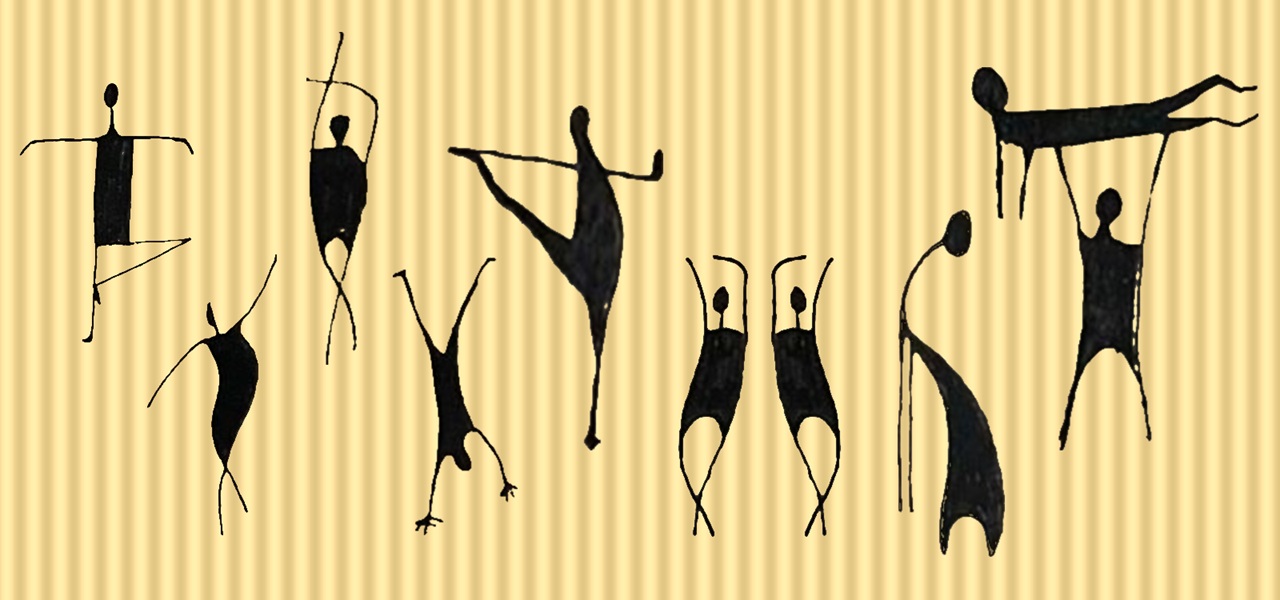
Silly Dance, No Mercy
He did a silly dance in a bar, a dance so silly that it had no regard for choreography, ego, or social order. At the afterparty he talked about civil religion, his gentle head at rest on the cushion of a sunken couch. Hours later, over the laps of their friends, their eyes met –hello– and a passage appeared leading to a light, empty plain. The silence of the place fell through them both with the weight of a sky. Woah! The air was cold, but the kind of cold that reminds you this is the real world and something indeed might happen. Gail had emerged from a private room of shock and all of this cannot be the case, this cannot be the case—to here. For Tom, it was the same. They sat face-to-face, eyes wide. There is no way to describe any of this because there is no way to describe any of this—that is the point of where they were. Gail and Tom still thought understanding and escape were the same thing and they had found it. Actually, mutual understanding is a trap or loop. Sorry, I’m getting ahead of myself—my bad! That evening was followed up by a stream of inevitable years until Tom, for reasons that amount to self-preservation, went away.
A short story by Emily Featherman.

Hesitantly Surfing the Looming AI Tsunami (Part Two)
This is not my voice, it’s a choppy kind of montage voice, with sales pitch style meets reddit. And, of course that is because Grok sucked up all of reddit and is used mostly by corporate employees. Nonetheless, this answer — this output — does raise a big question for me. If Grok, an AI that is owned by a company (XAi – CEO Musk) can deliver a pretty accurate critique on data centres and the politics of AI companies buying influence over small nations, from a perspective that is close to my own — then this is beyond ironic. As XAI requires data centre expansion for Grok and for the expansion of all AI related enterprises run Elon Musk. So, really what is the value of this ‘critique’? Are these not just useless words, performative protest, cooked up by an AI that requires data centres that are guzzling up fresh water and land as we speak.
Graham Rae interviews Ewan Morrison and Grok.

Dear Father, Who May Not Be In Heaven
In Homolovi, surrounded by storm clouds, faced with a hissing bull snake, I decided—like a fool—to pray to my father for guidance. The last time I’d prayed, my mother had lost her left foot to an alligator. I was seven and although my parents hadn’t raised me religious, I was aware of the concept of God. But because I lacked any spiritual guidance, I could only conceive of God on the same plane as Santa Claus: somebody you prayed to in order to receive the objects of your desire. Actually, I associated Jesus with Santa and I associated Jesus with God. I did not fear God; I wasn’t worried about going to Hell. My parents never invoked His name, at least not directly. My father, steadfast in his quaintness, opted in the few times he did exclaim anything for My word! or Oy!, and my mother didn’t exclaim at all; she’d hum until she got what she wanted, which was either a natural return to homeostasis or an apology. But no, that’s not right, I think, trying to ignore the lithe, black tongue of the bull snake, the darkening clouds of my lowest moment, because she did exclaim; Omp! she’d shout, yes, she’d Omp! in place of stomping because she found it difficult to stomp without a foot…
A short story by Caleb Berg.

Slaughterhouse 666: Kicking and A-gouging in the Pus and the Gore and the Fear
Imagine all those sentences, those paragraphs – the birth of a novel now lost among New Year’s resolutions in discarded Moleskine notebooks, or in folders on laptops with .txt files for passwords, or summoned on a walk through Lumphini Park with the burden of a stillborn incipit that you must remember to write down as soon as you get home but know that it will be lost in the purgatory of forgetfulness. How many millions of them are there that never got further than that – the abortive exordium that sublimates before the ink can fix its potentiality into the permanence of a page? These are the truncated fragments, the skeletal torsos of a literature that refuses to be born. Each one is a failure – a false start trapped in the eternal becoming of a thought.
Steve Finbow reviews Seven Coffins for the Killer by James Havoc.
Hesitantly Surfing the Looming AI Tsunami (Part One)
The truth is that Mars is a launchpad to nowhere. Rather than attempting to save the planet by investing funds into programs that might help the cause, Musk suggests that we leave this deteriorating planet behind and move on to pastures new, but he is also implying that a vast majority of the population would be left behind as well. Most of us won’t be able to afford a one-way ticket to the red planet. All this chat about colonising planets is nothing to do with the average person on the street. We’re not invited!
Chris Kelso interviewed by Graham Rae to coincide with the release Shadowspheres.

In Town, Earlier Than Usual
The women wearing this style were carrying cups of coffee. They were hurrying and looked serious and hard-pressed, as though they were quite high-powered – account managers for companies transitioning from advertising or graphic design to AI-collaborative advertising or AI-collaborative graphic design perhaps – and were struggling to accept the effort they had to put in to merely stand still in a role that wasn’t nearly as much fun as they had once imagined it might be. I didn’t know whether to feel sorry for them or not.
By Charlie Hill.


