
Three Stories
I wondered, so I asked Vivian why she was still single. As Communications Director for The Old Rats Motorcycle Club LLC, she was surrounded by men. Powerful men, exciting men, hoary and bearded men. She had her pick.
Vivian began to speak about her Old Rats leather motorcycle jacket. I assumed she was being metaphoric. What followed was an unbelievable tale involving the Cult of Saint Syncletica in the eighteenth century and their demonic thread. I just went with it. Long story short, the thread was eventually used to stitch none other than Vivian’s Old Rats leather jacket, and the wearer was at times under its dark sway.
Three new microfictions by Sean Ennis.
Minute 9: Anatomy of a Murder
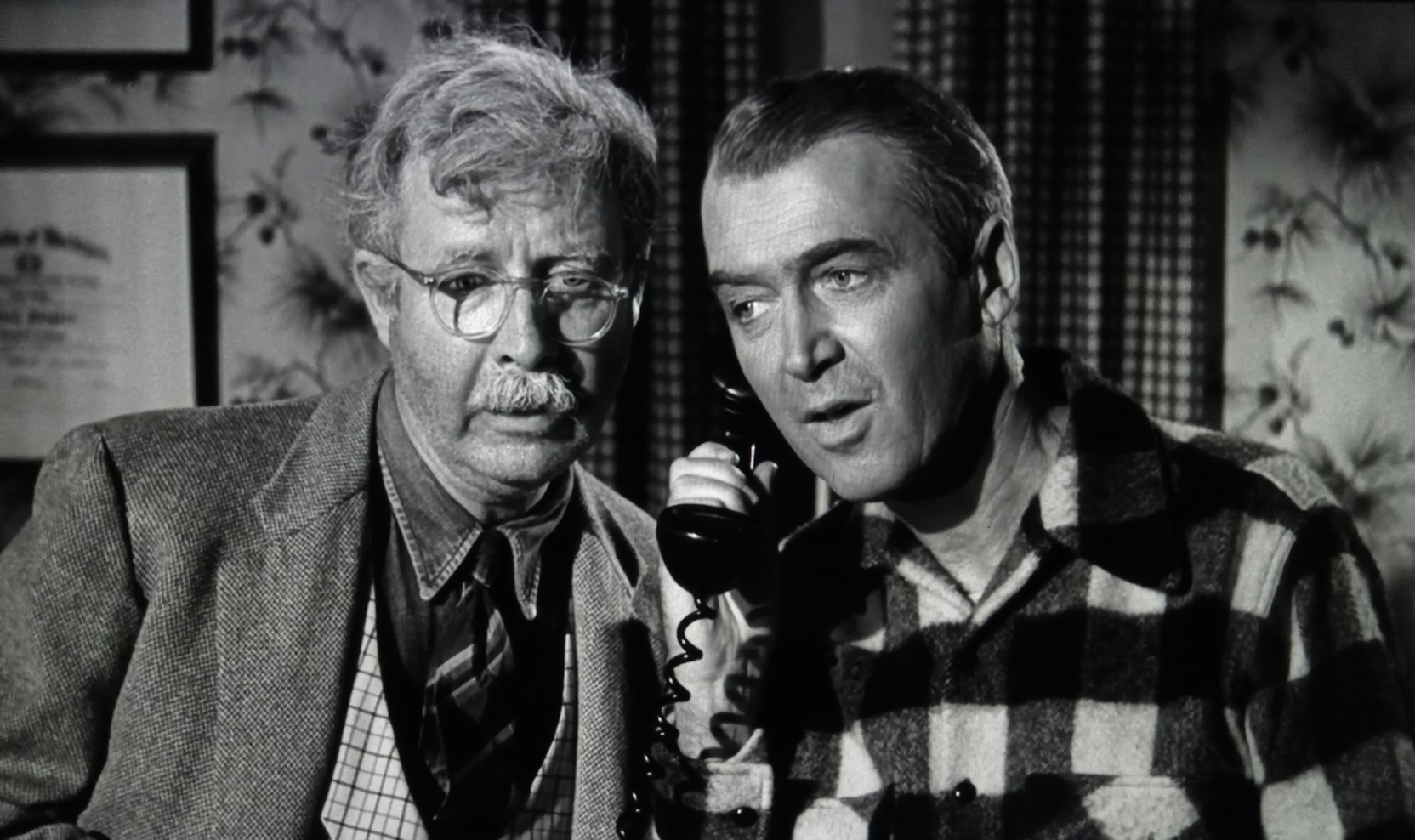
On the other end of the line is Laura (Lee Remick), drenched in a trench coat. “It’s not just this,” she says, removing her large black glasses for Paul later in the film, indicating her bruised eye, “you should see all over.” She can tell from the way Paul looks at her that he wants her, but also (and more embarrassingly) that he’d never act on it. And – by her onscreen music, costumes, and glances – we know that she’s a catch, yet we are terrified of her. She alone knows the truth, something we claim to want but can seldom handle.
David Kuhnlein on Anatomy of a Murder.

Go for Baroque! An Interview with John Madera
Artists, literary and otherwise, not only don’t stay in their lane, they go against traffic. And they often avoid the highway altogether! They swim! They fly! We ought to encourage conscientious border trespass, conscientious border abolition. That is, we ought to encourage writers to write compassionately, lovingly, and otherwise intelligently and empathetically from the imagined perspective or perspectives of an “other” or “others.” In fact, this is arguably what all great writers are always doing, even when writing from their “own” perspective.
John Madera, author of Nervosities, interviewed by Jeff Bursey.

In the Realm of the Red Pill
This is the dark underside to Romanticism, the movement that gave us Byron, Blake and Shelley, but with figures such as Kleist, also the beginnings of the violent anti-rationalism which would feed into fascism. And just as Romanticism was in part a revolt against grey utilitarianism, so its darker descendants today are able to tap into the many who feel adrift, abandoned or just plain bored and disillusioned with the modern liberal world, seeking something more primal and primordial. As Sontag said in her essay on ‘Fascinating Fascism’, ‘the seduction is beauty, the justification is honesty, the aim is ecstasy, the fantasy is death.’
By Ben Granger.

Rivals
They knew, considering the price and the location, that the place would be desired, but not that the line of people would stretch out the building and round the corner, even thirty minutes before the appointed hour, so they hurry to the end of the line which keeps getting longer behind them, comically so, as one made sure to acknowledge to the others with little glints of eye, or a curt puff of air from nostril, the wait interminable, interminable, before the first little budge, oh the giggle when it happens, and the exchange of genial looks, as if to say there we are old boy, the politeness of it, as though they all might have this thing if they’ll just be patient enough, but they all want the same one thing, and think the same thing, that in fact they are rivals for it, but no one would betray such ungenerosity, no, of course these other fuckers want it, why wouldn’t they…
A short story by Elvis Bego.

Praeludium and Allegro in the Style of Daniel W. Foster
My whole life I’ve been a fraud. I have come to accept this with the help of writer Daniel W. Foster and violinist Friedrich “Fritz” Kreisler, the latter of whom (in 1905, hoping to draw attention to his concerts) composed a piece he fraudulently attributed to the legendary Gaetano Pugnani.[1],[2] And but here’s the thing: It’s amazing. It’s a fraud and it’s a soaringly beautiful piece of music. You might even say genuinely beautiful, if you’re in the mood for a paradox, which I’m going to have to insist you be, because the thing about paradoxes is they’re all about the tension of bothness—good and bad, true and false, existing and non-existing, etc., etc.—and the story you’re reading is about Daniel W. Foster, who is emphatically both. Good and bad. True and false. Existing and, now, not.
A short story by R. Gatwood.

American Thighs
Elizabeth Ellen’s prowess at character concoction is readily apparent from the first page. In lieu of standard dialogue, she does something marvelous: relays story through vignettes that are not only meticulous in craft and heft, but self-sufficient ecosystems of plot, characterization, and symbolism. These self-contained vignettes function as linked accounts of the unfolding narrative and are also blatant reminders of the cinematic quality of Ellen’s writing.
Mary Buchanan Sellers reviews American Thighs by Elizabeth Ellen.
The Bunker Tapes: Chris Petit’s Come In and Shut the Door
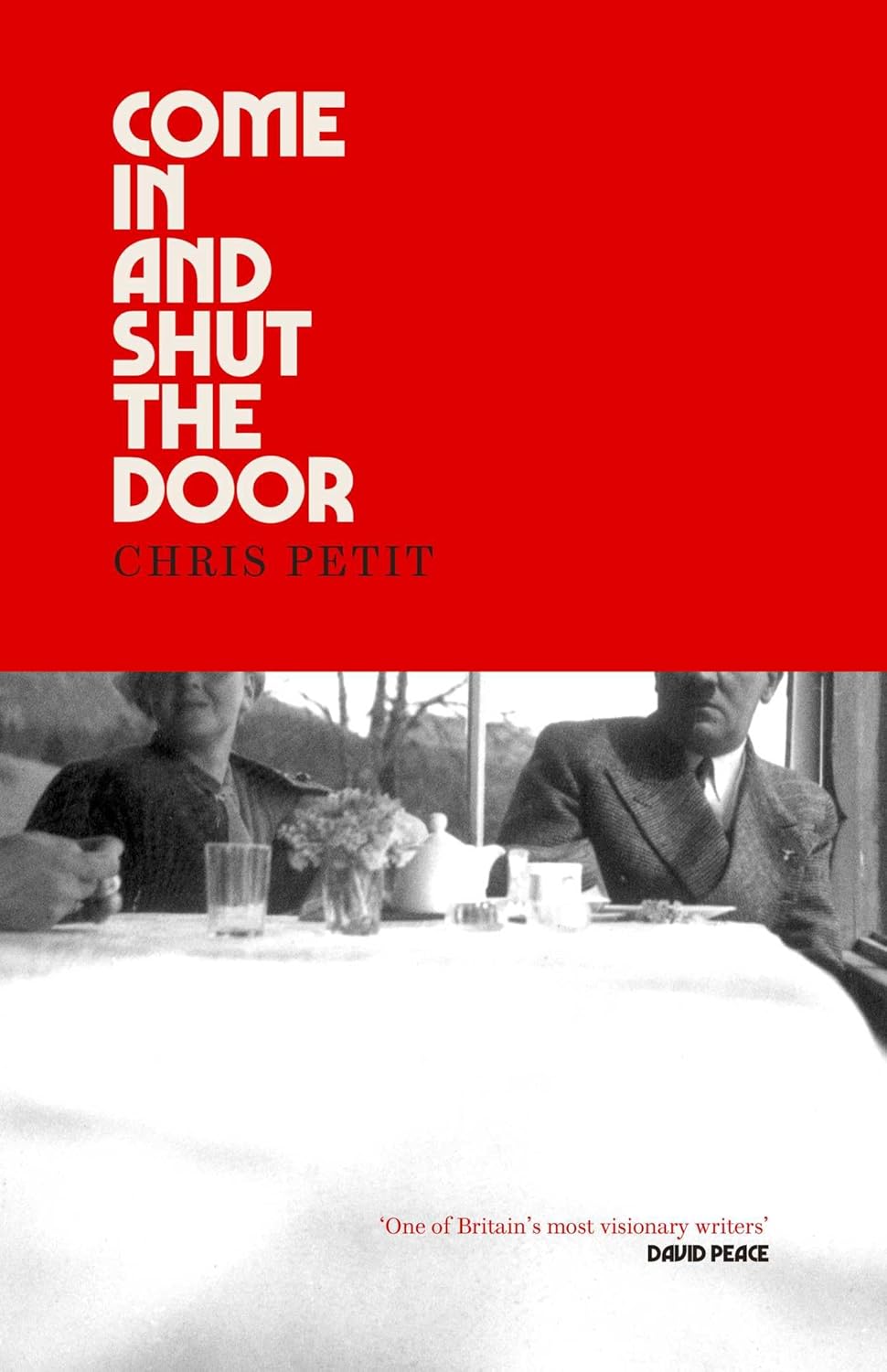
I think the other thing which people don’t get, although Alan Moore did in his introduction to The Psalm Killer (1997), is whether I’m a novelist at all, because my whole approach is not that literary, it’s cinematic. The way the writing is, it’s cinematic, and essentially, it describes what you see. I wrote Robinson because I couldn’t make films anymore, and I thought, “Well, I’m not a novelist. I don’t want to win the Booker Prize. I don’t really care about the whole literary scene.” I thought, “I’ll treat Robinson as though it’s a prose film; that it’s a project for a film that will never get made.” It was done in such a way that it couldn’t be turned in a film, but it is, essentially, filmic. And I think most of the stuff I write, as Moore pointed out, is written from the background of a filmmaker.
Chris Petit interviewed by James Riley.

What’s Inside
I found the salmon in the middle drawer of an old dresser in my closet. I was looking for a hammer, but I couldn’t remember why. The salmon was a chum salmon, the adult version of the ones running in a nearby creek. It had a greenish tint to its skin and red ridges on its sides. The chum filled the entire drawer. Nothing else was inside. I couldn’t tell if it was alive or dead.
A short story by Ryan Bender-Murphy.

The Ubiquitous Point-of-View
When I first knew myself, there were only two of us. Me and the other, and that was it. That was our entire universe. I could see nothing in front of me, I perceived nothing except this single other thing surrounding me on all sides. So I called it just that, nothingness, but not emptiness. No place was empty of it. I was always staring at nothing, and nothing was staring back at me. There was little else to do. When it was just the two of us, we were not hot before cold, light after dark, yin balancing yang. We were opposites, as different as two things can possibly be, but the world was far too simple then to allow for anything more. Features would come later, when many other things also existed to provide a context for such nuances.
A short story by David August.

Fixing the Self
For only in this constantly shifting state of belief and non-belief can mystery cut meaning out from under itself, which is nearly always the catalyst for a poem by Byrne. Reason enough it seems to read this collection, for amid Byrne’s subversion of the written word and the masterful way in which he keeps language in a state of almost aporetic equilibrium, the readers will realize, almost at once, that they are encountering one of the least ponderous minds in contemporary poetry, and one of its most Promethean voices.
Paul Stubbs reviews The Overmind by James Byrne.

Six Selected Poems
It is recommended that these lyric poems be read slowly and breathlessly after performing 5 burpees & 20 jumping jacks. The poet disclaims responsibility for all adverse or beneficial effects of following these instructions, including weight loss or angina attack.
New Poetry by Oliver Khan.