
Exhibition Road: an Interview with Dorothy Max Prior
What became called ‘punk’ in 1976 was a slow-growing art and music movement, in London and New York, in the early to mid 1970s. Of course, at the time, we didn’t know it was going to burst out of the underground and become a massive worldwide youth movement. We were just enjoying being over-the-top and making art and music and having fun in a true DIY spirit.
At the time, the influences in the UK were a mix of the Warhol Factory scene (New York) and the gay disco and alternative performance art scene in the UK. So, everyone from Patti Smith and Debbie Harry and Richard Hell and the New York Dolls (NYC) to the London scene of Malcolm and Viv’s SEX shop on the King’s Road, the alternative art and performance scene at the ICA and other venues, artist Derek Jarman and Andrew Logan, gay clubs like Louise’s and Sombrero, people who were fans of David Bowie and Roxy Music wanting to do something of their own… It was a complete mish-mash of people and ideas, eventually getting summed up rather oddly as ‘punk’. By the time it had a name, it had become something else…
Dorothy Max Prior interviewed by John Wisniewski.

Ghosts in the Machine: Christopher Stead Interviewed
The physical roots of contemporary graffiti and raves can be traced back to the origins of urban exploration, which emerged as a response to boredom. Whether urban or suburban, the ghosts of post-industrialisation have left a myriad of abandoned warehouses, squats, and vacant spaces. Growing up, my friends and I had no access to museums or galleries. That just wasn’t part of our culture. We found our catharsis within the post-industrial playgrounds that stood as monuments to failed futures. These places of other were treasure troves of pieces from the early graffiti pioneers. By day, the decaying and ruined spaces would act as makeshift galleries for the city’s curious teenagers. Then, at night, the same spots would transform into pop-up clubs for illegal parties, something we had yet to learn about and were about to discover. These playgrounds allowed the city’s delinquents to unyoke themselves from their home lives, and the secret, concealed nature of these sanctuaries made us feel like it was our secret. The train lines, however, were no secret; they were just forbidden.
Lee Rourke interviews Christopher Stead.

M.V. + R.G.
I first met M.V. at the anniversary party of a mutual friend in one of the evil suburbs of Northern Virginia seven years ago. I was taking in the slanted rays of a sunset on the patio after a conversation with a man who made his living selling the unthinkable when she stepped outside to do likewise. Our ties to the man who invited us were weak enough that it took no time at all for the one between us to supersede him in importance. In only a few minutes we discovered shared interests in the cluster of red cedars lining the backyard, the writings of David Kilcullen, and the typologies of man that walk the streets of our nation’s capital. We both knew ourselves to be wastrels beneath contempt in a way nobody else in the room could imagine.
A short story by Nathan Jefferson.

Trees Don’t Grow to the Sky
Abundancy isn’t a prerequisite to being a family; no, family can be a single thing, alone and even small, provided that that lone even small thing is comfortable and happy by itself just being, but I don’t think any of us would have been and that was good and great because there were a lot of us making up ours; lots of types of us too, those being, in order of most to least common, Oak, Beech, Corsican Pine, Scots Pine, Fur, Holly, Birch, Alder, Larch, Spruce, Lime, Horse Chestnut, Sweet Chestnut, Ginkgo, and Californian Redwood—though the last were just two, standing like pillars on the outskirts of opposite sides of the grove to each other, middle trunks hidden in the upper foliage of much smaller trees but the rest of them impossible to hide so tall and thick and red were they, like the nose of an au naturel clown. We were a family through proximity but also friendliness, when you can’t move from one spot and when your arms move only from particularly strong winds or the clambering of particularly nimble visitors and when your bark is hard but what lies below is so soft it’s just crying out for love and affection, friendliness becomes a main part of your personality…
A short story by William Hayward.

Ordinary Bull
Ordinary People and Raging Bull couldn’t be more different in style or tone. Raging Bull is all blood, sweat and tears and wears its heart on its sleeve. The heart in Ordinary People is alive and well in Connie but is buried beyond all reach in the green, green lawns of Lake Forest. Ordinary People feels as if it was made in a different era – a slower, more buttoned-up, soporific world. No expressionistic flourishes here. No swearing, no violence, but behind the posh parties and white picket fences, we see that the lives of these three people are just as bent out of shape and broken as those of Jake LaMotta, his brother and his wife. No punches may be thrown in Ordinary People, but the body blows are there for all to see.
Richard Skinner on the late Robert Redford‘s Ordinary People.

Archimedes and I Share a Bath
Archimedes and I are in the bath as all great thinkers are. His body is grey and wrinkled in a way you only see with people who have been sat in the bath for two thousand two hundred and sixty-nine years. The fool is stuck in eternal Eureka with his balls hanging loose. They are extremely dangly. It is kind of obscene. It’s gravity, Archimedes says, when he sees me looking. Chin out, dirt-grey beard flung over his shoulder, prideful like he’s invented the term.
A short story by Hana White.

The Social Night: On Denis Belloc
It’s that which constrains him, honest man and writer, to gathering a kind of manna at a border from which almost nothing can be seen: that which flocculates when we write “tightening the nuts and bolts”, as he said, or, to quote Duras, “at the words’ crest”; there, where the black, horned body of what one has to write, that which no one can ever truly read, lurks. But whose business is that, after all? What counts is that you have danced with the moths, and are finally able to fall silent.
By Patick Autréaux (translated by Tobias Ryan).

The Threshold and the Ledger
Malina resembles Ulysses in another, crucial respect. Both novels contain autofiction about a writer poised on the threshold of producing a masterpiece. In this way McCarthy’s essay itself becomes a work, in and of itself, about the possibility of producing a great literary work and, in turn, about the premise for and possibility of all literature.
Peter Carty reviews Tom McCarthy‘s The Threshold and the Ledger.

The day he met Gustav Olafsson
The circular room is six metres in diameter, although she thinks it used to be seven, eight, nine metres, but it’s smaller now. Six doors, equally spaced, numbered: 1, 2, 3, 4, 5, 6. Plain pine panels, simple handles, and when she first arrived she tried them all. 1, 2, 3, 4, 5, 6. But they were all locked and, although several months, maybe even years, have passed, she assumes they’re still locked. She wonders whether she should try them again. She imagines doing this, imagines turning the handles, and although of course they’ll still be locked, there’s some chance, perhaps, that one or several of them might open. She imagines doing this, but doesn’t, and doesn’t think she can. This growing chasm between what might be done and what is done. Just because you can, she thinks, doesn’t mean you should or could, or will.
A short story by Stephen Orr.
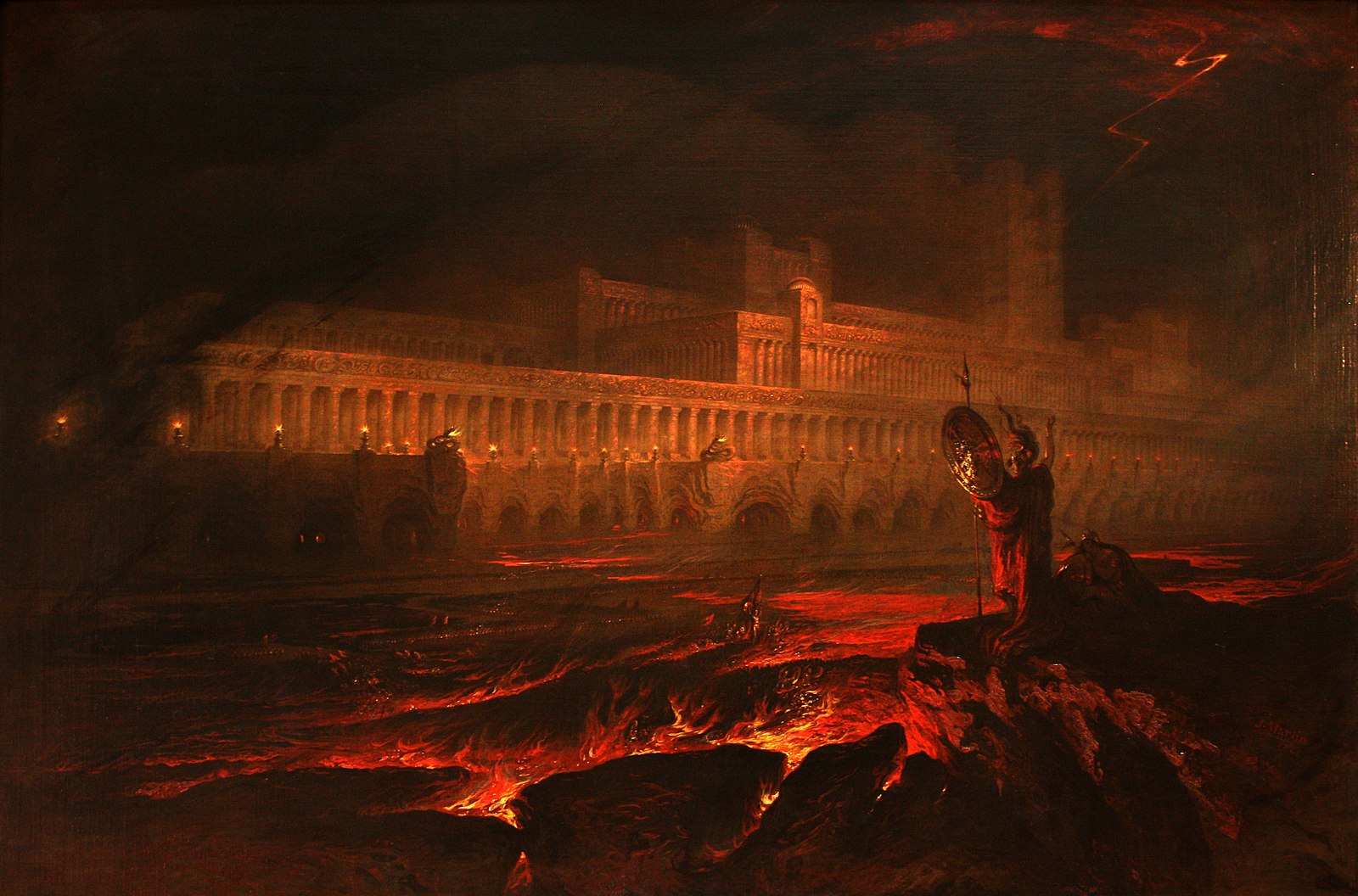
Hell
In the morning, sore and coffeeless, the light pale and cold, Theresa got us lost on the way back to her car and we found ourselves in an area that didn’t seem park-like at all, but rather hostile, alien, the landscape erupting in sharp, slate outcroppings like the scales of some enormous buried dragon.
We got so turned around, do you remember?
It was like it always is when you’re lost, a bit funny at first—the camaraderie of it all—and then not so funny.
By Nicholas Rombes.
Hypnotic Control
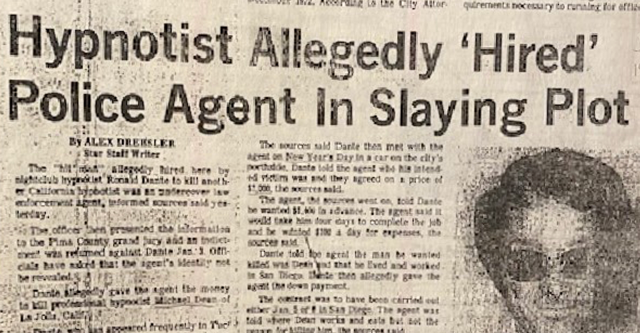
As a theatrical hypnotist, John-Ivan Palmer will make you crow like a rooster and chug like a wash machine. He will suspend a lady by her nape and Achilles tendons between two folding chairs and sledge-hammer a cinder brick on her tummy until her navel fills with grit. Simultaneously, with the other hand, he memorizes a complete issue of TIME Magazine at a glance, and is quizzed on specific pages by awestruck folks in the audience.
By Tom Bradley.
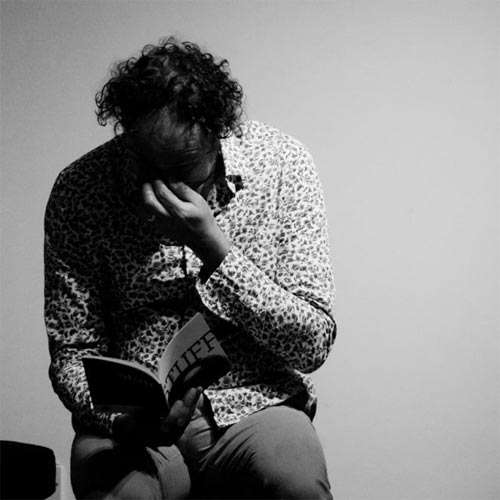
47 Sanford Road
I chose Sandford because of a photograph I once had. In it, I’m standing outside number 47 with a bottle of beer in one hand and a cigarette in the other; my attention has been taken by something out-of-shot and I’m looking to one side, at a cabbage white butterfly perhaps or neighbour sitting on her doorstep. I’m impossibly young, louche, invincible; I have the look of someone who has just struck an exclusive deal with the world that has left them impervious to the buffeting vicissitudes of life. I hadn’t seen the photo in years but that wasn’t the point: I’ll always remember it, just as I’ll always remember tying my partner to the futon in the red-bulbed attic at the top of 47’s narrow stairs or freewheeling past the mosque as we rode to feed the geese by the goose-shitty bandstand in the park; just as I’ll always remember buying handfuls of fruit and veg from the market on a Saturday morning – once we mashed a bowl of blackening avocados and had it on buttered toast – or visiting friends on afternoons that stretched round the earth like sun-warmed light or love.
By Charlie Hill.