
Off-Brand in Monaco
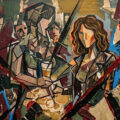
The narrator embarks on a ‘glamour’ hunt. But like the artificial beauty of the landscape, the glamour never seems quite real either. In surreal, cinematic descriptions it is frequently juxtaposed against its unglamourous, downmarket equivalent. On a night out, dressed in a new frock from a Monaco boutique — ‘red and white with a diagonal sash’ that she is told looks like ‘the Monaco football shirt’ — the narrator eats at a restaurant with ‘all these golden arches (I know, “like McDonald’s”)’.
Terri Mullholland reviews Juliet Jacques‘ Monaco.
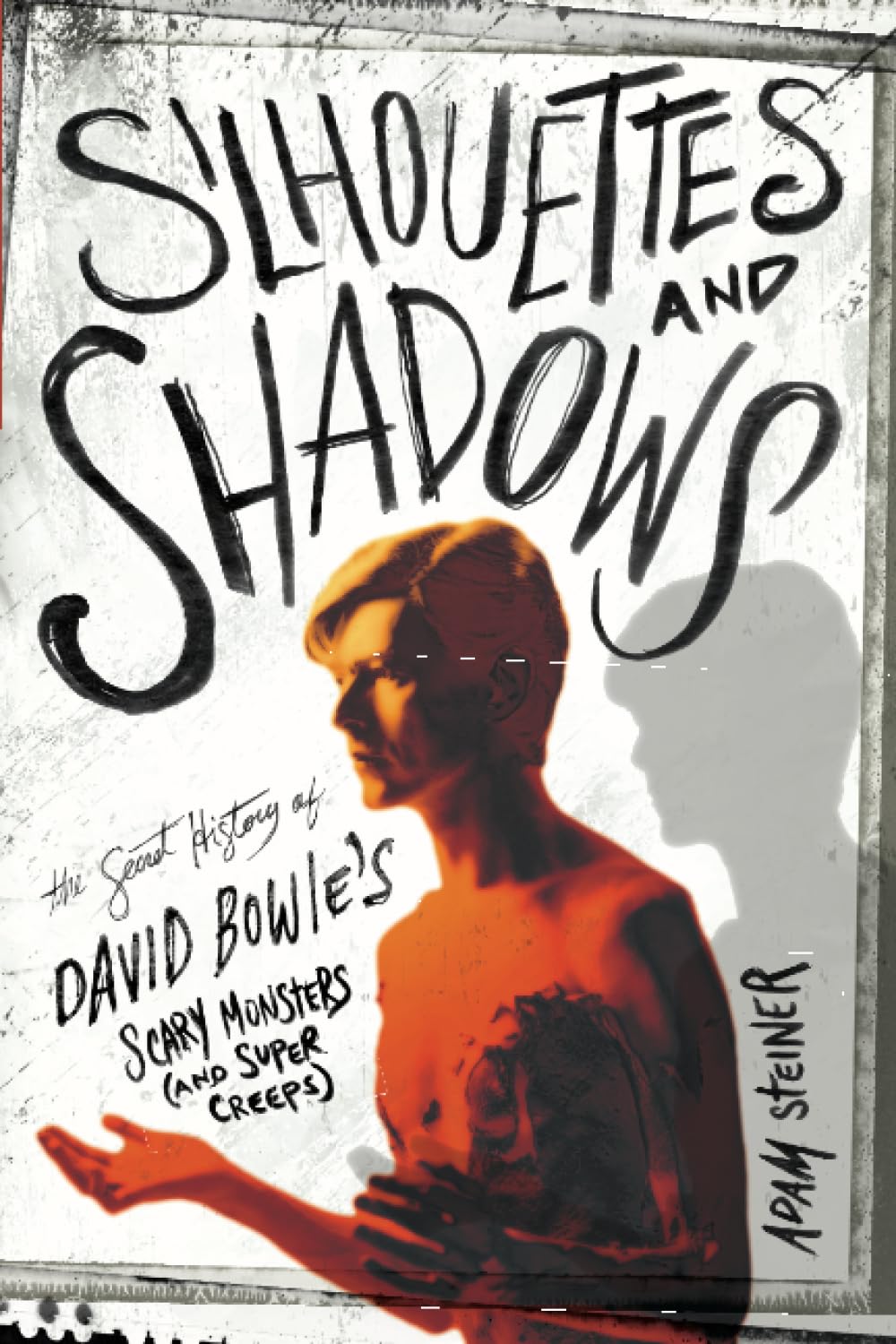
Bowie Haunts Himself
He captures too the fragmentation not just of this era but of Bowie. An artist who in constantly ‘ripping it up to start again’ became more a site of multiple identity haunting, a walking palimpsest; a puppet who’d learned to be his own puppet master. A man ‘making transgression his safeguard against forced normality’, terrified by a domesticity that was, in fact, being shattered not just for him but for generations to come once the free market was unleashed. As Steiner says, at this point Bowie was an artist meeting the times and his past. It was ‘like the future arrived to fulfil an alternative present’.
Guy Mankowski reviews Adam Steiner‘s Silhouettes and Shadows: The Secret History of David Bowie’s Scary Monsters (And Super Creeps).
Three Stories
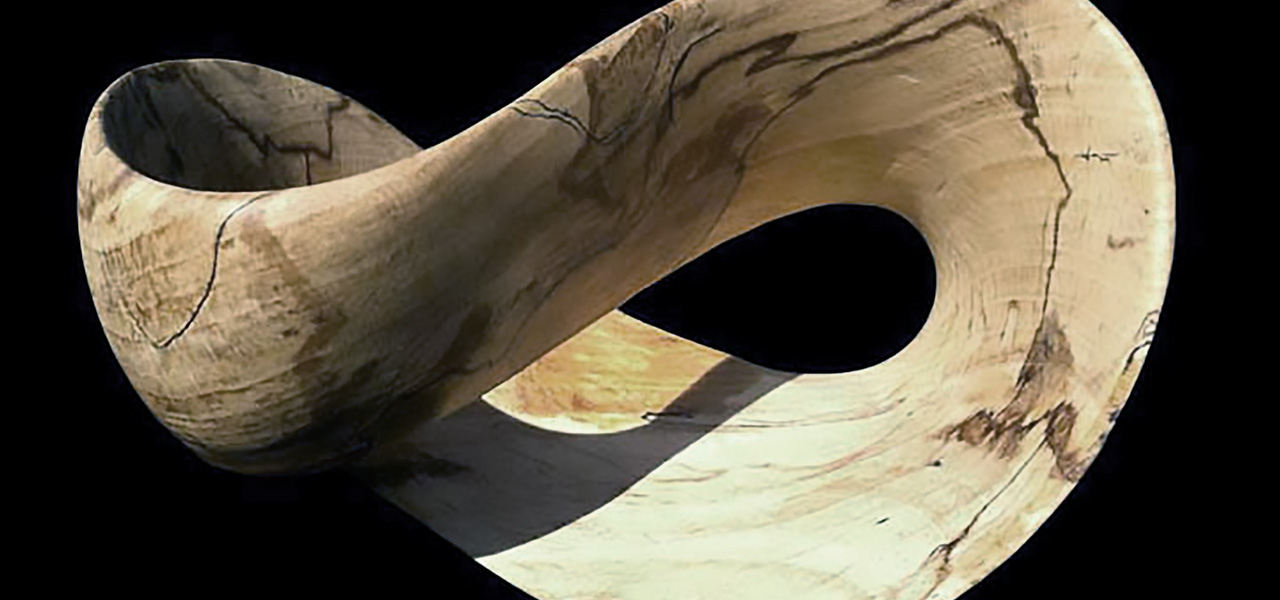
He could not say when, or how, or exactly where he first felt the urge—only that when it came to him, it had the quality of irresistibility, of absolute compulsion. At two, he was already crawling in circles. There were shaky videos of him, with muffled background laughter: footage of his little twitching body, going round and round large squares of linoleum, patio, lawn. At four he discovered triangles; at five, squares, rhomboids, polygons. As life went on, he took the jokes and jibes well: he could not run in certain parks, found it hard to walk around older cities. No forest ambles for him. Snakes and crabs filled him with disgust. Deserts horrified him. His workplaces immediately dictated his home addresses or vice versa. Life was exhausting: always buying return tickets, no mystery tours, no surprise parties. The ridicule matured him quickly, made him kinder, forgiving, ironically more flexible, even as the patterned contours of his life grew ever more rigid.
Three new microfictions by Arthur Mandal.
Poem Brut #156 – Norperf (European Poetry Festival edition)

An enactment of the thinginess of words and the wordiness of things
– the corporeal, the appended, the prosthetic, the floaty-woaty and the wibbly-wobbly –
by almost people to a soundtrack of almost voices, culminating in a harsh warning and an absolute exclusion.
In the 156th of the Poem Brut series, new poetry by Martin Wakefield and Patrick Cosgrove.
Frailures
In being granted a body I’ve come to feel in some way wronged. No. I’ve always felt as though in being given a body I’ve been wronged. No. Whoever provided me with a body has wronged me in some way. No. Over time I’ve come to feel that my body has wronged me. No. Since infancy my body has excelled in doing me wrong, outdoing itself with the years. No. I cannot formulate it properly. Let me reduce what I am trying to say to its most rudimentary form: me = body = wronged. This is still not right. There is something missing. Scrap that equation. It is not that my body has wronged me, it has no ill intent, it is behaving as programmed, it is secondary to the matter at hand, yes, it is not my body that has wronged me, but who or what granted or provided or gave me one. They are the culprit. The blame lies with them.
A short story by Sam Glover.
Small Pleasures
3:AM fits. We met through 3:AM. We didn’t, really, but it’s possible. We both read 3:AM religiously. Small books brought us together; small books made by large people too large to be “general” — to us, at least. He emailed me from Melbourne in 2012; he asked questions around the titles I was publishing and many times felt like my only devotee. The only logical thing to do was to marry. We eventually did — marry — but then he got ill and left me with a son and this document to publish. …This is a review of a life, written in its last week; the moments remembered he was soon to part from.
By Matthew O’Shannessy. Introduction by Rebekah Weikel.

Mérat and Nerval
Mérat and Nerval also shared a love for the theatre and adored the actresses they saw on stage — whose reality could never live up to the idealistic impressions of them created in the poets’ imaginations. In 1853, when Mérat was thirteen, Nerval’s Odelettes were published, containing ‘Une Allée du Luxembourg’, a poem set in the gardens that would become Mérat’s favourite part of Paris — and overlooking which he would later live many of his happiest years. The poem’s theme of an idealised love, happened on by chance amid the beauties of nature, which seems to promise perfection but ends in loss and grief, could almost be a template for Mérat’s own love poetry.
Read an extract from Tim Michell‘s Albert Mérat: Rimbaud’s Seer.
Four Poems from Les Chimères
The house erupted in the fresh voices of women.
They chatted; one laughed her twenty-year-old laugh,
While on the edge of the red, trembling skies,
The sun set in its huge bed of flames.
On blades, with burning kisses, the stars shone prisms
Shimmering with coloured reflections.
Sometimes on the strong backs of murmuring, blue waves,
A boat slid by with the sound of oars…
Four poems by Albert Mérat translated by Tim Mitchell.
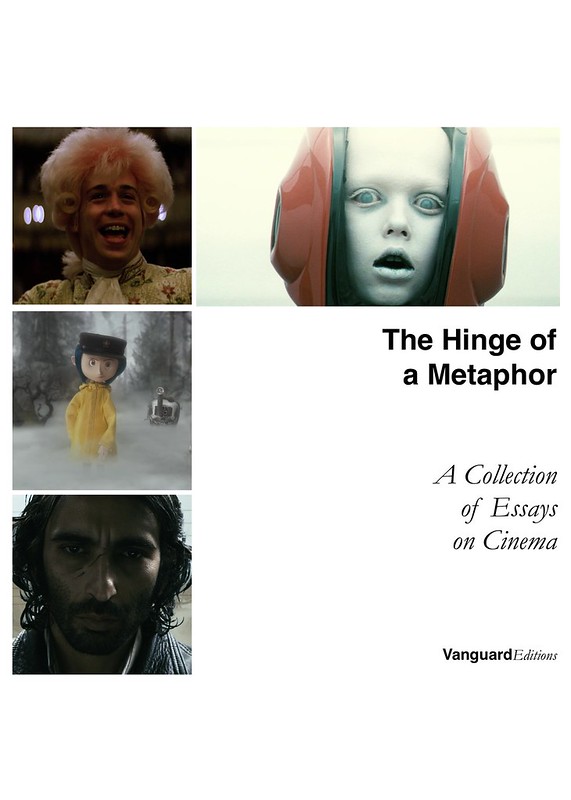
The Hinge of a Metaphor
The Hinge of a Metaphor: A Collection of Essays on Cinema, edited by Richard Skinner, can now be ordered from Vanguard Editions. It includes essays by Victoria Best, David Collard, Dan Dalton, 3:AM Magazine‘s Andrew Gallix, Jonathan Gibbs, Susana Medina, Mathilde Merouani, Rachael de Moravia, Dan O’Brien, Christian Patracchini, Imogen Reid, Richard Skinner, Matthew Turner, Owen Vince, Tony White and Eley Williams. A unique collection of essays on the world of cinema, its films, actors and directors, by a spectacular array of poets, playwrights, essayists, interdisciplinary writers, novelists and academics. Includes new, exclusive work on subjects as diverse as fairy
Three Stories
We found blueberries in the baby’s crib, and this terrified us. How was she getting them? Had she put any in her mouth? Was she breathing? Only later did we pause to consider the neatness of the pile, the care suggested by that perfect pyramid. The next morning it was pinecones. These were thin, sticky things that leaned on each other like the ribs of a teepee. We found pine pitch on our daughter’s palms and some in her hair. The next day it was maple leaves arrayed as though they were paint samples, red to orange to yellow. The leaves were perfectly flat and dried, as though they had been pressed in the pages of a book. The next day it was river stones in a row. The day after, coins stacked by size.
Three new microfictions by Stephen Tuttle.

Her Refrain
While you bathed, her wanting got out of control. She wanted to be three different people at once. She wanted several bodies in her bed. She wanted a sandwich with seven kinds of lunch meat. She left her apartment, shuffling down the block, carrying only objectives in her purse. The wants were heavy, gaining poundage with every step, so by the time she reached the store she was dragging the purse along the sidewalk muttering fuck.fuck.fuck.fuck.fuck.
A short story by Eve Zelickson.

Twist: An Interview with Adele Bertei
Our scene in NYC was the very first time women artists from all over — England, Ireland, Germany, France, Japan, America — gathered to make art, music, film, theater, books. There’s never been anything like it in the history of artistic movements, and I’m thrilled to be telling the story.
John Wisnieski interviews Adele Bertei.