
Origin Story
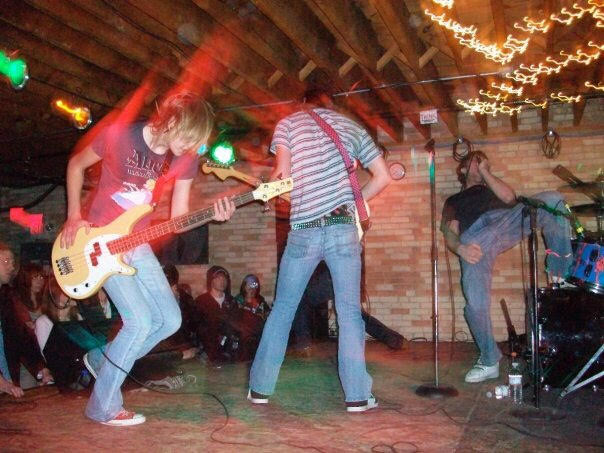
“I once ended an interview with the suggestion to write a poem or story like you would a prayer, and to not tell anyone what you’re doing. Really put yourself into it, and don’t hold back because you’re not going to show anyone. Print it off if it’s on your computer and delete the file so you only have the one copy. Now, go out into the world, on a hike, or on a boat, or to your local corner store, and gently tear it up. Bury it, throw it into the water, light it on fire, drop it into a large city trashcan or fold it into a paper airplane and toss it off a cliff. You made something you loved, only for yourself, and now it’s your secret with the universe. How special is that?”
Chris Kelso interviews Andrew J. Wilt.
Eden/Paradis After the Avant-Garde
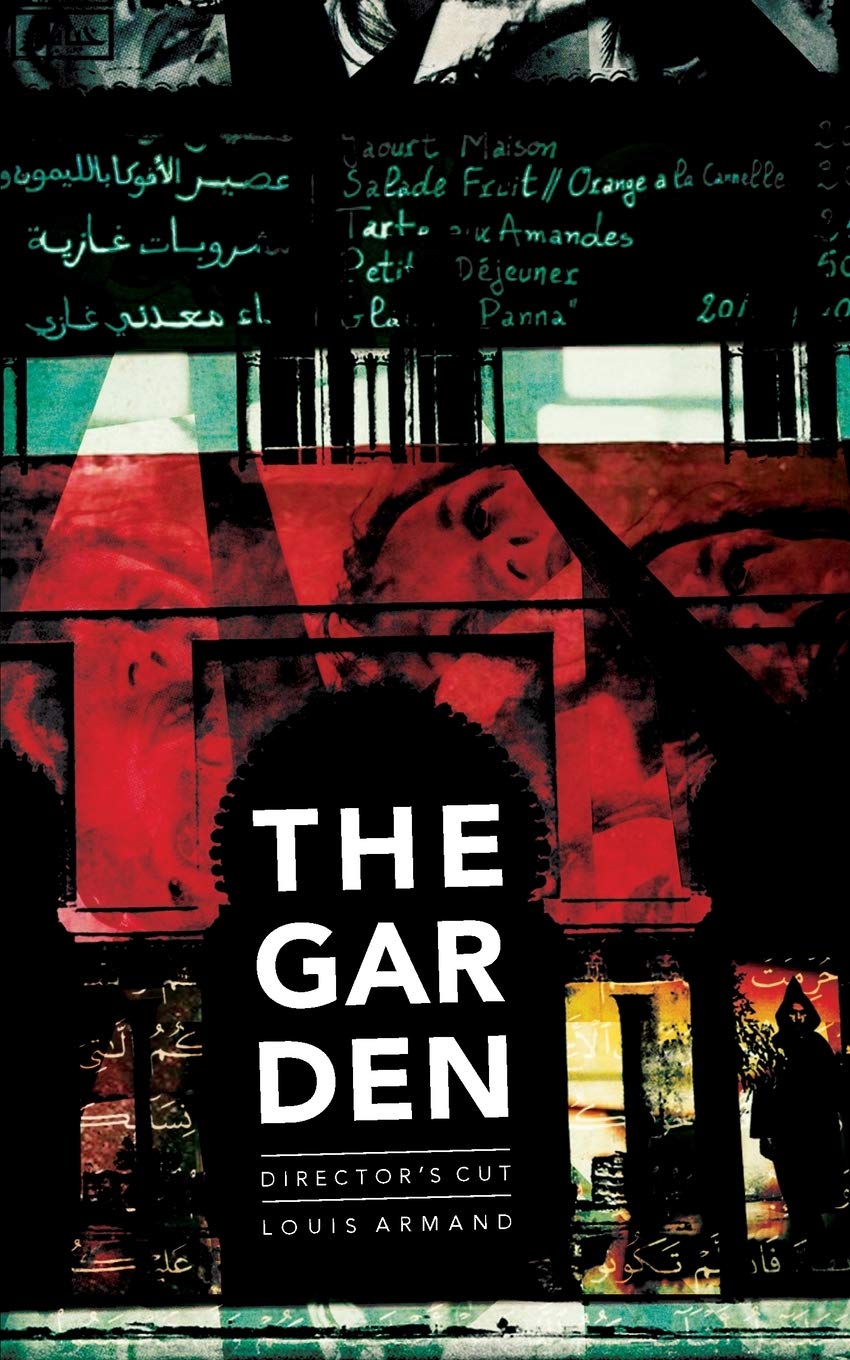
In the mid-90s, twenty-five years after Guyotat’s “war on literature” waged in Algeria, Louis Armand travelled through Morocco & “the disputed Western Sahara”, a trip which gave rise to notebooks that furnished the basis for The Garden (Salt, 2001). Another twenty-five years later, Armand produced The Garden: Director’s Cut, a complete, unexpurgated edition of his own Maghrebi “ransacking of literary & theological pieties”.
Jean Bessière and David Vichnar on Louis Armand‘s The Garden.
The Unknown Writer
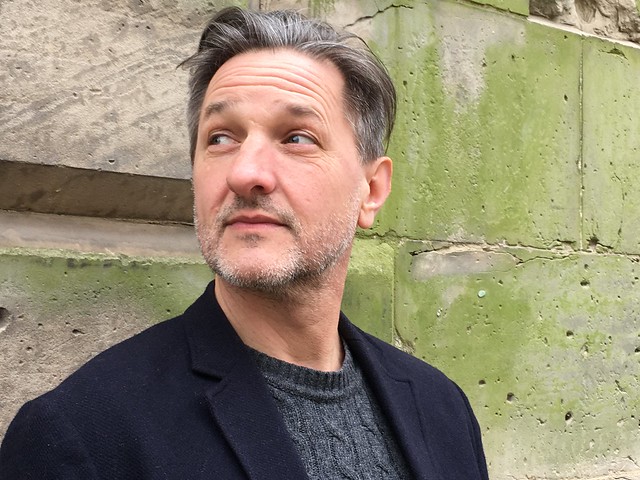
The mise en abyme is the process of piling things up on the edge of that abyss, or over it. It’s about amassing plenitude in an attempt to cover the horror of the void, or to avoid staring into the abyss too long. The Neapolitan actor-director Enzo Moscato claims the baroque as a style is based on a hysterical fear of the abyss, thus acknowledging the inseparability of the two. I think there’s a useful generative tension between the minimal and the baroque.
Andrew Gallix interviews C. D. Rose about his new novel, The Blind Accordionist.

A Torrent of Stories: An Interview with Anna Vaught
What do I hope readers will take away in terms of thinking about mental health? That mental health problems belong to everyone, to the creative, the brilliant, the cosmopolitan, the disenfranchised, the lonely, the everyone. That mental health problems may take unexpected forms and carry with them an unusual energy or productivity – which is NOT the same as saying they are good to have. I mean that in my case, for example, long and complex trauma has resulted in a host of things for me to deal with but, in coping, I have developed an absolute reliance on my imagination and fed that into my writing.
Anna Vaught interviewed by Katy Wimhurst.

Depressive Realism: An Interview with Julie Reshe
Art corresponds to the human tendency to self-destruction. When a person wants to create, has inspiration, he or she destroys herself, surrendering to his or her interactions with chaos. Art denotes chaos, and opposes itself to established meanings and orders. And our desire for death, or self-destruction, is associated with our fondness for chaos and the transgression of established meanings and orders. It is not that much about how art affects the mental background but about how art is a way of interacting with what attracts us and what destroys us psychologically.
Julie Reshe interviewed by Svetlana Gusarova. Translated from the Russian by Duane Rousselle.

In Answer to a Garielle Lutz Question
The interesting critic should breathe into that “certain pain arising…” because there are the riches – when one can’t say for sure, we might be better off with awe and acceptance of limitation, as in Frank Kermode’s describing two lines of Wallace Stevens as “among the most beautiful in Stevens and I do not know what they mean.” I don’t go to a review for a plot recap, I want to know what the art did to someone’s soul – show me tire marks!
Greg Gerke interviewed by Garielle Lutz.

The Poetics of Non-Space: An interview with Matthew Turner
Buildings, and how we interact with them, are shadows of thoughts and feeling before we become fully conscious of them. A cluttered home can be stream of consciousness made real, which is much more convincing than traditional articulations of that narrative mode, that for me is usually too ordered and well defined. Space in my writing expresses pre-conscious and pre-personal undercurrents which one of my favourite writers, Nathalie Sarraute, defined as ‘tropisms’ – a phrase borrowed from how plants move towards the sun or other stimulus, such as wind, gravity and darkness. I think my characters grow towards walls and objects, and in turn spaces grow inwards around them. Kafka wrote in one of his notebooks that everyone carries a room around inside of them, and we can hear the noises it makes – it’s this kind of relationship.
Matthew Turner interviewed by Andrew Gallix.

His Shadow Book: Jordan A. Rothacker Interviewed
The writerly answer would be that it is a totally fictional creation, but all me, as all the characters I create come from me, out of me, and are me. But this writing process was one of method acting. I developed this character out of my own pain and frustrations and then gave him life in his own journals. When I thought thoughts that fit him, I wrote them in there. That journal – which became several journals – was always in my pocket and I wrote in it out in the world. The text itself bleeds in and back out of reality and life and the clues within it support this idea and crazy experience. References to Anna Kavan and Rimbaud’s “Je est un autre” tease out the lie that Maawaam is me and that he isn’t.
Jordan A. Rothacker interviewed by Chris Kelso.
The English Fear of Cities and Europe: Patrick Keiller
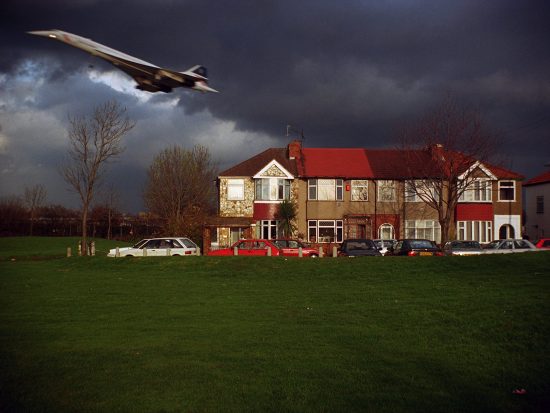
Then there are Herzen’s “absence of Continental diversions”; the absence of a credible London newspaper – it seemed to me that the Evening Standard was written for and read mostly by commuters on trains to dormitory towns and suburbs all over south-east England; the absence of metropolitan government, abolished in 1986; and, finally, that London was characterised by all this absence. When he said, in the next-but-one sentence, “London was the first metropolis to disappear”, I don’t suppose he meant that London was physically absent – that would be silly – but that it’s absent as an idea.
Andrew Stevens in conversation with Patrick Keiller.

Beyond Sugar Hill
When I talk about female friendship, I feel a kind of ambivalence: there’s a whole school of chick lit and soppy movies about the redemptive qualities of female friendship, how your female friend is gonna be there no matter what and is more important than anyone else out there. I don’t mean that friendships like that don’t exist, but what I’m more interested in are depictions of friendships Lila and Lenu’s in Elena Ferrante’s Neapolitan Quartet, which is all over the place – both dangerous and nurturing – depending when you drop in.
Linda Mannheim in conversation with Kit Caless.

Of Musil and his Translator: An Interview with Genese Grill
The greatest challenge in translating Musil is also the greatest joy. And both the challenge and the joy are embodied in the third noun of your question: “Surprise”. Musil is a writer at war with what he calls “congealed metaphors”–clich és, received ideas, “dead words”. The freshness of the words, the images, and the sentences’ syntax is as important as the ideas they carry, and a translator must always resist the temptation to replace his surprising arrangements with common phrases or more conventional concepts.
Joseph Schreiber interviews Genese Grill.

Oikeiôsis: An Interview with Steve Finbow
I certainly do not worry about backlash, but I don’t write books just to provoke people. If people are offended, that’s their problem. I usually write books because I am interested in a subject but I cannot find books that are related to that subject, and so I research and end up with enough material for a book. Grave Desire came out of my fascination with taboo subjects and serial killers but also out of my interest in the Marquis de Sade, Lautr éamont, Hans Bellmer, Jean Benoît, JG Ballard and so on. And we have to remember that what is transgressive in some cultures is accepted in others; what is transgressive in one century is conventional in another. What I am drawn to is limit-experience and how humanity blurs, pushes at and breaks through the boundaries of morality, ethics and aesthetics (a sort of an-aesthetics).
Chris Kelso interviews Steve Finbow.

