
Q&A: Richard Porter, Pilot Press
I think there’s a huge surge in the popularity of what is called “queer” literature at the moment, but I think that it is a selective interest, operating within a narrow framework. You only have to take a look at the shelves of an LGBT+ section in a bookshop to see the vibrant colours and attention-grabbing designs, what a friend calls ‘Bubble Tea covers’, to get a feel of what parameters the big publishers are working within. My Dead Book is hardcore. It’s intense and unrelenting in its despair. I can see how it didn’t find an audience at larger presses.
Richard Porter of Pilot Press interviewed by 3:AM’s Fiction Editor, Daniel Davis Wood.
Shane
Shane’s clothes were more sealant than fabric—sprayed on, shiny finish. He wore them like the hard shell of a toy animated to life by others’ imaginations. I was more like a hologram, a cheap illusion. He told stories about yearning to be tough, scraping his knuckles on cement until they bled, cultivating calluses and rough spots, the pride he took in scars, lowering his voice and moving his mouth less beneath a slit-eyed gaze. We were alike. Both of us shot into the world still marked by our makers like bullets streaked by their barrels. And we had collided.
Read an extract from Nate Lippens’ My Dead Book.
Poem Brut #152 – Red Disley

There’s pen, pencil and watercolour paint incorporated to make the poem… The poem focuses on how to create a person, the important elements and experiences throughout our lives and ultimately explores what make a person a person… The illustrations show her as her life progresses, how events impact her and some of the things she has done in her life like moving houses and finally show her close up in a more detailed art style.
In the 152nd of the Poem Brut series, new poetry by Red Disley.

Our Love Burned Down Tom Brady’s House
This was two nights after his fourth championship, so the statute of limitations has expired. I can tell the whole story now. We had you can be sure overindulged. When is enough enough? a more temperate man might have asked. I’m no temperate man. Even Jesus cursed the fig tree. Mr. Brady is no Jesus. My squeeze and I gained the foyer not without a certain dark elation. Someone had left the gate unlocked, the door too. A point had been scored, was the feeling, a redress for every unjust penalty levied across the years on Mr. Brady’s foes. I am, I confess, no devotee of American football. Too impersonal a violence. In Mr. Brady’s foyer my squeeze and I performed the physical act of love. Out of politeness we kept the lights off, at first. Let’s not wake the family, we reasoned. Our passion, regrettably, took a turn for the raucous.
A short story by Victor Ladis Schultz.

We Are but Nothing (Extract)
Not that I “prefer to remember the dead when they were alive”, as some would perhaps say. It’s simply that I don’t need visual or olfactory aids to make the connection. On top of that, the funeral industry has to be the only industry that’s worse than airlines. They are equally exploitative and usurious, only that instead of banking on our need to get from A to B they exploit our inability to get rid of bodies effectively and independently—a disposal that if you consider it properly is also a way of getting (someone else) from A to B.
Read an exclusive extract from Fernando Sdrigotti‘s new book.

Minute 9: Performance
I’ve lost count of how many times I’ve seen Performance. I’d seen it thirteen times before 1976. No matter to which strata of the sclerotic British class structure you belonged in the early seventies, you were woven into the social fabric by the music you absorbed, the books you read, the bands you saw, the squats or rentals where you lived, your connections to the hardcore criminality of the drug scene that fuelled the sixties/seventies outsider culture.
By Des Barry.

Devil’s Ivy
What is a set? A theory of how one can get FROM: 1. A plant named Gerald; 2. Memories of trout on a line between pine trees; 3. Someone finally saying your name; TO: A building rooftop where it all ends.
A short story by Shannon Hardwick.
Memory’s Fiasco
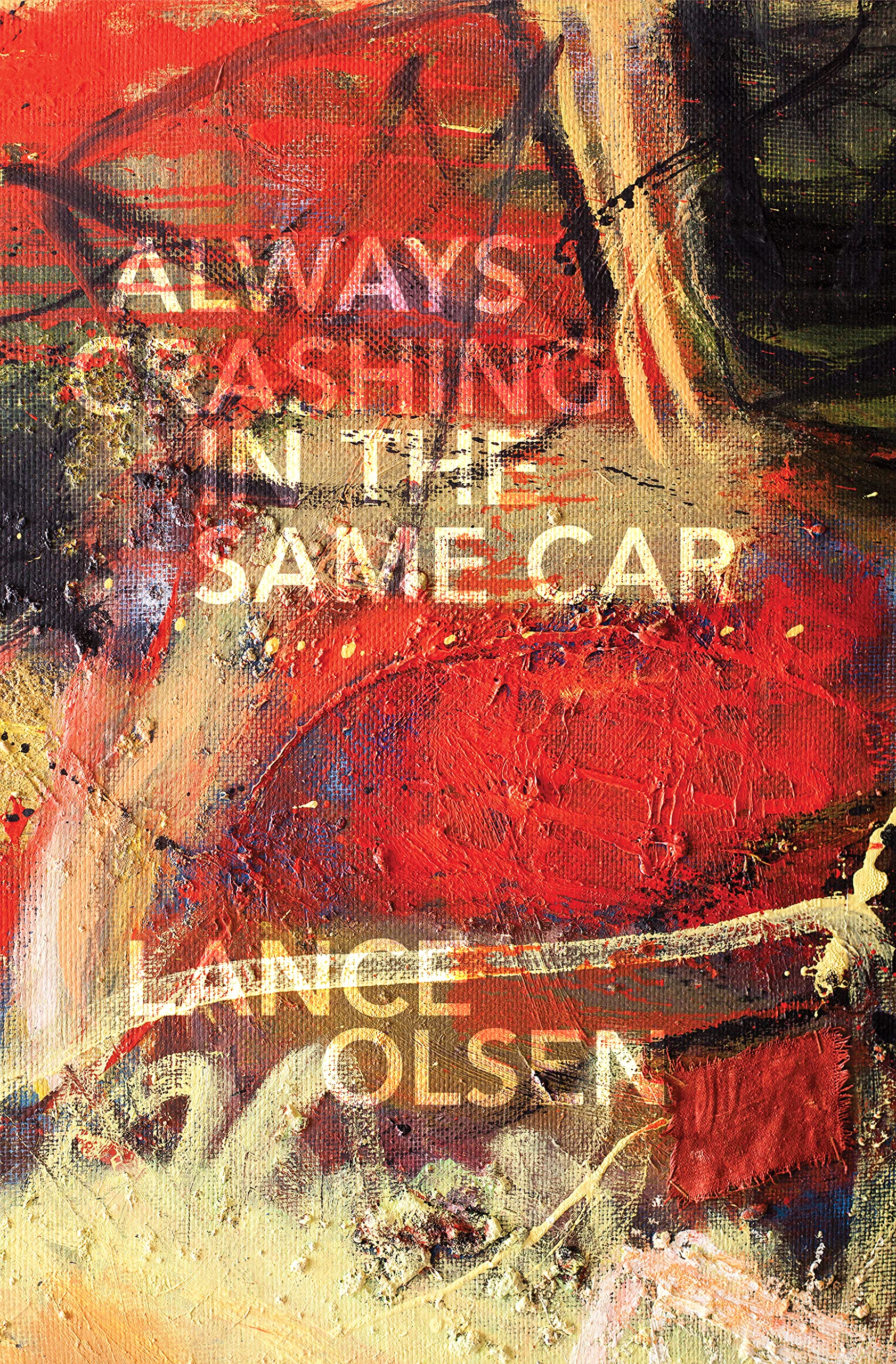
This book treats a life like a text that is being written as we read it and, in many ways, everyone outside of Bowie exists to illustrate another facet of the man. Both Bowie and the narrator are interested in “how others write him into themselves.” He becomes an amalgam of an expansive audience’s opinions and experiences. In fact, Bowie only remembers parts of himself once he’s “read about himself reading it in a biography about him.”
Jesi Buell reviews Lance Olsen‘s Always Crashing in the Same Car.

Bright Colors That Have No Names
It’s Christmas Day and they are gathered in the living room when Brother #3 asks what is that plant, the plant on the table, the plant with the brown leaves; and Tired Father says those leaves aren’t brown, they’re red, that’s a poinsettia, can you see the red asks Tired Father, turning to Brother #1; and Brother #1 says he can see that one part of the poinsettia is darker than the other, but looking at the leaves he can’t tell which part of the poinsettia is red, maybe it’s just a trick of the light…
A short story by Seph Murtagh.

Instructions From Light
Bolland’s text is framed by a translation of the screenplay of Le Silence by Louis Delluc. The original film is presumed lost, so everything — the staging, the lighting, and the costumes — must be reimagined. Different fonts indicate the multiple voices/characters/texts: the original manuscript, the translation, and the commentary on the translation. Thoughts vacillate between translating the text (and the difficulty and the impossibility of translating) and how to stage the work, how to translate it visually: ‘I think about my eye behind the camera’.
Terri Holland reviews Emma Bolland‘s Instructions from Light.
Poem Brut #151 – Phased Notes

Notes on the original works – Taking cues from DIY cultural forms, these works create an abstract visual language based around found sources of non textual information.
Notes on the geometric pieces (Phased Notes) – Found patterns, in and out of phase. Indeterminate nodes sourced from discard information.
In the 151st of the Poem Brut series, new poetry by Craig Stewart Johnson.

My Preliterate Works
I had to repeat first grade because I couldn’t read, but I wrote a lot imitating the letters in books. When the reading bud opened in my brain I read what I wrote — ethereal beautiful made all kinds of sense (to me). Schoolbooks were excruciatingly boring by comparison. There are few books I’ve read since that came close to my preliterate works. I wish I still had them but my stepfather burned them for heat in the winter of 1953 when Stalin died.
Andrei Codrescu interviewed by John Wisniewski.