
Millenial Edgelord: An Interview with Susan Finlay
When I was at art college, the question of Identity with a capital ‘I’ was a big thing. I remember Anouchka Grose coming into give a guest lecturer, and how she used the example of a shopping list to explain the ways in which identity can be regarded as being in a permanent state of flux: if the person who made the list was the same person as the one who arrived at the shop, then the list would be obsolete. Rather, you write things down to remind the future you of what the past you thought that they would want. This really stuck with me, not only the idea of different selves, but different selves leaving reminders for each other, and trying to predict who else they might become.
Andrew Gallix interviews Susan Finlay.
Brotherless Night: An Interview with V.V. Ganeshananthan
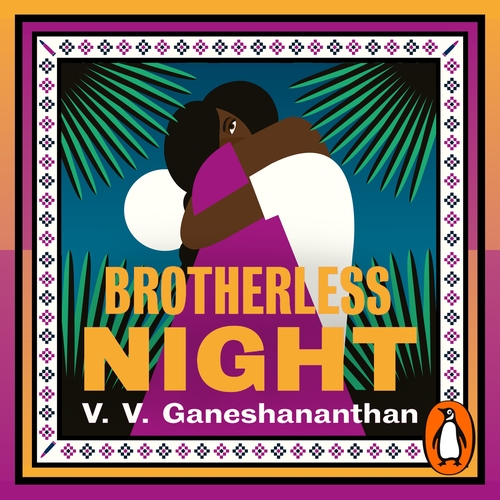
The book is certainly preoccupied with bearing witness. This is part of my own reaction to understanding how certain narratives were presented to me and to others, as though they were total and complete, when in fact they elided or erased certain histories that did not fit the goals of authoritarian storytellers. I was very much looking to return to the page stories that people hadn’t told as much. Whether that was the story of civilian women’s resistance to militarization, the story of how Sri Lankan security forces behaved in the theatre of war, or the story of how Tamil militants behaved in the theatre of war, I was interested in messing up the accepted or prevalent narratives.
V.V. Ganeshananthan interviewed by Katy Wimhurst.

The State of Us: An Interview with Charlie Hill
‘On the International Space Station’ took years to write and I only persevered because I thought it was an original idea; if I’d known there was something else like it, I probably wouldn’t have bothered. It might be convincing because I did a ridiculous amount of research into both the International Space Station and Toronto. Then again, it was supposed to be about a woman. And given you’re the second person out of not very many to think it was a man, I’ve got to consider the possibility it wasn’t my most successful act of ventriloquism!
Katy Wimhurst interviews Charlie Hill.

Twist: An Interview with Adele Bertei
Our scene in NYC was the very first time women artists from all over — England, Ireland, Germany, France, Japan, America — gathered to make art, music, film, theater, books. There’s never been anything like it in the history of artistic movements, and I’m thrilled to be telling the story.
John Wisnieski interviews Adele Bertei.
To Battle with the Forces of Nature: An Interview with Derek Ogbourne
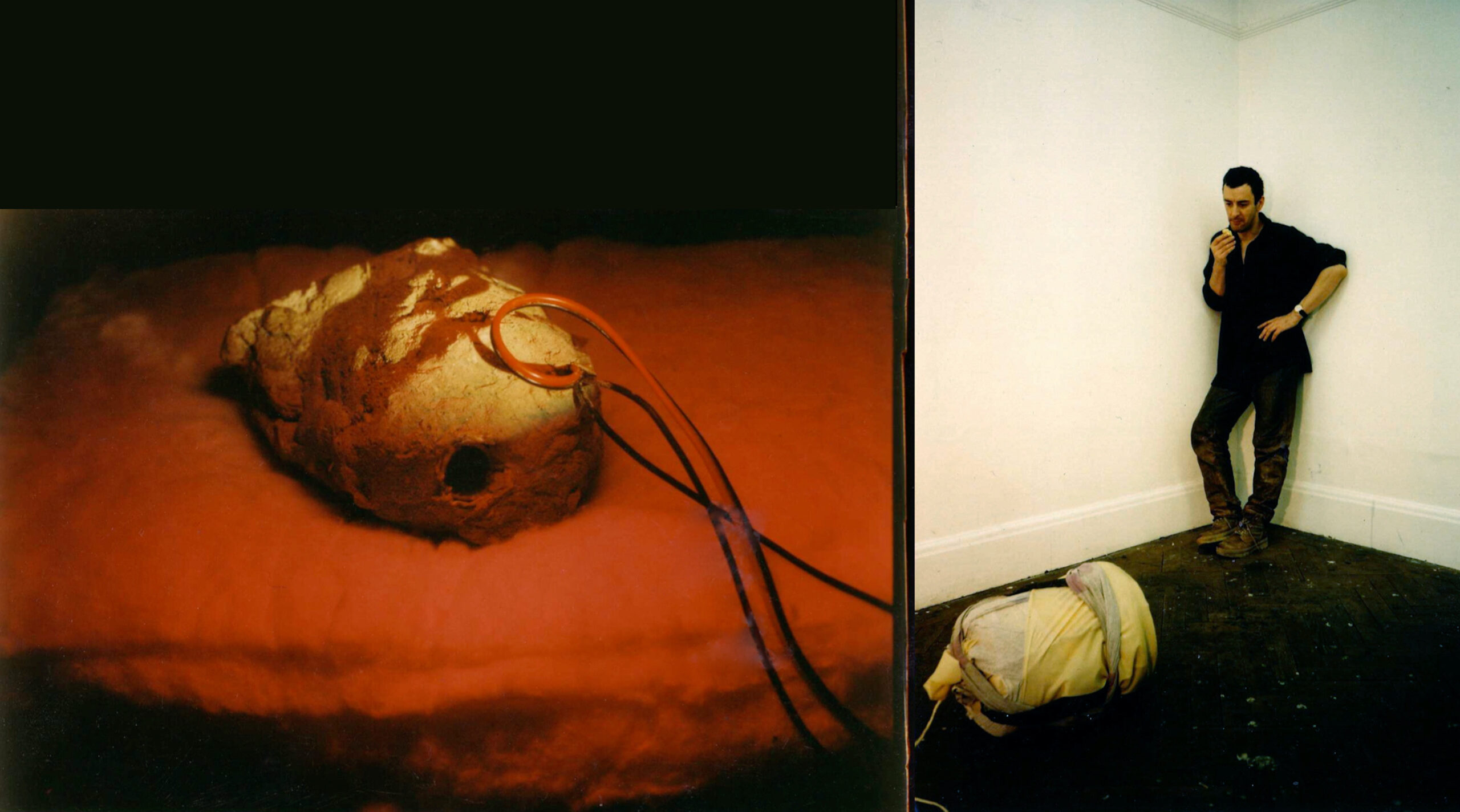
Chance would be a fine thing! The spontaneously glorious nature of words and meaning, double meaning, triple meanings, words that sound like other words but mean something completely different, Intense and In Tents — chance is a fine tool to upset the chains of formalism, the random, the unexpected, the free mind, playfulness as flourishes of nature’s wonder of randomness are harnessed by things made by artists.
Derek Ogbourne interviewed by Steve Finbow.

Q&A: Nathan Connolly, Dead Ink Books
I think readers are going into it with their eyes open, and the very fact that the book presents them with challenges is maybe part of what is driving the interest in it. It is a difficult book on a difficult subject matter and readers are hungry for that. A book that asks if the human race is even worthy of survival shouldn’t be easy.
Nathan Connolly of Dead Ink Books interviewed by 3:AM’s Fiction Editor, Daniel Davis Wood.

Q&A: Richard Porter, Pilot Press
I think there’s a huge surge in the popularity of what is called “queer” literature at the moment, but I think that it is a selective interest, operating within a narrow framework. You only have to take a look at the shelves of an LGBT+ section in a bookshop to see the vibrant colours and attention-grabbing designs, what a friend calls ‘Bubble Tea covers’, to get a feel of what parameters the big publishers are working within. My Dead Book is hardcore. It’s intense and unrelenting in its despair. I can see how it didn’t find an audience at larger presses.
Richard Porter of Pilot Press interviewed by 3:AM’s Fiction Editor, Daniel Davis Wood.

My Preliterate Works
I had to repeat first grade because I couldn’t read, but I wrote a lot imitating the letters in books. When the reading bud opened in my brain I read what I wrote — ethereal beautiful made all kinds of sense (to me). Schoolbooks were excruciatingly boring by comparison. There are few books I’ve read since that came close to my preliterate works. I wish I still had them but my stepfather burned them for heat in the winter of 1953 when Stalin died.
Andrei Codrescu interviewed by John Wisniewski.

Q&A: Dominic Jaeckle, Tenement Press
From the editorship of Hotel on through to the advent of Tenement’s activities back in 2021, I was drawn to the spike of SJ Fowler’s anarchic wit, and I’ve been fortunate enough to count on Fowler as a friend and frequent collaborator. With either the page or stage in mind, our collaborations have always leaned on conversation, and the candour of our exchanges always proved coloured by a free circulation of ideas. Be it a consideration of creativity, fresh enthusiasms, works-in-progress, or projects-in-percolation—all was ever fair game—and (in the best sense of the word) it seemed inevitable that, once the Press had found its feet, we’d begin thinking on the prospect of our working on a publication together.
Dominic Jaeckle of Tenement Press interviewed by 3:AM‘s new Fiction Editor, Daniel Davis Wood.

Harry Crews: An American Tragicomedy
If you’ve been around carnivals,’ comments Crews, ‘as I have, working on the freak shows, you’ll realise that most of us carry our abnormalities or perversities or whatever on the inside, and so are able to lead what people call a “normal life”. But if you’re three feet tall you can’t do that, if you’re a lady and you’ve got a beard, you can’t do that — for around every corner you turn you’ll meet somebody that’s a mirror to reflect back the improbable grossness of your condition. I see such people as having special consideration under the Lord. I’ve always been fascinated by what they have to go through.
Read John L. Williams‘s previously unpublished interview with Harry Crews.
What Willow Says: An Interview with Lynn Buckle
It isn’t just the scarcity of deaf characters in literary fiction which concerns me, but the way we are represented. All those harmful disability stereotypes and lazy ableist tropes written by non-deaf authors. For example, the idea that deafness is always something to be overcome or that we have superpowers or profound knowledge trapped inside disabled bodies … I wanted to see us portrayed as contentedly deaf and as active protagonists with agency, rather than plot props or foils to enlighten others.
Lynn Buckle interviewed by Katy Wimhurst.
I’m Only Happy When It Rains
I don’t know if I’ll be able to do that. I feel like I fight myself and the push and pull of the market inside myself every day — wanting to be liked, versus wanting to be good at art. I envisioned my life here being kind of like that, that maybe moving here would be, for me, a place I could just live and also write. Suffering is everywhere, but at least in Scotland, it’s always rainy.
Chris Kelso interviews Elle Nash.

